Our mission
Here at the department, our mission is to advance the understanding of forest ecosystem processes and to progress the principles of forest ecosystem management.
Laboratory Facilities
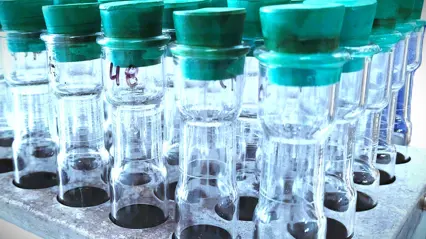
Our state-of-the-art labs offer analysis on soils, plants, gases, and water components in SSIL, BAL and research lab facilities
Research Infrastructures
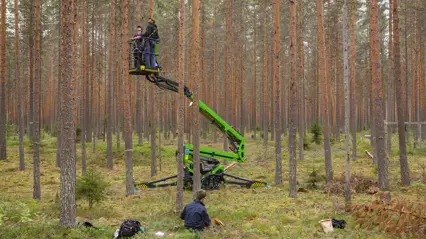
The unit for field-based forest research was established in 2004 and is part of the Faculty of Forest Sciences.

BIOGEOMON 2026
SLU host the BIOGEOMON conference on June 8-11, 2026 at the Umea Campus
WIFORCE
Wallenberg Initiatives in Forest Research explore how climate, environment, and genetics affect forest growth and health
News & Events
News
-
From Rainforest Discovery to Forest Futures: Adam Felton Appointed Professor in Conservation Ecology
Adam Felton studies how species respond to different forest management approaches, and the societal trade-offs involved. As newly appointed professor of conservation ecology at SLU, he aims to further develop this research. -
In search of the eel’s secrets in the middle of the Sargasso Sea
In the Sargasso Sea, an expedition by the German Thünen Institute of Fisheries Ecology is underway to provide new insights into the early life of the European eel. By collecting larvae directly in the eel’s spawning area, researchers hope to better understand changes in the population. -
Advisers can contribute to simplifying complex farm regulations
The increasing regulatory burden in agriculture creates stress, frustration and costs for many businesses. A new study from SLU highlights how advisers can contribute to simplifying regulations – by serving as a link between farmers and regulatory authorities. -
Help SLU find wild honey bee colonies this summer
Do wild honey bee colonies still exist in Sweden and Europe? And if so, how do they manage to survive alongside the dreaded Varroa mite? These are questions that researchers at the Swedish University of Agricultural Sciences (SLU) aim to answer – with the help of citizen scientists and beekeepers. -
Beyond clay content and fixed root-to-shoot ratios for organic carbon estimates in Swedish agricultural soils
Miyanda Chilipamushi is the author of a new doctoral thesis that evaluates sources of uncertainty in estimates of organic carbon storage in Swedish agricultural mineral soils. Her results open up for better decisions for soil management and climate mitigation in the future.