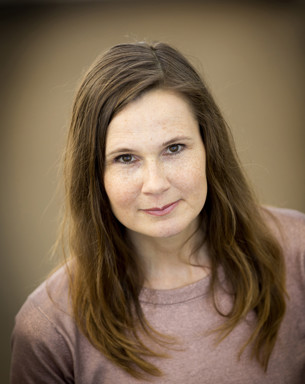
Ann Grubbström
Presentation
Ph.D. Ann Grubbström is a Docent in Human Geography. She is now working as a researcher at the Division of Environmental Communication, as Director of Ph.D. studies, at Urban and Rural Development (SOL), and as an educational developer at the Swedish University of Agricultural Sciences. Ann has a background as a senior lecturer at the Department of Social and Economic Geography at Uppsala University. She has worked on several research projects, for example, addressing land ownership issues, generational succession within farming, young farmers, and gender equality in forest education. The current project Shadow Forests addresses young foresters in times of forest transformation. Ann Grubbström has also been the coordinator for Uppsala University’s research school in subject education, a member of the program committee for teacher education (representing Social Sciences at Uppsala University), assistant project leader for the national test in geography year 9, and director of studies for a research school in Geography. Ann has also supervised several licentiates and doctoral students.
Research
Some important themes:
Forestry education
Who does what in the forest? Upper-secondary students’ thoughts about a future in forestry.
The project focused on how students at agricultural/forestry high schools view their future in the forest sector. We asked questions related to climate transition, gender equality and career choices (KSLA 2022–2023).
The project Stop Counting Bodies.
Forestry’s own #me-too movement, expressed through #slutavverkat and the open letter written by female forestry students at SLU, showed that forestry education was still characterized by a lack of gender equality. Through interviews and focus groups with leaders, teachers and students, the project examined why problematic elements of masculine cultures, such as sexist jokes and other forms of sexual harassments, have been so persistent at the forestry program.
The study shows that it is important to observe what happens in environments “hidden” from teachers and leadership, such as in student unions and on social media, in order to understand why and how discrimination can continue. Strong traditions can be positive, but they may also help maintain inappropriate behaviour. For example, through songs and rituals at the student union. Hierarchies are another crucial factor, where older students set norms and younger students follow their lead. Another aspect is how sexual harassment has been accepted by being labelled as jokes. The fact that these “jokes” have been ignored or trivialised has made many students perceive them as acceptable. A fear of conflict also leads bystanders to remain passive (Skogssällskapet 2018–2023).
Generational succession and transfer of resources (agriculture)
A farmer is both an entrepreneur and a steward of a social, cultural and economic heritage. In several research projects in Sweden, we examined how young farmers and high school students perceived the farmer’s role, now and in the future. Gender, access to a farm and land, as well as the size and location of the farm, proved to be important factors. Questions related to entrepreneurship and sustainability were central to the research.
Different sub-projects studied students at agricultural high schools, young farmers who had inherited the farm within the family, and young farmers who took over a farm without family ties, such as immigrants. Retired farmers and their strategies for finding a successor were also examined (SLF 2010, KSLA 2014, KSLA 2016).
In a collaboration with the Department of Economic History at Uppsala University, we studied models and strategies for generational transitions and the transfer of resources within agriculture in Sweden, Estonia and Hungary from cultural-analytical, economic, spatial and gender perspectives. The project had a longitudinal perspective and was based on both documents and interviews. It focused on the transfer of both material and immaterial resources.
It became clear that the ideal to transfer the farm primarily to a son was very strong. It was also important that a successor should be appointed at an early stage. Surprisingly, these ideals persisted during the Soviet era and still remain today, despite the decline of family farming and the increasing use of farms as holiday homes. This is explained by the strong emotional attachment to the land that exists in Estonia for historical reasons (VR 2004-2742).
Another project examined landownership and land use in connection with the dissolution of the Soviet system and the rapid transition to a market economy in Estonia. This project also used a longitudinal perspective, focusing on ownership structures, land use, and the owner’s economic, social and emotional relationship to the property.
Owners who had regained their property through restitution often have a strong emotional attachment to the land and are therefore unwilling to sell, even if they have no intention of using the land at present. Many hope that the next generation will develop an interest in the property (FORMAS 2004-1579).
Research projects
PhD supervision
Cecilia Almlöv, PhD (2024) Becoming a doctoral co-supervisor: How novice doctoral co-supervisors form collective and reflective individual identities, KTH, Stockholm (co-supervisor)
Sebastian Djup, PhD (2023) Distorted natures: Shifting ideologies of nature in Swedish geography school textbooks 1866-2012. Department of social and Economic Geography, Uppsala University (co-supervisor).
Cecilia Fåhraeus, PhD. (2020) Drawing a Livelihoodscape from the Slum: Towards a spatial understanding of gendered livelihoods in Zambia. Department of Social and Economic Geography, Uppsala universitet (co-supervisor).
Magdalena Cedering, PhD. (2016) Konsekvenser av skolnedläggningar. en studie av barnfamiljers vardagsliv i samband med skolnedläggningar i Ydre kommun. Kulturgeografiska institutionen, Uppsala universitet (biträdande handledare).
Kajsa Kramming, PhD. (2016) Environmental collapse or sustainable futures? Department of Social and Economic Geography, Uppsala University, (main supervisor).
Karin Nibon, Lic. (2016) Ge igen med samma mynt. Ekonomiska och sociala relationer i Sundborns socken i Dalarna 1820-1849. Kulturgeografiska institutionen, Uppsala universitet (co-supervisor).
Robert Kenndal, Lic. (2011) Rum för det “andra” modersmålet. Betydelser och konsekvenser av modersmålet som minoritetsspråk och transnationell språkgemenskap bland ungdomar med annat modersmål än svenska. Kulturgeografiska institutionen, Uppsala universitet (co-supervisor).
Nora Wahlström (ongoing) Back to the land and the cultivation of a new rurality? Exploring the scope and impact of back to the land migration in rural Sweden. Department of Urban and Rural Development (co-supervisor).
Kornelia Johansson (ongoing) Forest Journalists as change agents. Department of Urban and Rural Development (main supervisor).
Publications (selection)
Almlöv, C., & Grubbström, A. (2024). ‘Challenging from the start’: novice doctoral co-supervisors’ experiences of supervision culture and practice. Higher Education Research & Development, 1-15.
Powell, S. and Grubbström, A., (2021). Leading gender equality change in higher education–the case of forestry. The Journal of Agricultural Education and Extension, pp.1-18.
Grubbström, A. and Joosse, S. (2021) New Entrants in Agriculture–The Case of Young Immigrant Farmers in Sweden. European Countryside, 13(1), pp.22-37.
Powell, S. and Grubbström, A. (2021) Vem ska leda jämställdhetsarbetet inom akademin? En studie av jämställdhetsarbetet vid SLU. Tidskrift för genusvetenskap, 42 (1), pp. 79-98.
Grubbström, A. and Powell, S. (2020). Persistent norms and the# MeToo effect in Swedish forestry education. Scandinavian Journal of Forest Research, 35(5-6), pp.308-318.
Joosse, S., Powell, S., Bergeå, H., Böhm, S., Calderón, C., Caselunghe, E., Fischer, A., Grubbström, A., Hallgren, L., Holmgren, S. and Löf, A. (2020) Critical, Engaged and Change-oriented Scholarship in Environmental Communication. Six Methodological Dilemmas to Think With. Environmental Communication, 14(6), pp.758-771.
Grubbström, A. and Eriksson, C. (2018) Retired farmers and new land users: how relations to land and people influence farmers' land transfer decisions. Sociologia ruralis, 58(4), pp.707-725.
Stenbacka Susanne, Grubbström Ann & Forsberg Gunnel (2017) Gendered youth strategies for inclusion in a changing society: breaking or reproducing the local gender contract? Area, Doi: 10.1111/area.12392
Joosse Sofie & Grubbström Ann (2017) Continuity in farming – Not just family business. Journal of Rural Studies.Vol. 50, 198-208.
Grubbström Ann, Stenbacka Susanne & Joosse Sofie (2014) Balancing family traditions and business. Gendered strategies for achieving future resilience among agricultural students, Journal of Rural Studies. Vol. 35, 152-161.
Grubbström Ann (2011) Emotional bonds as obstacles to land sale. Attitudes to land among local and absentee landowners in Northwest Estonia. Landscape and Urban Planning. Vol. 99, No. 1, 31-39.
Book Chapter:
Holmgren, S., Powell, S., Grubbström, A., Söderlund-Kanarp, C., Johansson, K., & Lundin, C. (2025). Looking around for liveable forest futures. In Socioecological Transformations (pp. 182-198). Routledge.
Communication with media (selection)
Skogsaktuellt, Hur ska framtidens skogsbruk locka unga skogsmaskinsförare? 2025-01-30, https://www.skogsaktuellt.se/artikel/2236993/hur-ska-framtidens-skogsbruk-locka-unga-skogsmaskinfrare.html
Tidningen skogen, Ny forskning om sexuella trakasserier på Skogsutbildning, https://www.skogssallskapet.se/kunskapsbank/artiklar/2022-12-14-ny-forskning-om-sexuella-trakasserier-pa-skogsutbildning.html
Tidningen Skogen, Seglivad sexism bland jägarstudenter, 2020-08-2, https://www.skogen.se/nyheter/seglivad-sexism-bland-jagmastarstudenter/
Universitetsläraren, Mansdominerad utbildning gör upp med Machokultur, 2020-11-17, https://universitetslararen.se/2020/11/17/mansdominerad-utbildning-gor-upp-med-machokultur/
EDU TALKS, Avsnitt 12, Genus och jämställdhet för våra studenter (Gender and gender equality for our students). podcast https://internt.slu.se/stod-service/utbildning/pedagogiskt-och-digitalt-stod/Pedagogik/edu-talks---podcast-inom-hogskolepedagogik/edu-talks-all/Genus-jamstalldhet-for-studenter/
REEDS Research Culture Uncovered Podcasts (S2E9), Women researchers, “Screwed from the Start!” 23-01-11
SVT (Swedish television), “Svårt med generationsväxling inom jordbruket”. I was interviewed about my research on generational succession in agriculture.
Financial Times Podcast, Future of food and agriculture. Europes’s farmers face a generational crisis as young desert the land. https://www.ft.com/content/f2399c18-e455-11e8-a8a0-99b2e340ffeb