Plants – food, feed and ornamental use

At SLU, we develop knowledge about the cultivation of plants in arable land and greenhouses – for food, feed, biomaterials, bioenergy and ornamental use. Interested in plant protection, plant breeding, plant nutrients, soil cultivation, buildings, or the history of agriculture and horticulture? Find your way into SLU’s work in this field.

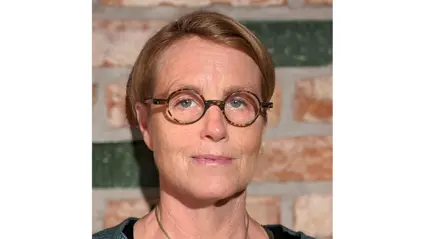
Malin Hultberg, senior lecturer in horticultural science with a focus on food production collaboration, in a portrait photo with a neutral expression. She is wearing round glasses and has short, light hair. The background is a warm-toned brick wall.

Contact an expert or find a collaboration partner

Malin Hultberg is Senior Lecturer in Collaboration in horticultural science with a focus on food production. Contact Malin Hultberg or one of our other plant experts.

Knowledge bank: Plants

  • 2025-06-12

    Sniffing out fruit tree canker

    Diminished crops and lowered fruit quality are some of the effects of Fruit tree canker, the single most destructive disease plaguing Swedish apple orchards.

Research: Plants

  • FORTUNA - Future innovation for pesticide use reduction in agriculture

    The EU-funded FORTUNA project identifies future research needs to help halve pesticide use and risk in line with the European Farm to Fork Strategy while supporting competitive, pesticide-free farming.
  • Ericoid mycorrhizas in blueberries

    Blueberries and other plants belonging to the Ericaceae form mycorrhizal symbiosis with ericoid mycorrhizal fungi. The root system of wild blueberry plants is shallow and the fine hair roots are commonly colonised by mycorrhizal fungi.

Departments: Plants

  • Department of Plant Biology

    We conduct research to deepen our understanding of plants and their interactions with the environment, including other organisms and abiotic factors. Our aim is to translate this fundamental knowledge into practical solutions that promote sustainable practices in agriculture and forestry.
  • Department of Crop Production Ecology

    How can we ensure that food, animal feed, bioenergy, and fiber from cultivated plants are sufficient for a growing global population, while at the same time reducing the environmental impact of agriculture? The Department of Crop Production Ecology (VPE) contributes to solutions through research, collaboration, and education in sustainable crop production.
  • Department of Forest Genetics and Plant Physiology

    We are part of Umeå Plant Science Centre, a centre of excellence for experimental plant research and forest biotechnology. Our mission is to:
  • Department of Plant Protection Biology

    We are an interdisciplinary constellation aiming to enhance our understanding, sustainable use and management of our biological resources
  • Department of Biosystems and Technology

    At the Department of Biosystems and Technology, we explore interactions between soil, plants, animals, the environment, climate, and humans in systems for sustainable food production and renewable raw materials. Our teaching and research focus on the sustainable and efficient use of limited resources for production in greenhouses, on agricultural land, and in farm buildings.
  • Department of Forest Mycology and Plant Pathology

    We answer questions about how agriculture and forestry can be conducted in a world with changing climate. Key themes include forest and plant pathology as well as nutrient and carbon cycling in agricultural and forest ecosystems.
  • Department of Soil and Environment

    Our research seeks knowledge about the interaction between man, soil, plant and the surrounding environment in forest and agricultural landscapes as well as urban environments. We collect, analyse and report data on the state of the environment.
  • Department of Economics

    At the Department of Economics, we conduct research and teaching in business administration and economics with applications to sustainability, food, agriculture, and natural resources.
  • Department of Plant Breeding

    Our vision is to make a significant contribution to the efficient and sustainable production of food, feed, and industrial products derived from plants.

Collaborative centers: Plants

  • SLU Grogrund - Centre for Breeding of Food Crops

    SLU Grogrund joins forces from academia, society and the business sector to develop competence within plant breeding. We want to secure access to resilient crop varieties adapted to Swedish growing conditions, and contribute to a sustainable and competitive agricultural and horticultural production throughout Sweden.
  • The Swedish National Gene Bank

    The Swedish National Gene Bank preserves 2,300 historic varieties of fruit, berries, vegetables, and ornamental plants. These varieties have been cultivated in Sweden since before 1940, 1950, or 1960 - depending on the plant type - and were collected through the Programme for Cultivated Diversity (Pom). The gene bank consists of three parts: the central collection in Alnarp, thirty-two regional clone archives, and cultivation of berries in protected environments.
  • SLU Fältforsk

    SLU Fältforsk is a joint body between the Swedish University of Agricultural Sciences (SLU) and external stakeholders in the agricultural sector. SLU Fältforsk's main tasks are to coordinate the planning of national field research and the processing of results, as well as to ensure the quality of methods and techniques used both in the field and in laboratories.
  • Trees for the future

    In 2026, T4F starts a new program phase "phase IV" and the research coordinator group around program leader Michael Gundale has written a new research plan. Read the new plan and see also what happened during program phase III below.
  • SLU Plant Protection Network

    We explore how to protect crops and trees from diseases, pests, weather damage, weeds and invasive species, and how to create healthy environments for plants. The network connects SLU researchers and external stakeholders and is a platform to share our groundbreaking plant protection research.
  • SLU Breeding Network

    The SLU Breeding Network is a collaboration between all four faculties at SLU and aims to strengthen and highlight current research in the field at SLU and to increase the interaction between research and education.
  • Umeå Plant Science Centre

    Umeå Plant Science Centre (UPSC) is a centre for experimental plant biology and forest biotechnology in Umeå that belongs to Umeå University and SLU. Our mission is to perform excellent and innovative basic research and generate knowledge that benefits forestry, agriculture, environment and society.
  • Agrifood

    The AgriFood Economics Centre provides economic expertise in the fields of food, agriculture, fishing and rural development. The Centre, which consists of SLU and Lund University, is a platform for applied research. The aim is to supply government bodies with a solid foundation supporting strategic and long- term policy choices.
  • PlantLink

    Plant Link is a research network in the area of plant sciences in the south of Sweden. PlantLink was formed in 2011 as an alliance between Lund University and the Swedish University of Agricultural Sciences in Alnarp (SLU Alnarp) with financial support from the Skåne Regional Council (Region Skåne).
  • SLU Risk Assessment of Plant Pests

    The risk that non-indigenous plant pests establish in Sweden is increasing with climate warming and an increasing global trade. We perform independent analyses which will provide support to the Swedish Board of Agriculture in their effort to counter the damage of non-indigenous pests. The pests may be for example, insects, nematodes, mites, fungi, bacteria or virus.