
Insects could provide comfort for future space travellers
Animals that accompanied long sea voyages in the past offered far more than food – they provided comfort and helped create routines for sailors. Insects could play a similar role on future space missions.
Insects have strong potential as a food source during long-duration space travel. They require very little space, can be reared on leftover plant material, and produce fertiliser that can be used to grow new crops.
“We are currently studying how crickets and mealworms cope facing conditions with almost no gravity,” explains Åsa Berggren, professor of Ecology at Swedish University of Agricultural Sciences, SLU.
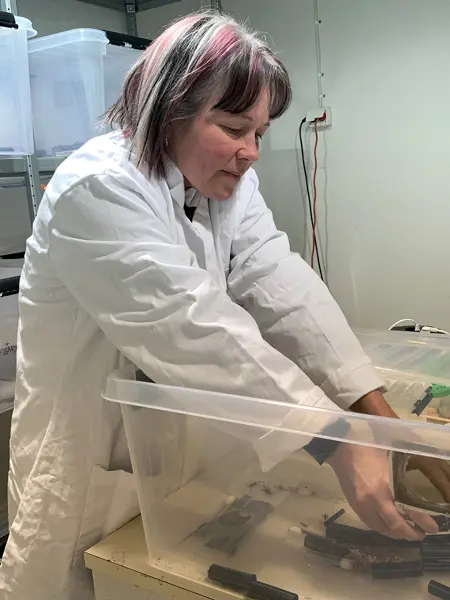
Yet insects are not only sources of protein. Together with Ingvar Svanberg, a researcher at Uppsala University, Åsa Berggren has introduced the concept of astro-ethnobiology, which explores how humans in space will form relationships with other species.
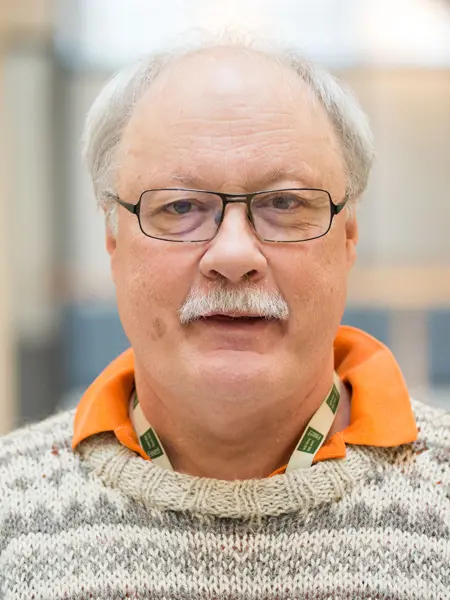
“Caring for the insects can provide satisfaction, establish routines and give meaning to daily life,” says Ingvar Svanberg, ethnobiologist at the Institute for Russian and Eurasian Studies.
History shows that animals have played a crucial social role during expeditions. Goats, pigs and chickens often travelled on ships in earlier centuries and became part of everyday life on board, sometimes even given names by the crew. In the Arctic, sled dogs offered both companionship and a sense of security.
“Insects may not be ‘cuddly’, but people can still form attachments to them. For space travellers far from home, anything that evokes life on Earth becomes important,” says Åsa Berggren.
There are many examples of people forming bonds with insects. In Japan, insects are popular pets, especially among children. In Sweden, too, insects are sometimes kept at home – many have encountered stick insects – and beekeeping is widespread both here and globally. Insects also appear in creation myths, literature, songs, traditional medicine – and, of course, as food.
On a space mission, the crew is likely to include some who consider eating insects entirely normal, and others who find the idea unfamiliar or even off-putting.
“Humans can adapt to new food sources. Sailors on long voyages began eating unfamiliar animals such as turtles because necessity demanded it – but also because these species gradually became part of shipboard routines and stories,” says Ingvar Svanberg.
Throughout history, new foods have often become acceptable only when cultural frameworks – such as rituals, social norms and shared narratives – have made them meaningful. Mushrooms, for example, were once rarely eaten in Sweden, even during times of famine. Today they are both a popular hobby and a much-loved ingredient.
In the same way, future space crews may develop their own culture around insects – valuing them both as food and as fellow living organisms on board.
Facts: Insects in Space
Insects as food
• More than 2,000 insect species are eaten worldwide.
• Insects are highly nutritious and extremely efficient at converting feed into body mass.
• They can be reared on by-products that humans cannot eat, such as agricultural residues.
Research at SLU and ESA
• SLU has carried out long-term research on sustainable cricket farming.
• Åsa Berggren now leads an international research team supported by the European Space Agency (ESA) studying insects as potential space food.
• The team will investigate how house crickets and mealworms respond to microgravity – including effects on behaviour, health and life cycles.
• Earlier studies show that many insects tolerate physical stress well and may function in space environments.
Culture and astro-ethnobiology
• If insects travel into space, they will inevitably become part of everyday life and social culture on board.
• The term astro-ethnobiology, introduced in the journal Ethnobiology Letters, examines relationships between humans and other species in space habitats.
• Ethnobiology studies how humans use, interpret and coexist with other organisms – from domestic animals to wild species.
Scientific article
Astro-Ethnobiology: Insects, Identity, and the Design of Food Systems in Space
Contact
Åsa Berggren
Professor in the Department of Ecology
+4618672344, asa.berggren@slu.se
Ingvar Svanberg
Researcher at the Institute for Russian and Eurasian Studies
+46 18 471 16 85, ingvar.svanberg@ires.uu.se
The article has been translated using AI but then edited and modified by humans.