
Researchers sharpen bat monitoring with an open-access tool
Bats are fascinating animals – and key players in natural ecosystems. Researchers are now developing a new tool for species identification that will support research, conservation and even bat watching.
Bats pollinate plants, disperse seeds and regulate insect populations. They also produce some of the most complex acoustic signals in the mammalian world, including social calls and echolocation used to navigate and locate prey.
Most of these sounds lie outside the range of human hearing – but they can be recorded. Because different species produce distinct acoustic signals, sound recordings can be used to map which bat species are present in a given area.
“This has fundamentally changed bat research,” says Katarina Meramo. “Instead of capturing bats to identify them, we can record their calls. A single field season can generate thousands – sometimes millions – of recordings.”
She is part of the global research programme LIFEPLAN, which collects biodiversity data worldwide, including sounds from birds and bats. The resulting datasets are extensive and offer new insights into where bats occur and when they are active.
“It quickly became clear that no existing bat classifier could handle the diversity of species and species assemblages in our recordings. So we built our own,” says Katarina Meramo.
The new tool currently covers 21 European bat species. Bat experts can contribute by identifying species in the audio material, gradually improving the model’s performance. The long-term goal, however, is a global tool. Researchers are now working to incorporate material from Madagascar, where LIFEPLAN has collected extensive acoustic data.
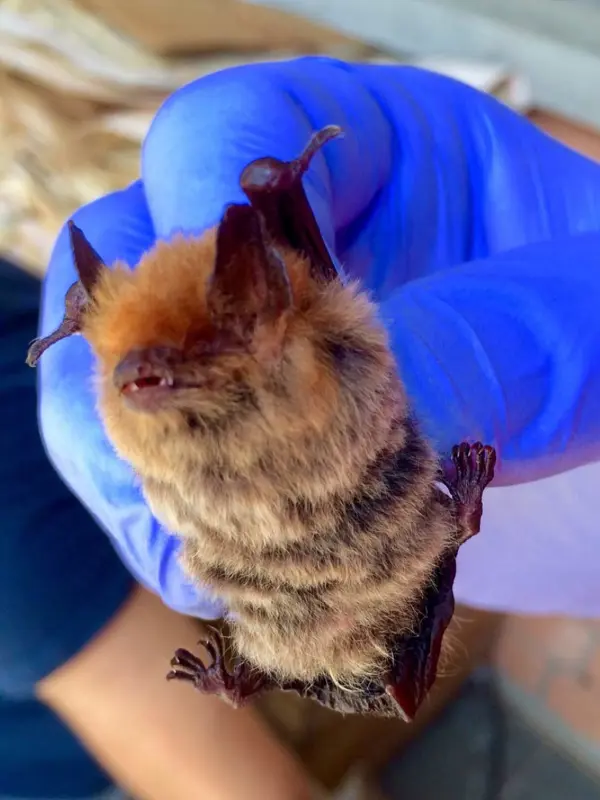
A key feature is that the tool is open-access and free to use. Many existing species identification tools are developed by companies or organisations that restrict access to their data.
“The response has been extremely positive,” says Katarina Meramo. “Researchers are clearly asking for open tools.”
Identifying bats by sound is not always straightforward, even for experts. For tropical and subtropical species, reference material is often lacking – ironically in regions where biodiversity is richest and most threatened.
“I have studied bats in Brazil myself, and compared to my study areas in Finland it was a nightmare. There simply weren’t enough reference recordings to compare with. A tool like the one we are developing now would have been invaluable,” she says.
The aim is for the tool to be usable by a wide range of people, including researchers, conservation practitioners, students, consultants, field biologists and citizen scientists. When users contribute recordings from their own regions and species communities, the model becomes more accurate – and more useful for them in return.
At the same time, the researchers stress that automated classifications are never perfect. Some bat calls are extremely similar across species.
“That is why uncertain cases are classified at the level of phonic groups rather than species. Overconfident systems can do more harm than good if used in conservation,” says Katarina Meramo.
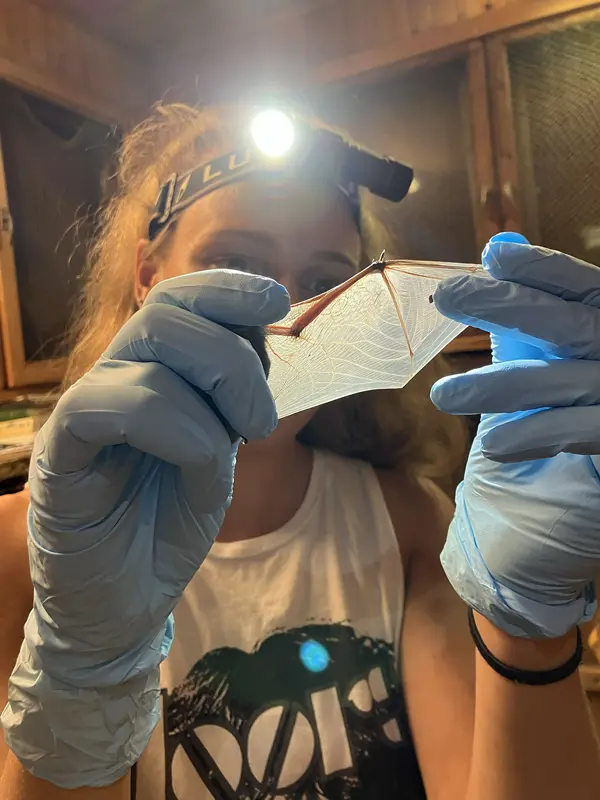
Automated identification tools are not intended to replace experts. There will always be a need for people who can recognise species from the acoustic patterns, so called spectrograms. At the same time, users will learn more about bats by working with the tool.
“Even with my long experience, working through thousands of spectrograms has deepened my understanding of species, groups and difficult edge cases,” says Katarina Meramo.
Recording of parti-coloured bat
This is a species whose social calls can be heard with the naked ear, for most species you need ultrasonic detectors.
How to access the tool
The tool is called BSG-BATS, where BSG stands for Bird Sounds Global. LIFEPLAN has already developed an application for birds, and the idea is to integrate bats into the same user-friendly application, allowing users to choose which model to run.
Experts can already contribute by manually annotating bat recordings – identifying which species or phonic groups are present in different parts of the audio. These annotations are used as training data to teach machine-learning models to automatically recognise bat calls.
Would you like to contribute?
- Share recordings (bsg-bat@helsinki.fi)
- Annotate calls via the portal
- Test the model in your own research
- Every contribution, large or small, helps build a more global and inclusive tool for bat conservation.
Contact
-
Person
-
PersonAnna Lundmark, Kommunikatör, SciFest-ansvarigDepartment of Ecology , joint staff/department office