
Spider silk with integrated color – new method developed at SLU
Scientists have developed a new type of artificial spider silk fibers that are colored, marking an important step toward eliminating the need for conventional dyeing processes. A new study led by Professor Anna Rising has now been published.
By genetically fusing spider silk proteins with naturally colored proteins, the research group, led by Professor Anna Rising at the Department of Animal Biosciences at the Swedish University of Agricultural Sciences, has created artificial spider silk fibers with inbuilt color.
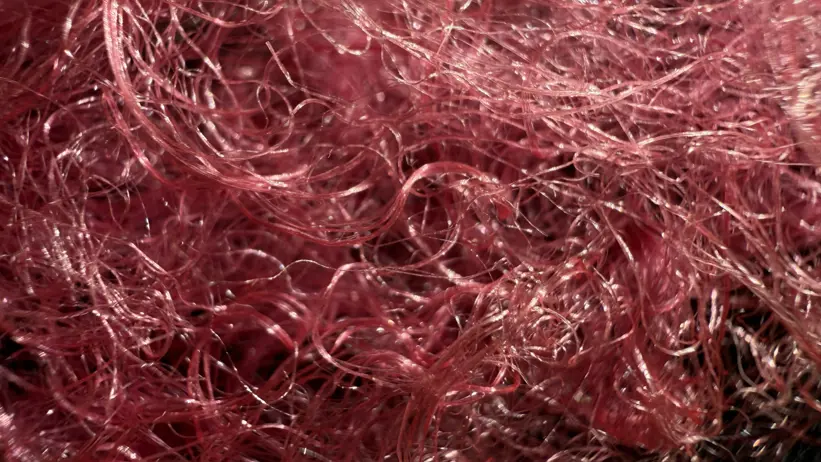
Spider silk is often described as a biological super-material. The material combines mechanical performance that rivals steel with the rare advantages of being environmentally degradable. These qualities open new possibilities for sustainable textiles and innovative medical materials that cannot be achieved with today’s oil-based synthetic fibers.
– For spider silk to be used in textiles, the fibers must be colored. In conventional textile manufacturing, dyeing is typically carried out through additional chemical processing steps that increase costs and energy consumption and place a considerable burden on the environment, says Anna Rising.
The color is built in from the start
In the new approach, color is built directly into the silk at the molecular level. The researchers produce engineered spider silk proteins in bacteria, then isolate them before spinning them into fibers using a fully water-based process.
– Remarkably, the fibers retained both their mechanical properties, while exhibiting a bright burgundy color. This shows that we can combine functionality and performance in a single continuous process, says Tomas Bohn Pessatti, researcher and one of the lead authors of the study. Benjamin Schmuck, researcher and co-first author, adds:
– By avoiding separate dyeing steps, we simplify production and reduce environmental impact, which is crucial for future large-scale manufacturing of artificial spider silk.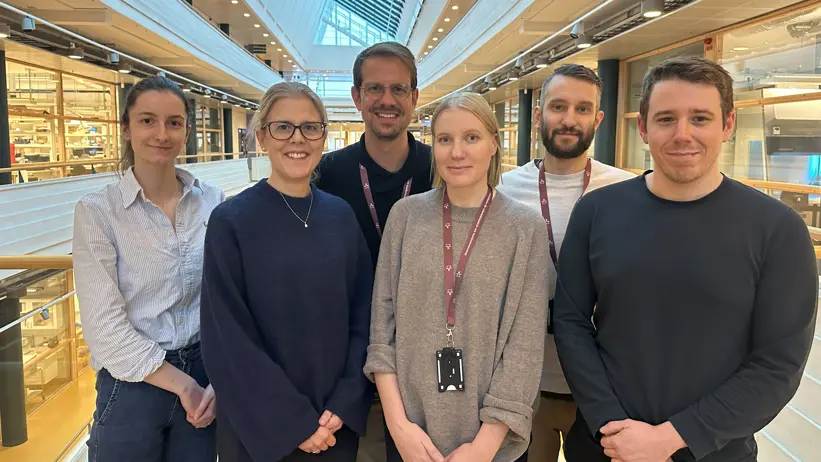
Beyond color, the strategy also enables the integration of other functions directly into the fibers, such as antimicrobial properties, giving cells the ability to bind the material or other biological activity. The work represents an important step towards scalable and sustainable production of high-performance, multifunctional materials inspired by nature.
The work is supported by grants from Formas, the Olle Engkvist Foundation and the Knut and Alice Wallenberg Foundation.
The work, titled "Intrinsically colored artificial silk fibers made from mini-spidroin fusion proteins | Communications Materials", has now been published in the journal Communications Materials.
Contact
-
Person
-
PersonBenjamin Schmuck, ResearcherHBIO, Veterinary Biochemistry
-
PersonTomas Bohn Pessatti, ResearcherHBIO, Veterinary Biochemistry