
Traditions determine which tree species are used in Madagascar – challenged as the rainforest shrinks
The forest is vital for the local population in Madagascar. A new study shows how culture and traditions govern which tree species are preferred in everyday life. The study provides knowledge that is needed to support the population and reduce pressure on the forest.
Madagascar is known for its unique biodiversity. The local population has always used a diversity of trees in everyday life, for building houses, making tools and burning as fuel for cooking. But this is becoming increasingly difficult as the forest shrinks due to land use, logging and climate change.
– To support these communities, we need to understand which trees are considered important for people's survival and well-being and why those particular species are selected. It's also about preserving local knowledge and culture, says Sheila Holmes, researcher at Swedish University of Agricultural Sciences (SLU), who led the study.
The study documented how local populations select trees for everyday needs through interviews with over 600 households in different parts of Madagascar's rainforest.
– Imagine you go into the forest and your favourite tree species is gone. Then you might look for other trees with the same characteristics as the one you usually use. Those characteristics were what we were trying to understand. That's why we didn't just ask about favourite species, but about all the characteristics that people look for, says Minoseheno Rakotovao, doctoral student at the University of Antananarivo, Madagascar, who worked on the interviews for a year.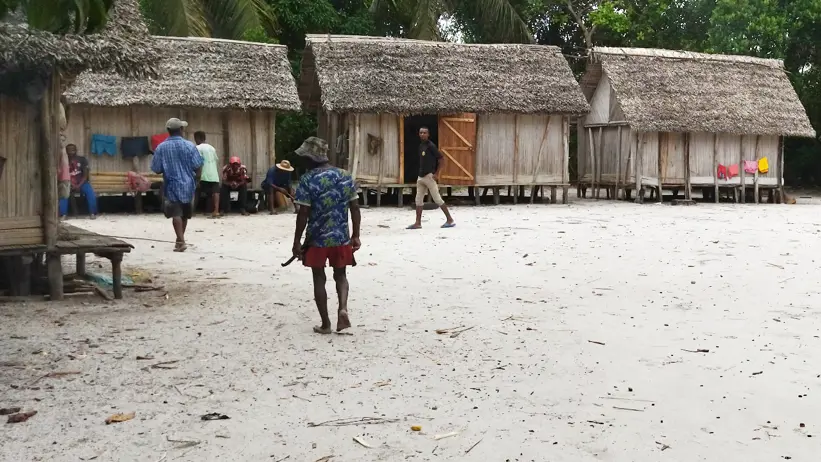
Accessibility matters most – especially for women
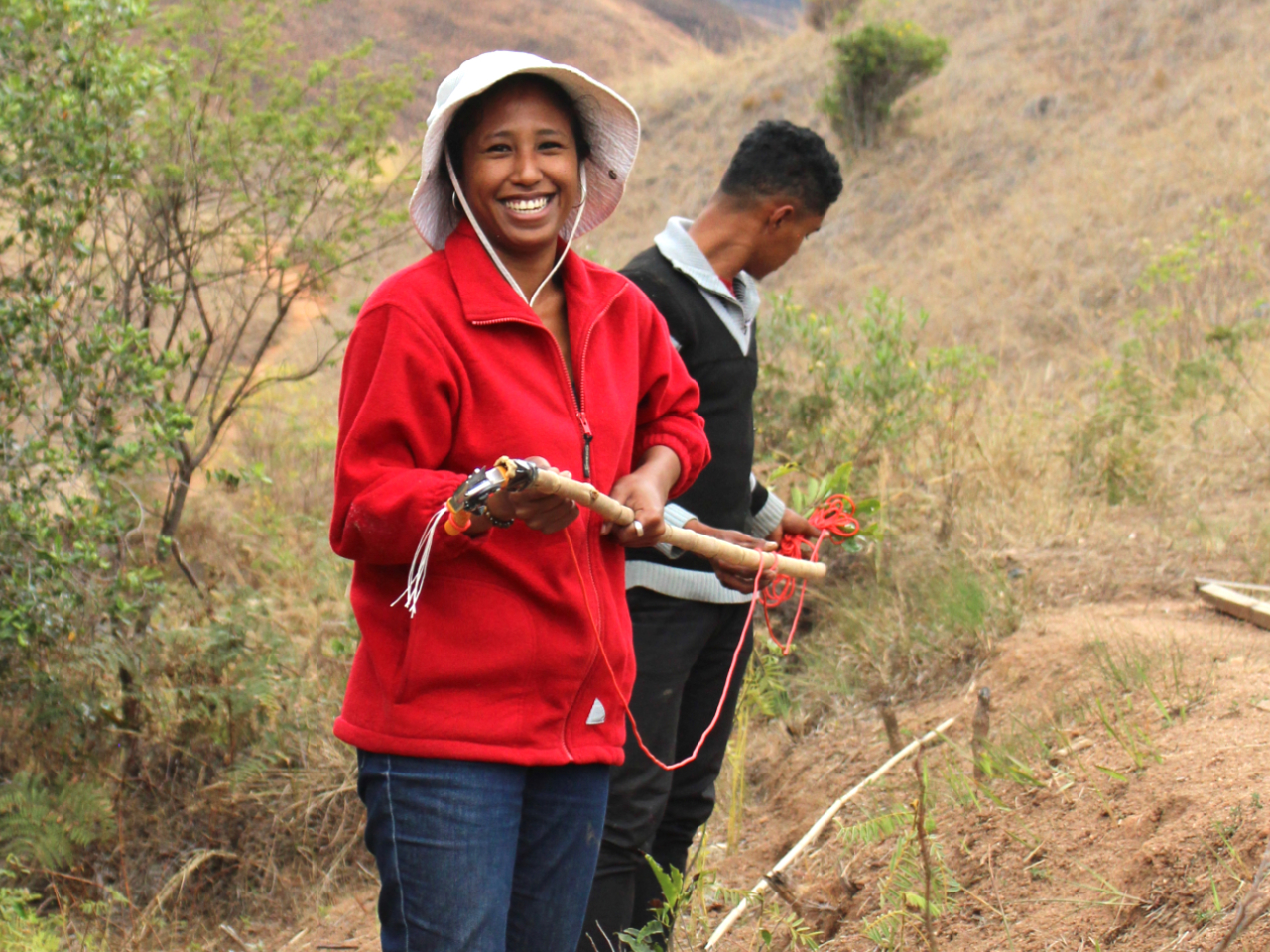
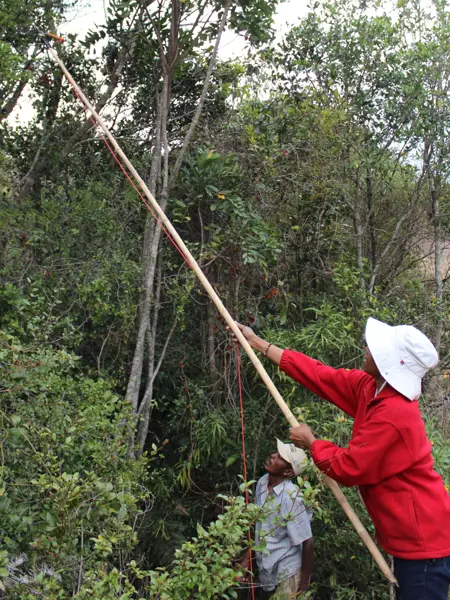
The researchers also collected samples from 260 tree species, which, together with the extensive interviews, enabled them to identify clear patterns. The study shows, for example, that many people are not picky when it comes to the wood they collect for fuel. Even though dense wood is best because it burns for a long time, they simply choose the wood that is easiest to obtain. Availability is particularly important for women. In the interviews, women said they had to collect wood for fuel and tools while also taking care of their children.
Men are usually responsible for construction. According to the study, dense wood is preferred for load-bearing structures, while tall trees are chosen for wall and roof materials.
Dense, durable wood is also used for tools such as spades and mortars. The mortars are not the small type that many people have in their kitchens in Sweden, but massive stumps. They are used to husk rice or grind peanuts into butter. Mortars are preferably made from trees with thick trunks.
The study also shows that cultural factors play a major role, sometimes outweighing the importance of optimal material properties.
– For example, ebony is used specifically for coffin lids in Madagascar. In some areas, it is even taboo to use it for other things, even though ebony is a hard and useful type of wood, says Sheila Holmes.
Knowledge can reduce pressure on forests
Authorities and non-profit organisations are trying to meet the urgent need for wood products by planting trees and creating fast-growing plantations in Madagascar. The new study contributes important knowledge to this work.
– Planting trees close to homes can help women balance work and childcare. In some communities, alternatives to wood are used, such as stones as mortars. This can also reduce pressure on forests, says Sheila Holmes.
The diversity of animal species in Madagascar also benefits the trees that the local population needs. According to the study, many tree seeds are spread by animals such as lemurs and birds.
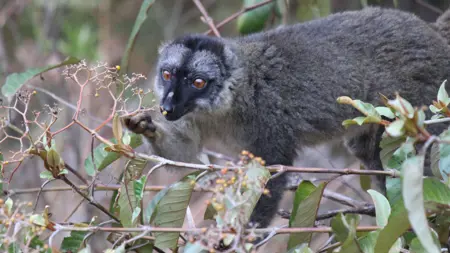
– The importance of preserving biodiversity and understanding its complexity is well known. We must also value the diverse traditional knowledge that local people have about their environment. People see trees in different ways, and each tree is not the same to them. We can help them by making their favourite trees available, for example by replanting a variety of species, says Minoseheno Rakotovao.
About the study
38 focus groups and 614 households were interviewed at five study sites in communities in Madagascar's eastern rainforest. Samples from 260 tree species were collected.
The study is part of the larger Rewilding Madagascar research programme led by Sheila Holmes, Department of Wildlife, Fish, and Environmental Studies at SLU in Umeå. The research is funded by the Swedish Research Council's Development Research programme.
Scientific article
Communities with diverse subsistence needs require a variety of functional tree traits.
Minoseheno Rakotovao, Cortni Borgerson, Kerry A. Brown, Joris P. G. M. Cromsigt, Steig E. Johnson, Onja H. Razafindratsima, Ruth Mendum, Onjaniaina O. Andrianjatovo, Harisoa B. Ravaomanalina, Seheno Andriantsaralaza, Sheila M. Holmes. https://doi.org/10.1111/csp2.70209
Madagascar – a biological hotspot with social challenges
The majority of Madagascar's approximately 32 million inhabitants live in poverty. Around 75 per cent are farmers, heavily dependent on the forests for their daily livelihood. Between 1953 and 2014, over 40 per cent of the total forest area disappeared, and it continues to slowly decline.
The forests of Madagascar have an exceptional diversity of unique species. 82 per cent of vascular plants and 95 per cent of mammals are endemic, meaning they are found nowhere else in the world.
Contact
-
PersonSheila Holmes, ResearcherDepartment of Wildlife, Fish and Environmental Studies
-
Minoseheno Rakotovao, Doctoral student, University of Antananarivo.
-
PersonFrida Wengberg, Communications Officer