
Africa’s Youth take on responsibility for the Continent’s Forests
Africa’s young population plays an increasingly important role in sustainably managing the continent’s forests. New initiatives and workshops in Kenya and Cameroon, show how local knowledge, digital tools and entrepreneurship contributes to a sustainable forestry and green economy.
Deforestation, land‑use change and climate change continue to put significant pressure on Africa’s forests. These ecosystems are important for biodiversity, climate adaptation and the livelihoods of millions of people. At the same time, Africa is a young continent—home to one‑fifth of the global population aged 20–29, compared to Europe’s seven percent. The responsibility to manage the forests falls on the young and can be in different forms, as policy-makers, entrepreneurs or environmental activists.
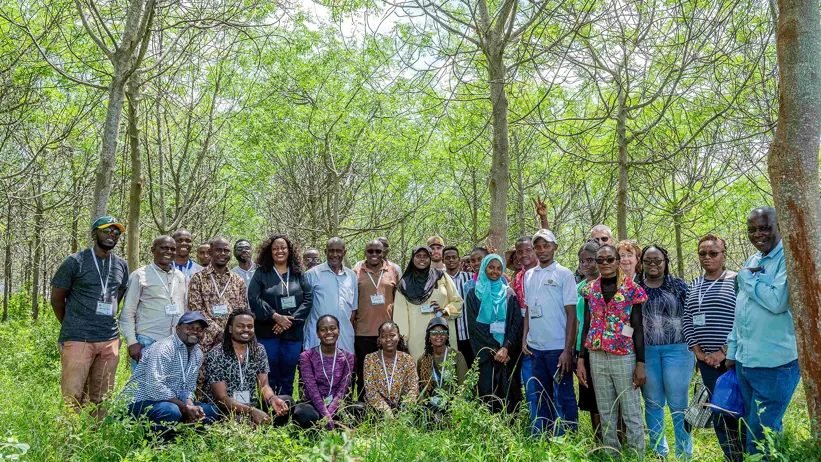
To strengthen their capacity to find solutions, African Forest Forum, the Kenya Forestry Research Institute and the Swedish University of Agricultural Sciences launched workshops in 2025 in Kenya and Cameroon. The workshops brought together young people, researchers and policymakers to co‑create solutions that combine traditional ecological knowledge with the young participants creativity.
The workshops was a three‑step process—situation mapping, brainstorming and concrete action planning.
As part of the work, the participants developed local projects in their home communities. In Kenya, initiatives included mangrove restoration, wetland stabilization and agroforestry projects. In Cameroon, young participants focused on digital tools for green entrepreneurship, including coffee‑based agroforestry and honey production.
— These workshops clearly demonstrate that Africa’s youth have the capacity and creativity to drive an inclusive green economy rooted in sustainable forest management,” says Professor Anders Roos.
The results from the workshops show that combining local ecological knowledge with scientific research and digital tools meant that the participants could develop solutions that are locally grounded, globally relevant and sustainable. These solutions encompassed forest restoration, agroforestry, entrepreneurship based on non‑timber forest products, and green financing models.
About the study
Wekesa, C., Roos, A., Gitonga, D., Popoola, L., Mutta, D., Avana- Tientcheu, M.-L., Massaoudou, M., Mark-Herbert, C., Babalola, F. D., Mbile, P., Agendia, N. & Omondi, R. 2025. Africanyouth4forests – from science to youth action for sustainable forests. Development in Practice, 1-9
Agroforestry – combining trees with crops
Contact
-
PersonAnders Roos, Professor