
Archived tree cores reveal why boreal forests are getting starved for nitrogen
Despite decades of industrial deposition, nitrogen availability in the boreal forest is steadily declining. In a new study published in Nature, researchers from the Swedish University of Agricultural Sciences have found that atmospheric CO₂ is the main driver - using decades of unique, stored data.
Studies from North America and global meta-analyses have in recent years shown declining nitrogen stable isotope values in tree rings, which serve as an indicator that nitrogen availability is decreasing over time.
Why this happens is the key question. Two alternative theories have been proposed, either falling atmospheric N deposition rates since the 1990s, or rising CO₂ levels in the atmosphere. And that is what a new study from SLU by lead author Kelley Bassett, PhD student at the Department of Forest Ecology and Management, has been able to answer, using 60 years' worth of archived tree cores. The unique material works like a time machine, where the nitrogen isotope values of spruce and pine can be traced back decade by decade.
– This is a different way of constructing chronologies. Instead of following one tree back in time, we can pick out trees of the same age through time, which avoids many of the problems with internal nitrogen movement in trees, says Kelley Bassett.
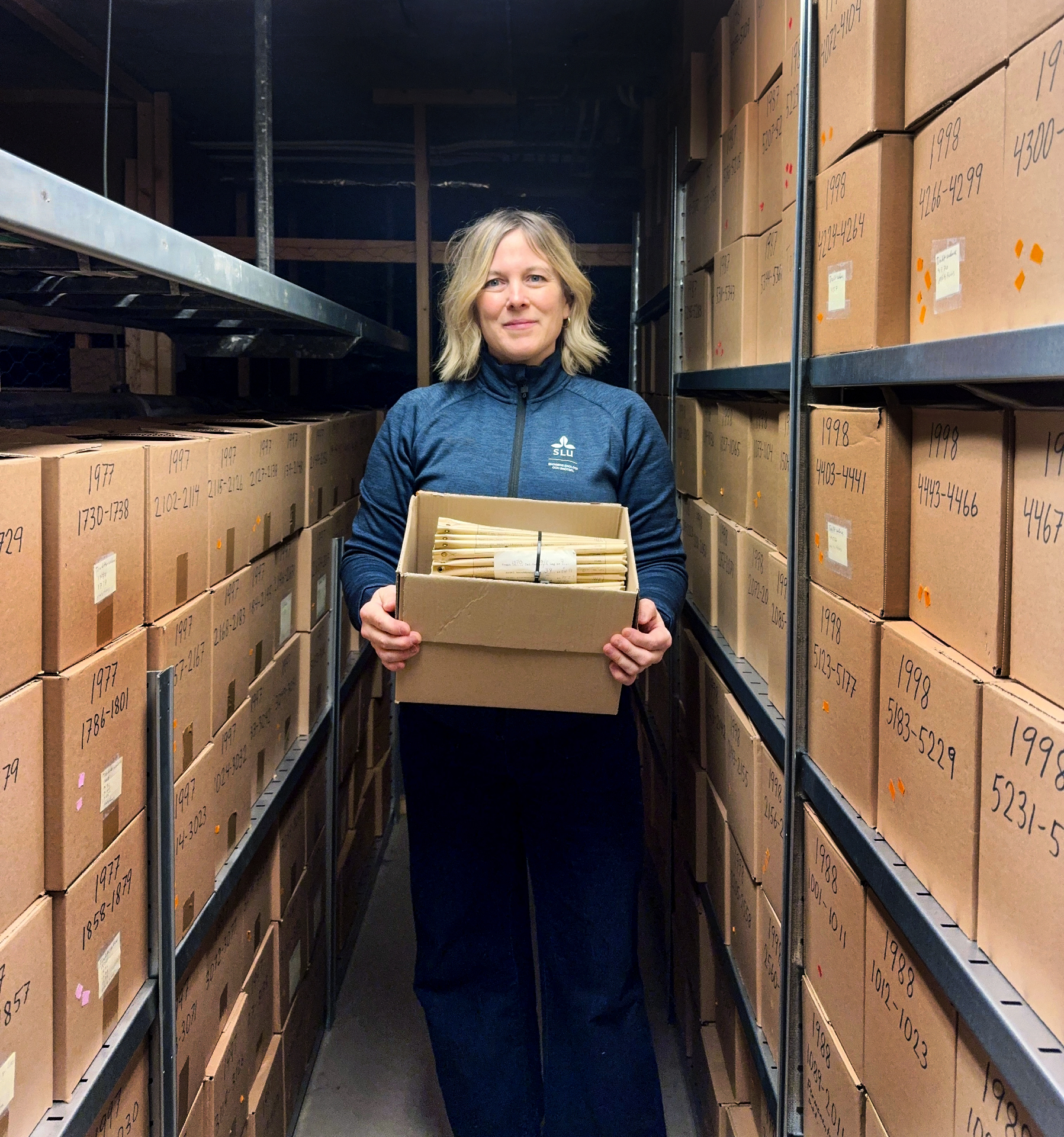
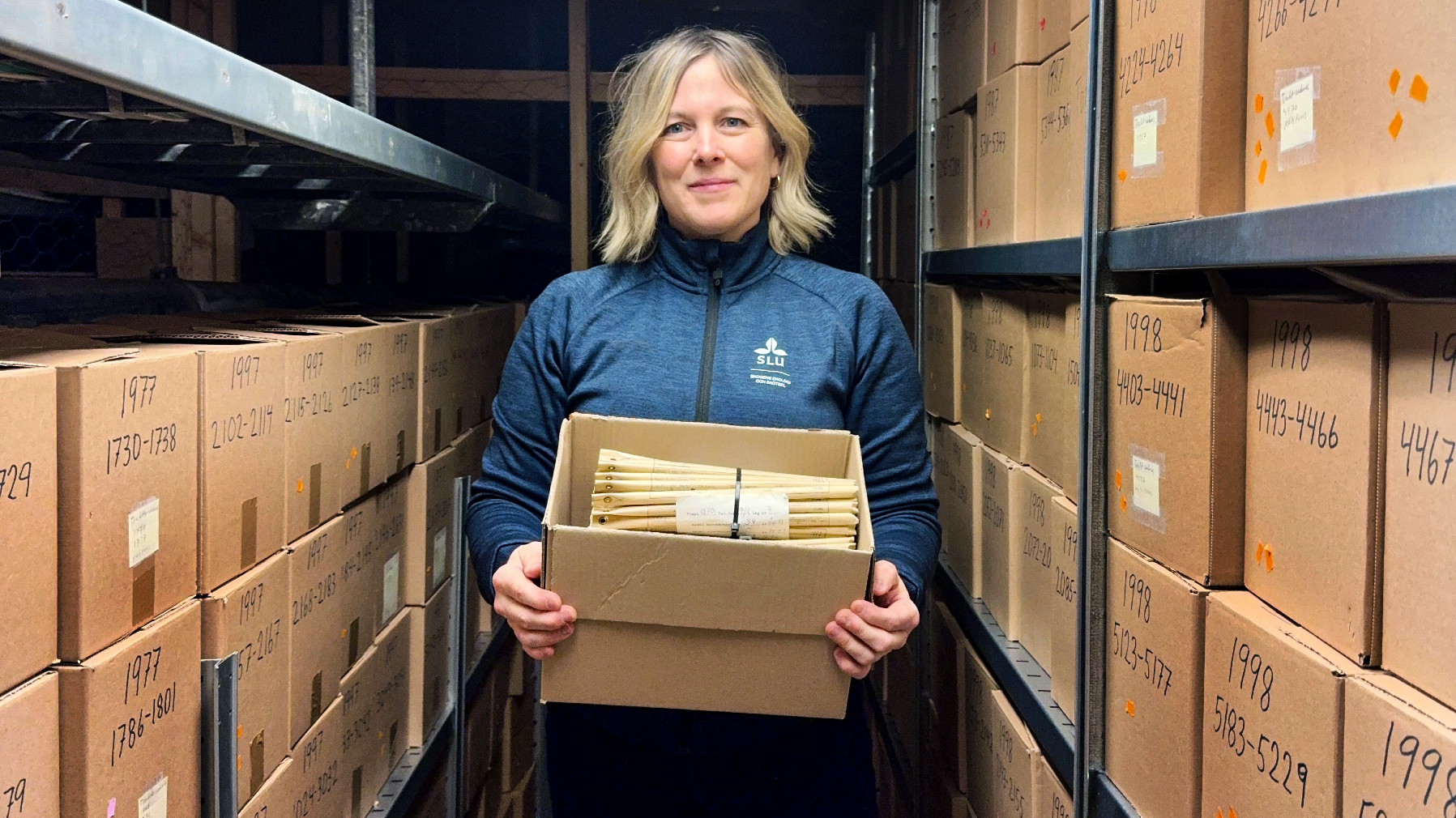
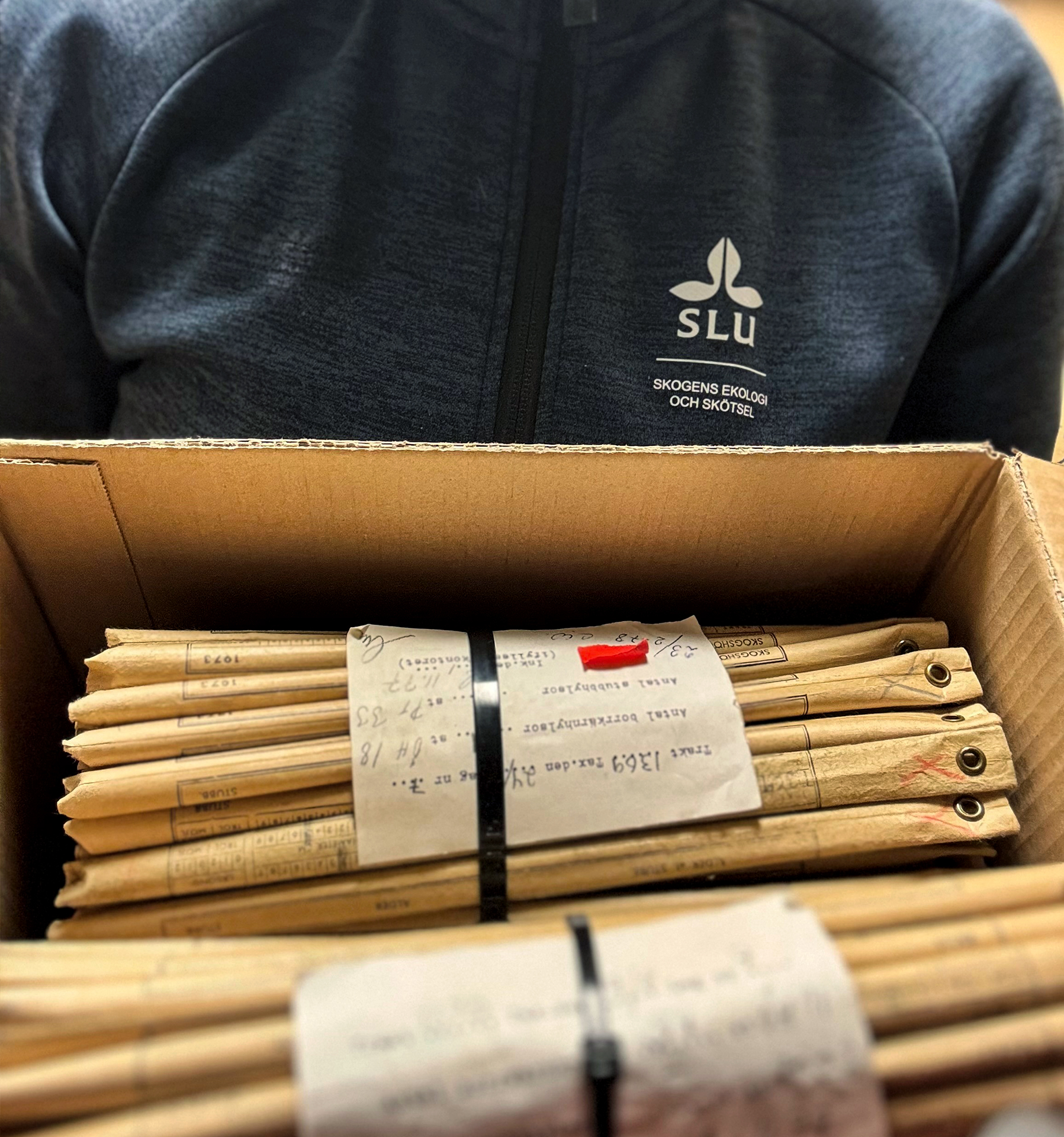
For a century, field-crews of the National Forest Inventory (NFI) have visited thousands of sample plots all over Sweden, extracting pencil-thin wood cores from trees across Sweden to determine forest age and diameter growth for official national statistics of Swedish forests. The core-samples are then stored in an archive, eventually amounting to more than a million tree cores. The samples could have been discarded decades ago, but have remained tucked away in the basement.

– It’s amazing in a way. The wise decision by colleagues, more than 60 years ago, to save these samples has made new and completely different kinds of research possible, says Jonas Fridman of the Department of Forest Resource Management and former head of the NFI. He and his colleagues had a major role to play in the study, in reorganizing the huge archive to make it available for study.
– It was like finding a USB-stick with a huge novel stored on it, says Professor Michael Gundale at the Department of Forest Ecology and Management, who first proposed to measure isotopes in the archived samples a few years back.
– I thought there must be some untapped information stored in the archive, and that new types of analysis could reveal a story that was hidden in there, Gundale says.
A nationwide natural experiment
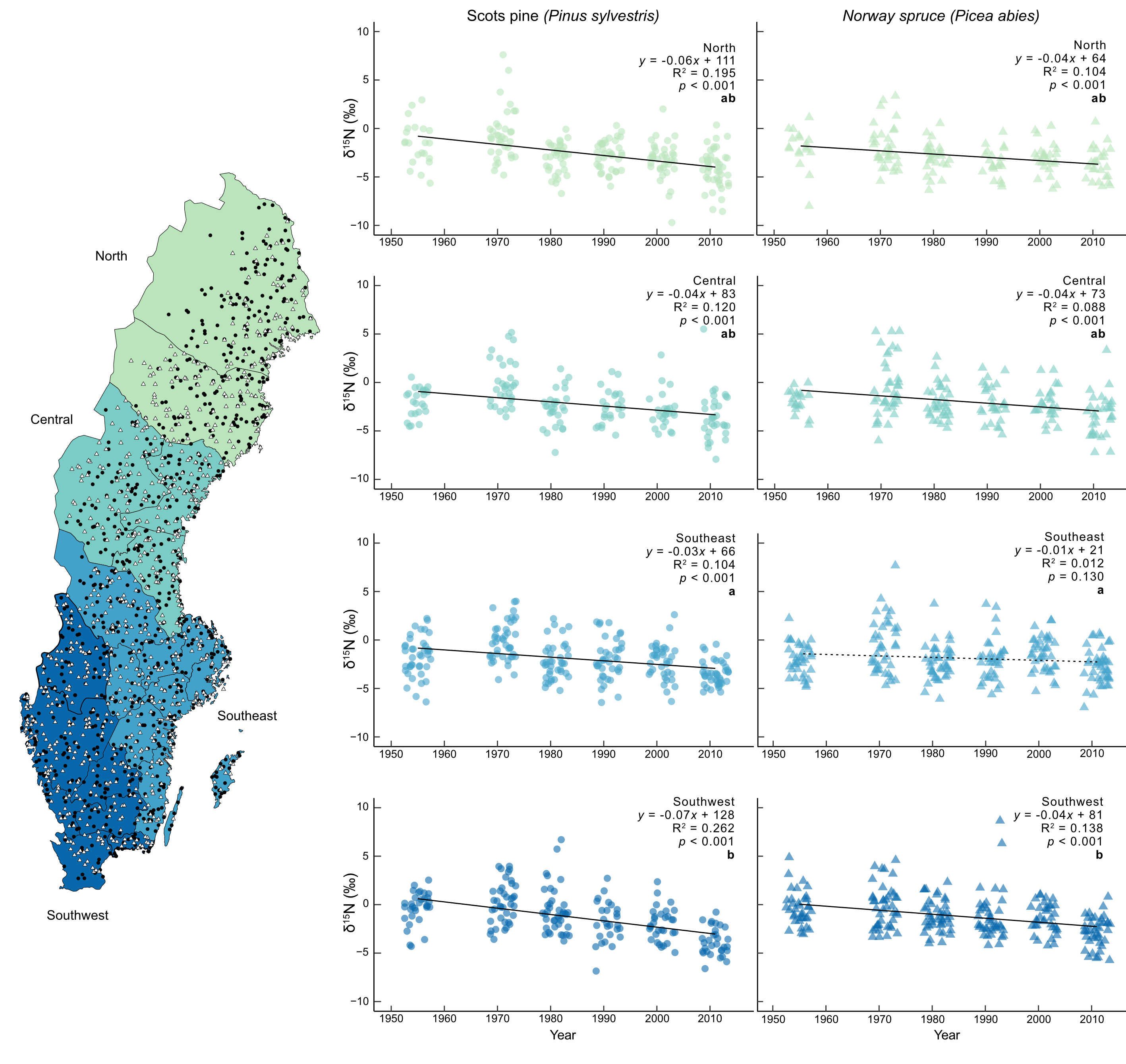
By using 1,609 of these tree cores collected between 1961 and 2018 the research group was able to construct a unique timeline of nitrogen availability across Sweden. The comprehensive archive made it possible to acquire wood from trees of the same age and forest type from different regions and decades, from which the team analysed the isotopes.
To test competing theories, Sweden’s geography provided a perfect natural experiment; nitrogen deposition has varied as much as fourfold across the country from north to south, while rising atmospheric CO₂ levels are relatively uniform.
– We constructed models that took into account atmospheric CO₂, nitrogen deposition, temperature, and forest density. We wanted to see what could actually explain the decline in nitrogen isotopes we are observing” says Kelley Bassett.
The results were clear. Regardless of nitrogen deposition levels, the nitrogen isotope values in tree rings have been declining across all Swedish regions for both pine and spruce. And rising CO₂, rather than atmospheric N deposition, explained the observed patterns.
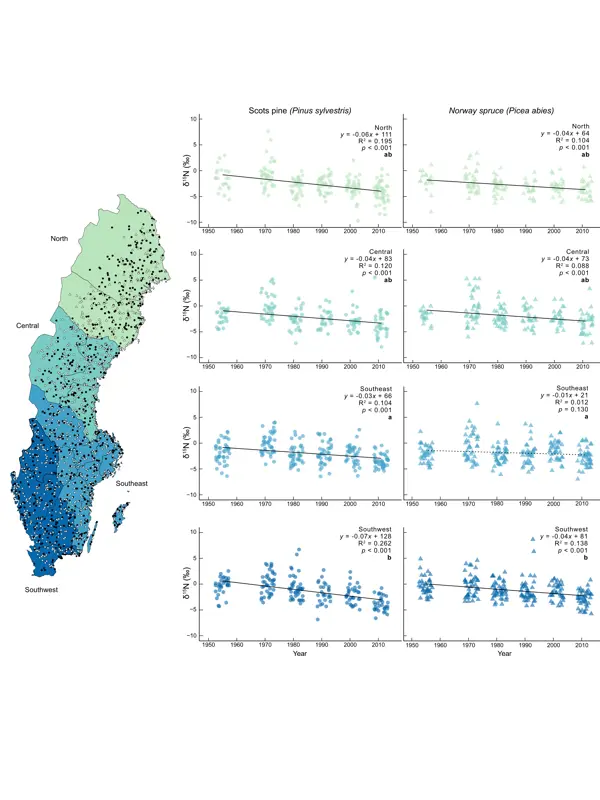
– When we removed variables from the model, the difference with or without atmospheric CO₂ made it extremely clear. The other factors could not explain much of what was happening with the nitrogen isotope values, says Kelley Bassett.
Major implications for climate models
The findings suggest that rising CO₂ levels are reducing nitrogen availability in boreal forests, which has important implications for climate projections. Many Earth system models already include nitrogen constraints on forest growth, but the new study provides one of the most comprehensive empirical datasets showing how widespread and persistent this limitation may be.
– The implications are concerning, says Michael Gundale. Terrestrial ecosystems currently absorb about a third of global carbon emissions. And while it remains unclear if declining nitrogen availability is currently enough to affect tree growth, this could eventually result in a weakening carbon sink that does not keep pace with rising atmospheric CO₂, ultimately leading to climate change progressing faster than we currently anticipate.
For our current Earth System models, this is evidence that declining nutrient availability as a result of rising CO₂ is not only theoretical, but already underway in boreal forests says Michael Gundale.
– There’s been a long-standing idea that more CO₂ means more growth. But nutrients are absolutely required as well, says Kelley Bassett.
Read the popular science summary (Nature).
Authors from the Swedish University of Agricultural Sciences:
Kelley Bassett, department of Forest Ecology and Management
Jonas Fridman, department of Forest Resource Management
Michael Gundale, department of Forest Ecology and Management
Sandra Jämtgård, department of Forest Ecology and Management
Stefan Hupperts, department of Forest Ecology and Management
Lars Östlund, department of Forest Ecology and Management
Images
Images are free to publish in the context of the press release. Photographers' name must be included.
Kelley Bassett tree core archive portrait. Photo: Kelley Bassett/SLU.
Kelley Bassett tree core archive landscape photo. Photo: Kelley Bassett/SLU.
Tree cores in a box, closeup. Photo: Photo: Kelley Bassett/SLU.
Research results graphic. Image: Kelley Bassett et al, Nature.
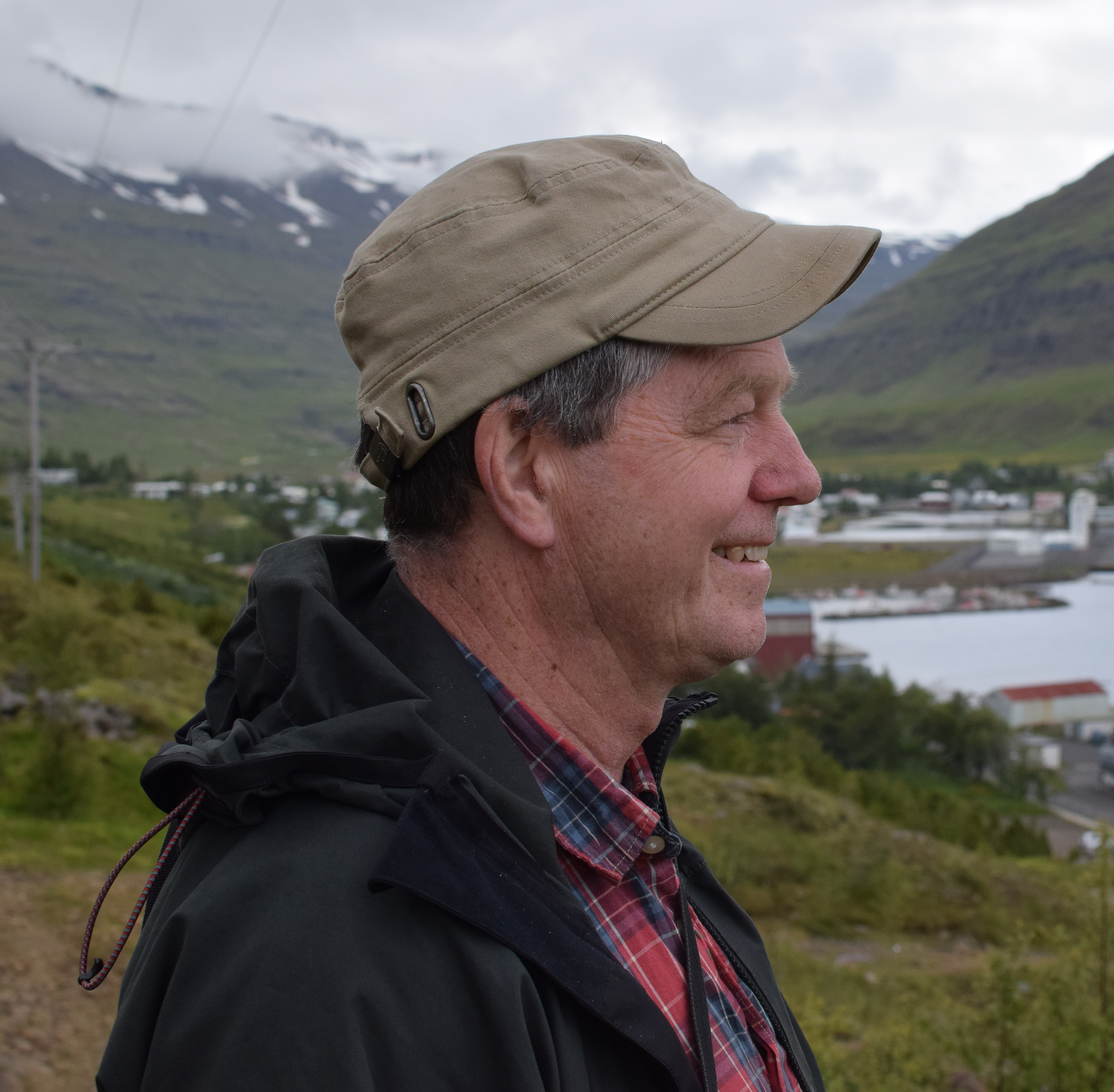
Jonas Fridman, SLU portrait. Photo: Andreas Palmén.

Michael Gundale, SLU portrait. Photo: Andreas Palmén.

Lars Östlund, SLU portrait. Photo: Gerd Audrell.
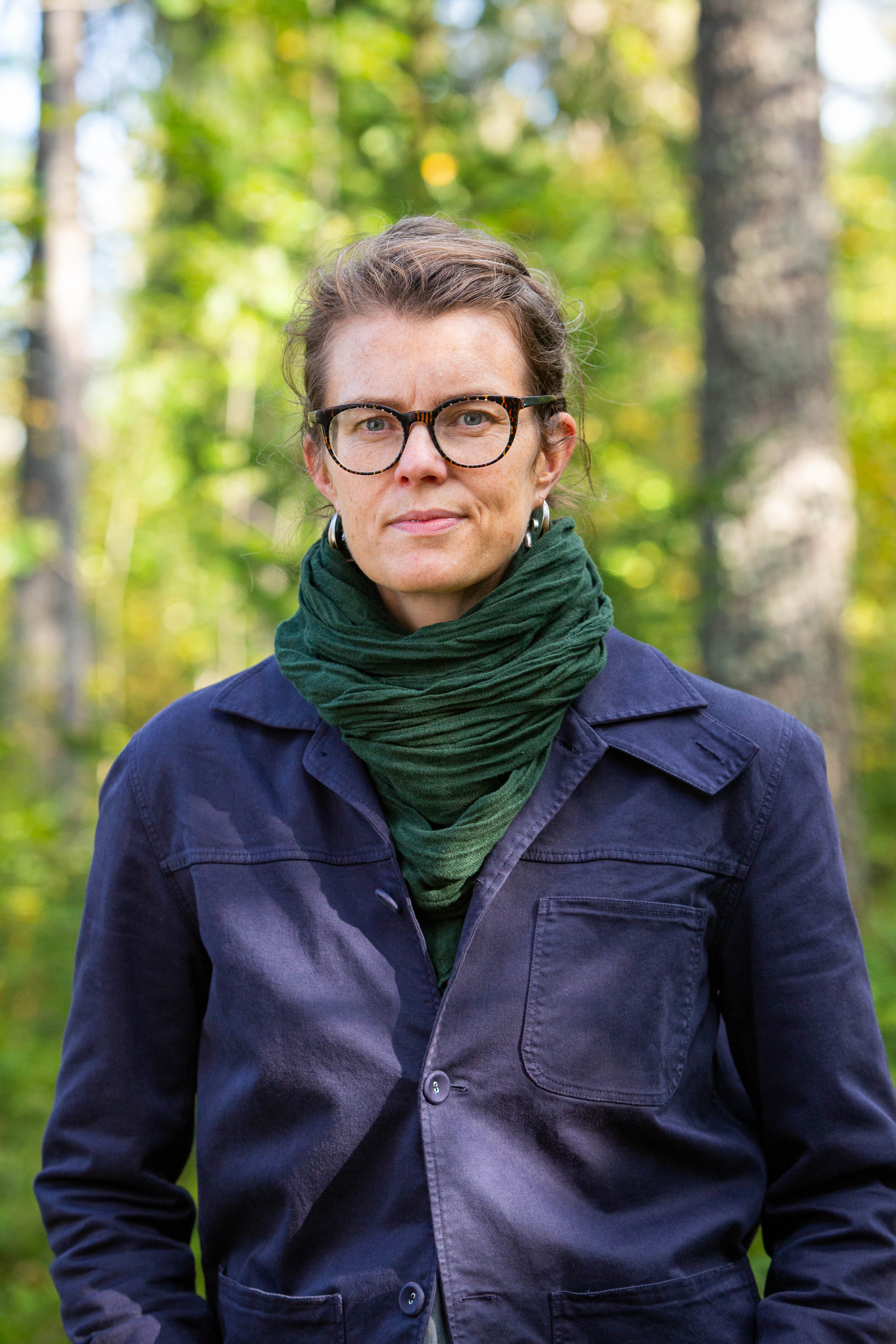
Sandra Jämtgård, SLU portrait. Photo: Andreas Palmén.
Stefan Hupperts, SLU portrait. Photo: Stefan Hupperts.

Contact:
Kelley Bassett, lead author
Department of Forest Ecology and Management
kelley.bassett@slu.se +4690 786 84 44 +4673 087 35 15
Michael Gundale, Professor, co-author
Department of Forest Ecology and Management
michael.gundale@slu.se +4690 786 84 27 +4670 618 69 46
Daniel Stjärna, Communications Officer
Department of Forest Ecology and Management
daniel.stjarna@slu.se +4679 097 64 00