
Smart farming scares pests away – and lures them aside
Smallholder farmers in Africa struggle with weeds, insect pests and low soil fertility. The push-pull system, where crops are grown alongside other plants that scare away or attract pests, is one way of dealing with these problems. The method works – but not everywhere and not in the same way.
Push–pull is an agroecological farming system developed for small-scale farmers in sub-Saharan Africa. By growing different crops together, the system can reduce damage from both weeds and insect pests. These include the parasitic weed Striga, as well as insect pests such as stem borers and the fall armyworm.
“I have seen that the method works, but how well it works depends on the context. It needs to be adapted to different soils, landscapes and farming practices,” says Grace Mercy Amboka.
Push–pull harnesses ecological interactions to reduce crop pest damage and improve soil fertility, instead of – or alongside – fertilisers and chemical pesticides.
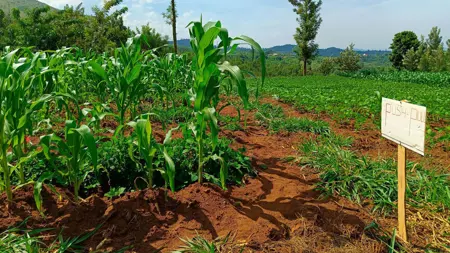
The main crop, usually maize or sorghum, is intercropped with a legume from the genus Desmodium. This plant provides the repellent element of the system – the so-called push component.
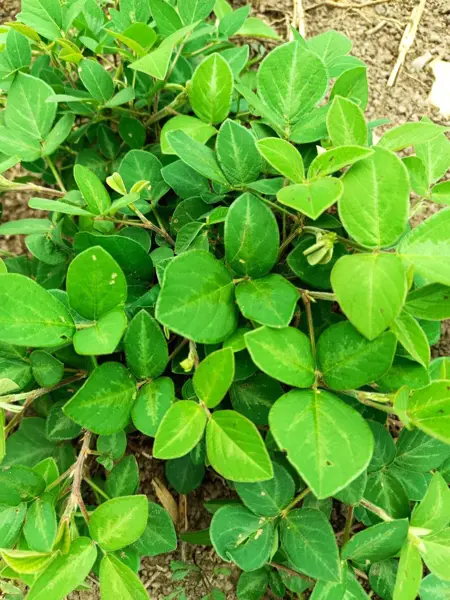
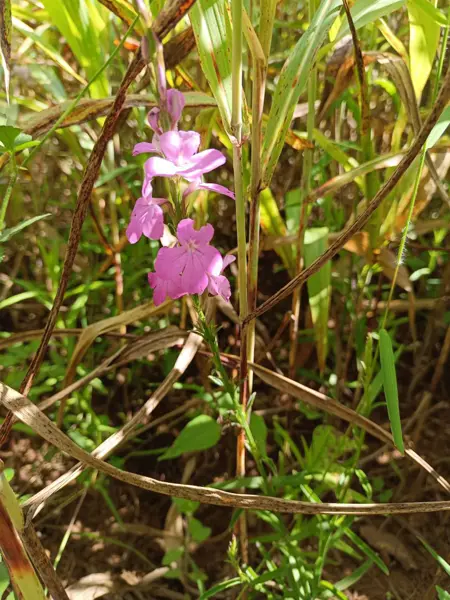
Desmodium has several tricks up its sleeve. It releases volatile compounds that make maize and sorghum less attractive to pests such as stem borers and fall armyworm. It also produces chemicals that interfere with the pest larval development and can even kill the larvae. In addition, Desmodium roots release chemicals that trigger so-called suicidal germination in the parasitic weed Striga. Striga cannot survive without a host plant, and by inducing it to germinate too early, the seed bank in the soil is gradually reduced. At the same time, Desmodium affects soil properties.
The attractive component of the system – the pull component – consists of grasses, either Napier grass or Brachiaria grass, planted around the field that are more appealing to some pests than the crop itself. These grasses can also be used as fodder for livestock.
In some contexts, this way of farming can also increase the abundance and richness of natural enemies – insects that prey on crop pests.
Together with colleagues, Grace Mercy Amboka carried out fieldwork in Uganda, Ethiopia, Kenya and Rwanda. In total, 128 smallholder fields were included in the study, both with and without push–pull.
In her doctoral thesis, she observed a clear reduction in insect pest damage in Uganda and Ethiopia, but not in Kenya and Rwanda. For the parasitic weed Striga, the method worked well in Uganda and in nutrient-poor soils in Rwanda. In Kenya and Ethiopia, the effects were weaker, with similar Striga seed density in both push-pull and non-push-pull fields in Kenya and generally lower Striga pressure in Ethiopia.
As for natural enemies, push–pull increased their numbers in forest-rich areas of Kenya. In Rwanda and Uganda, however, natural enemy populations were influenced mainly by season rather than whether fields were managed with push–pull or not. Altogether, tens of thousands of natural enemies were recorded across the four countries – predominantly ants, but also [MJ1] spiders and crickets.
“I have really appreciated working closely with farmers. They also posess a great deal of traditional knowledge about how to reduce crop pest damage,” says Grace Mercy Amboka.
Today, the use of push–pull remains relatively limited. Although it is widely promoted in East Africa, the high cost of seeds and limited access to agricultural advisory services constrain adoption, while delayed or less visible benefits further discourage farmers from investing in the system.
“In areas where I have seen that it works, I would encourage smallholders to explore this option. Where it works less well, it may be better to develop other intercropping solutions, for example, with soybeans or common beans.”
Grace Mercy Amboka is part of a large research network linking Sweden and several European and African countries.
“I hope this collaboration continues. Especially in the face of climate change, it is vital to find solutions that are based on ecology and support more sustainable farming systems.”
She also calls for a global perspective. While farmers are encouraged to adopt sustainable practices such as push-pull, highly toxic pesticides and herbicides that are banned within the EU are still used in parts of Africa.
“It should be illegal for EU countries to export these substances. If they are too dangerous to be used in Europe, they are too dangerous for farmers in Africa as well,” says Grace Mercy Amboka.
Read the thesis:
Push-pull cropping and ecosystem functioning in sub-Saharan African smallholder systems
Contact
-
Person
-
PersonAnna Lundmark, Kommunikatör, SciFest-ansvarigDepartment of Ecology , joint staff/department office