
The memory of past land use is visible in the soil
Traces of historical land use remain visible in the soil for decades, according to a recently published study. Grasslands that were previously farmland contain different microbes than those without such a history, preserving memories of a bygone era.
We use soils for a range of purposes: to grow crops or trees, provide foundations for built environments, or make grazing grounds for animals. But how does the way we use the soils shape the myriads of microbes living belowground, and how long do these influences last?
“We saw that the past influenced soil life. The memory of previous land use was best preserved in the diversity and composition of microbial plant pathogens,” says Tord Ranheim Sveen, researcher at the Department of Ecology, and lead author of the study.

It is well known that specialized grassland plants can be found in heavily afforested areas far outside their typical niche range, if the forests were previously managed as grasslands. These plants are sometimes referred to as “ghost populations” because they are likely to disappear from the sites in the future.
But are there any similar ghost populations in the in the world of microbes under our feet?
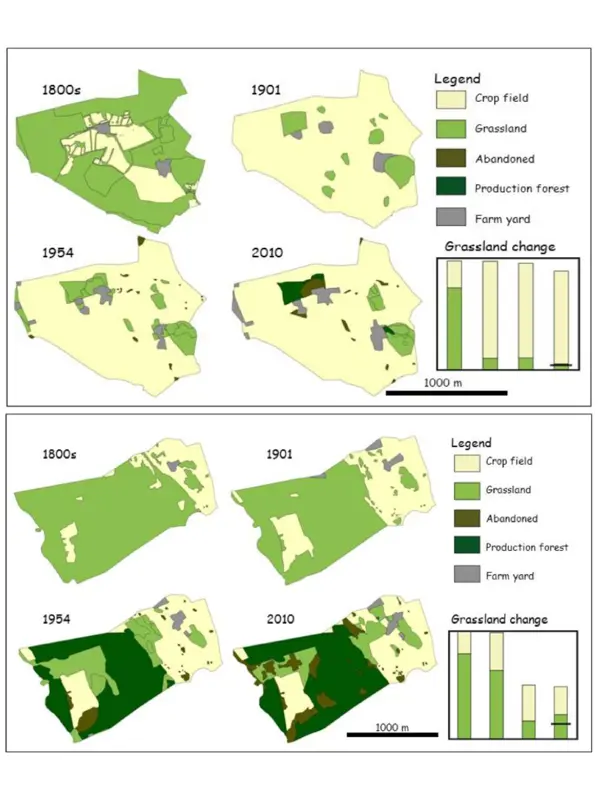
This is what Tord Ranheim Sveen and his colleagues set out to examine. To their help, they had DNA-based sequencing methods revealing the identity of the thousands of microbial species dwelling in soils, and historical cadastral maps showing how land use shifted in two regions in Sörmland and Västra Götaland across three centuries.
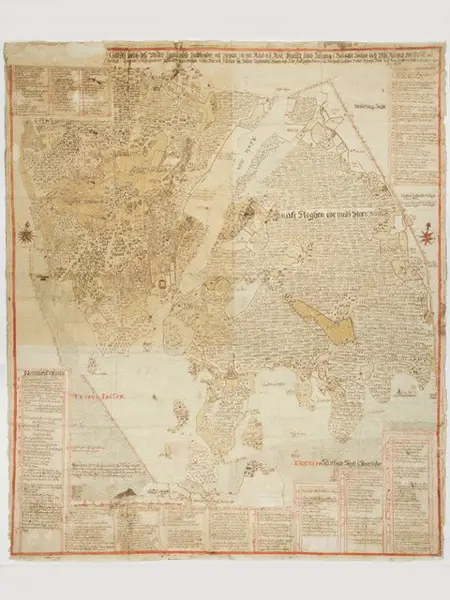
What they found was that in grasslands which had been used as arable fields until around 60 years ago, fungal plant pathogens were more diverse and distinct compared to comparable sites but with no arable history. Some of these pathogenic fungi were also closely associated with cereal crops, showing that the connection between plants and soil microbes is not lost even if the plants disappeared decades ago.
“What is fascinating is that legacies of historical land use appear to be lingering within specific groups of microbes, like specialized plant pathogens. The natural follow-up question is whether these pathogens continue to influence the ecosystems today, for instance by suppressing certain related plant species and therefore indirectly benefitting others,” says Tord Ranheim Sveen.
Another intriguing question is whether the lingering pathogens would affect crops if grasslands were re-converted into cropping fields and planted with cereals again.
“This could become very relevant in a scenario where local food security needs to be rapidly increased. That is something we would like to investigate more.”
Linking the effects of historical climate or land use on present-day ecosystems is challenging because it requires unaffected control sites to compare against. Historical land-use maps provide an important piece of the puzzle, as information on both sites which have common and differing histories of land uses can be found and compared against each other. While this does not replace the need for time-series, where the same site is measured repeatedly across time, they can provide a shortcut to study anthropogenic impacts on ecosystems over long timespans.
“This reveals how the past continues to shape the present in all ecosystems” says Tord Ranheim Sveen. “However, we also observed that if the land-use change to grasslands occurred longer ago - 100 years or more – the historical signal was gradually lost, and we could no longer tell the communities apart from grasslands with no history of arable land use”.
If memories of past land use are visible in soils, it appears that also these memories are gradually lost. After a while.
The scientific article
Tord Ranheim Sveen, Ida Junker Madsen, Eva Gustavsson, Sara Cousins, Franz Buegger, Karin Pritsch, Laura Riggi, Jan Bengtsson, Maria Viketoft, Mo Bahram. Soil-borne pathogens reflect agricultural land-use legacies. Ecology Letters.