A cause of persistent taste loss after Covid-19 has been discovered
Some people have experienced a loss of taste long after a COVID-19 infection has subsided. Researchers from SLU, Uppsala University and the University of Colorado have shown that this may be due to a disruption in taste cells that would otherwise give rise to experiences of sweet, bitter or umami.
Of the five human senses, taste is probably the most underrated, perhaps because it is rarely fails us? Yet the sense of taste is vital. If something doesn’t taste good, we won’t eat it. In fact, long-term loss of taste leads to weight loss and poor health.
Since ancient times, the taste of most food items has been divided into the four qualities salt, sour, sweet, and bitter, with a fifth being added at the turn of the century, that of umami – often described as the taste of Japanese Miso soup. Research has confirmed that there are different types of taste cells in the tongue’s taste buds that respond to these five basic taste qualities.
SARS-CoV-2, the coronavirus that causes Covid-19, can in some cases knock out one or more of the basic taste qualities, or even all five. In most Covid patients, this loss is acute and short-lived, Still, it is not uncommon that after a Covid-19 infection has ended, taste disturbances persist.
In this study, a biological cause has been discovered in the taste cells by a group of researchers from the Swedish University of Agricultural Sciences (SLU), Uppsala University and institutions in the USA. The study was led by Göran Hellekant, who has explored the sense of taste in mammals for decades and is active at SLU and the University of Wisconsin Madison USA. The researchers have investigated how the virus infection affects the ability by the taste cells to transmit signals to their taste nerves and how the taste loss to sweet, bitter and umami can be explained.
Clear individual differences
“We recruited 28 people who had tested positive for SARS-CoV-2 without requiring hospitalization and who reported taste disturbances for more than 12 months. All of them could therefore be classified as suffering of post-covid complications,” said Göran Laurell, from Uppsala University, who was responsible for the recruitment of participants.
To objectively determine which taste quality that is affected and to get a numerical value of the extent of taste loss for each taste quality, the researchers used a commercial taste test kit (WETT). This kit confirmed that all participants, except one, had some form of taste disturbance.
Mainly affects taste cells that respond to sweet, bitter or umami
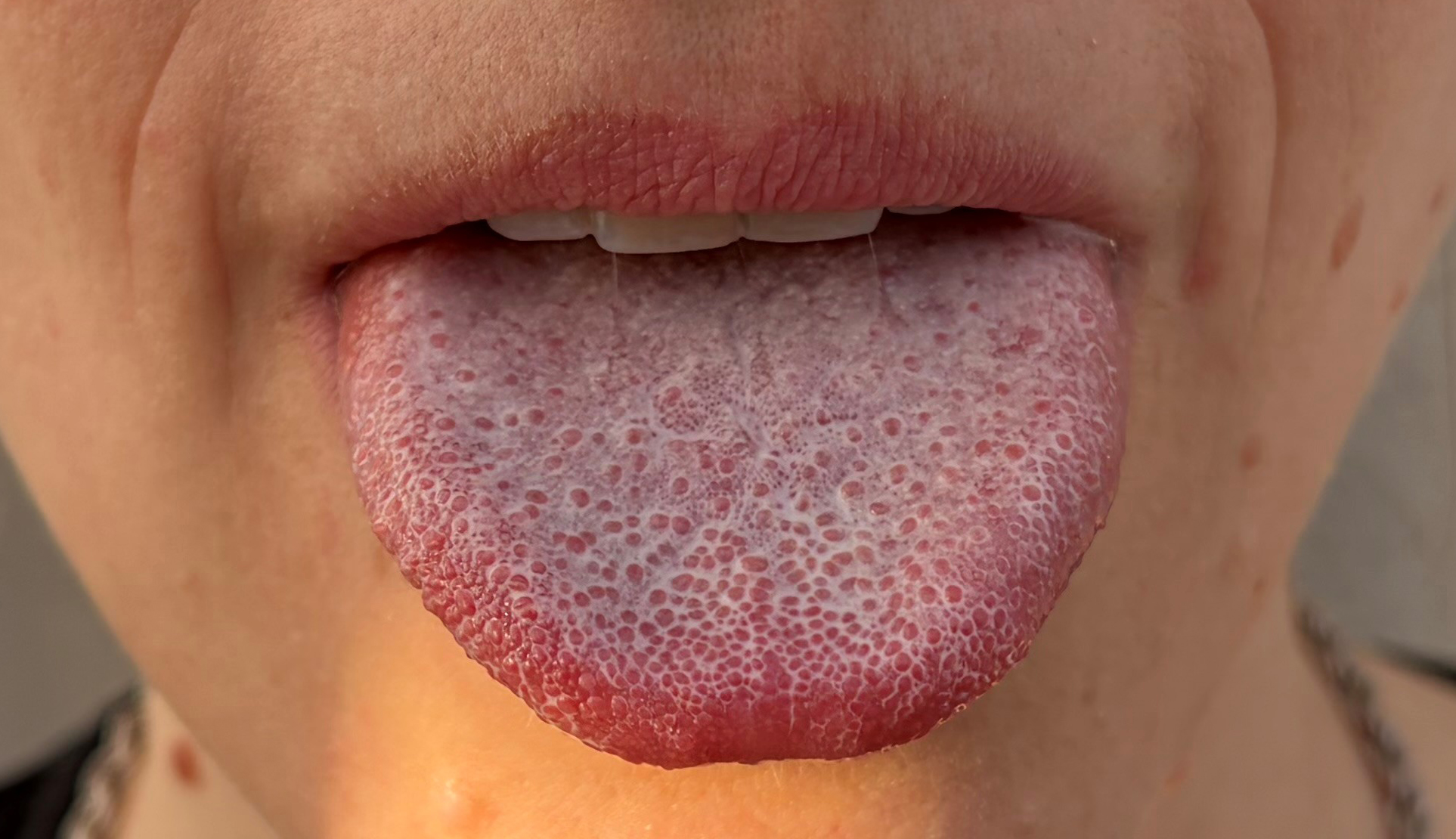
The next step was to examine the tongue's taste buds in detail. Twenty of the participating subjects volunteered and allowed the researchers to take tissue samples (biopsies of 5–8 fungiform papillae) from the tip of the tongue. The fungiform papillae can be seen as small ‘dots’ on the tip of the tongue and along the sides of the tongue.
“When the papillae were examined microscopically, there was little damage to the overall structure or to the nerve connections of the taste buds,” says Tom Finger of the University of Colorado, who performed the histological examination. “Both the papillae and nerves are largely normal in appearance.”
However, molecular genetic analyses of the different types of taste cells showed how the sense of taste was affected. The biological abnormality was linked to the tastes of sweet, bitter and umami – precisely the tastes that the WETT taste test showed to be affected in the subjects. This study is the first to establish the connection between people's own taste experiences, the objective test result and the biological cause.
“We were able to link reduced ability to taste sweet, bitter and umami to low levels of mRNA encoding a protein called PLCβ2 in specific taste cells,” says SLU researcher Göran Andersson, who was responsible for the molecular genetic analysis. “PLCβ2 is needed to amplify the signal from these taste cells to the taste nerves, which then carry the information in the form of electrical impulses to the taste centers of the brain where the tastes sweet, bitter and umami arise. The impulses are created by short-term influxes of sodium into the nerves and potassium out of the nerve fibers.”
To summarize, the long-term loss of ability to taste sweet, bitter and umami flavours after Covid-19 can be due to changes in specific cells in the taste buds. These cells are the ones that normally initiate the nerve impulses to specific areas of the brain that then give rise to the taste sensations sweet, bitter and umami.
Contact persons
Göran Hellekant, Professor
Department of Animal Biosciences; Molecular Genetics and Bioinformatics, SLU
E-mail: goran.hellekant@slu.se; ghellekant@gmail.com
Phone: +46 702791950
Göran Andersson, Professor
Department of Animal Biosciences; Molecular Genetics and Bioinformatics, SLU
E-mail: goran.andersson@slu.se
Phone: +46 18 67 20 56, +46 703 80 89 19
Scientific Article in Chemical Senses
Hanna Morad, Tytti Vanhala, Marta A. Kisiel, Agnes Andreason, Mei Li, Göran Andersson, Göran Laurell, Thomas E. Finger, Göran Hellekant. 2026. Taste dysfunction in Long COVID. https://doi.org/10.1093/chemse/bjaf068
Press image
(May be freely published in connection with articles about this news. Click for high-resolution image. Photographer must be cited.)
Photo of a human tongue with a large number of fungiform papillae – the red dots visible on the tongue. To make these papillae more visible, cream has been applied to the tongue. The taste buds embedded in the papillae are not visible, but the blood in the surrounding blood vessels gives the papillae a red colour. Photo: David Stephansson