Ancient seabird guano reveals how climate change may shape future populations
By analysing peat cores, researchers have shown how populations of nesting seabirds have fluctuated on a sub-Antarctic island over 8,000 years. They found that bird numbers rose and fell alongside shifts in climate, offering new clues about how future climate change could impact seabird populations.
These results, from a study led by Chuxian Li from the Swedish University of Agricultural Sciences and the University of Bern, in collaboration with the British Antarctic Survey and many other institutes, were published today in the journal Proceedings of the National Academy of Sciences of the United States of America (PNAS).
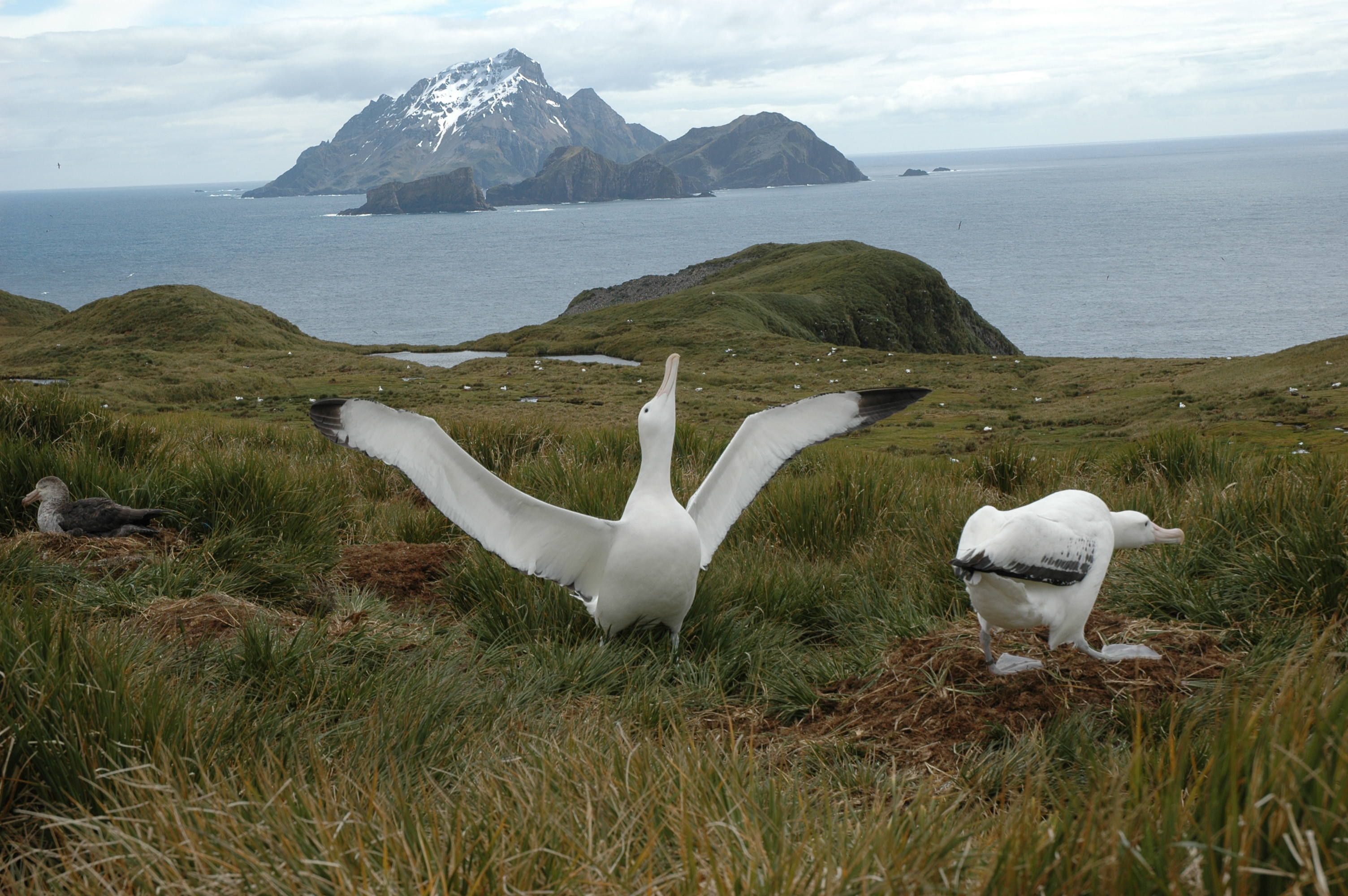
The seabirds in this study nest in the Southern Hemisphere, but the findings are highly relevant all over the world. As top predators that move across vast regions – with some species migrating across entire oceans – seabirds provide early-warning signals of large‑scale changes in ecosystems.
“The oceans are all connected – changes in one place ripple to others. This is why changes like the dramatic decline of globally monitored seabird populations – down by up to 70 per cent since the 1950s – is concerning for all of us”, says Chuxian Li.
Detailed picture of seabird population dynamics over 8000 years
How these seabird populations have varied in size in the past, before the Anthropocene (modern era), has been largely unknown. This has limited our ability to understand what is happening, and to predict further consequences of climate change.
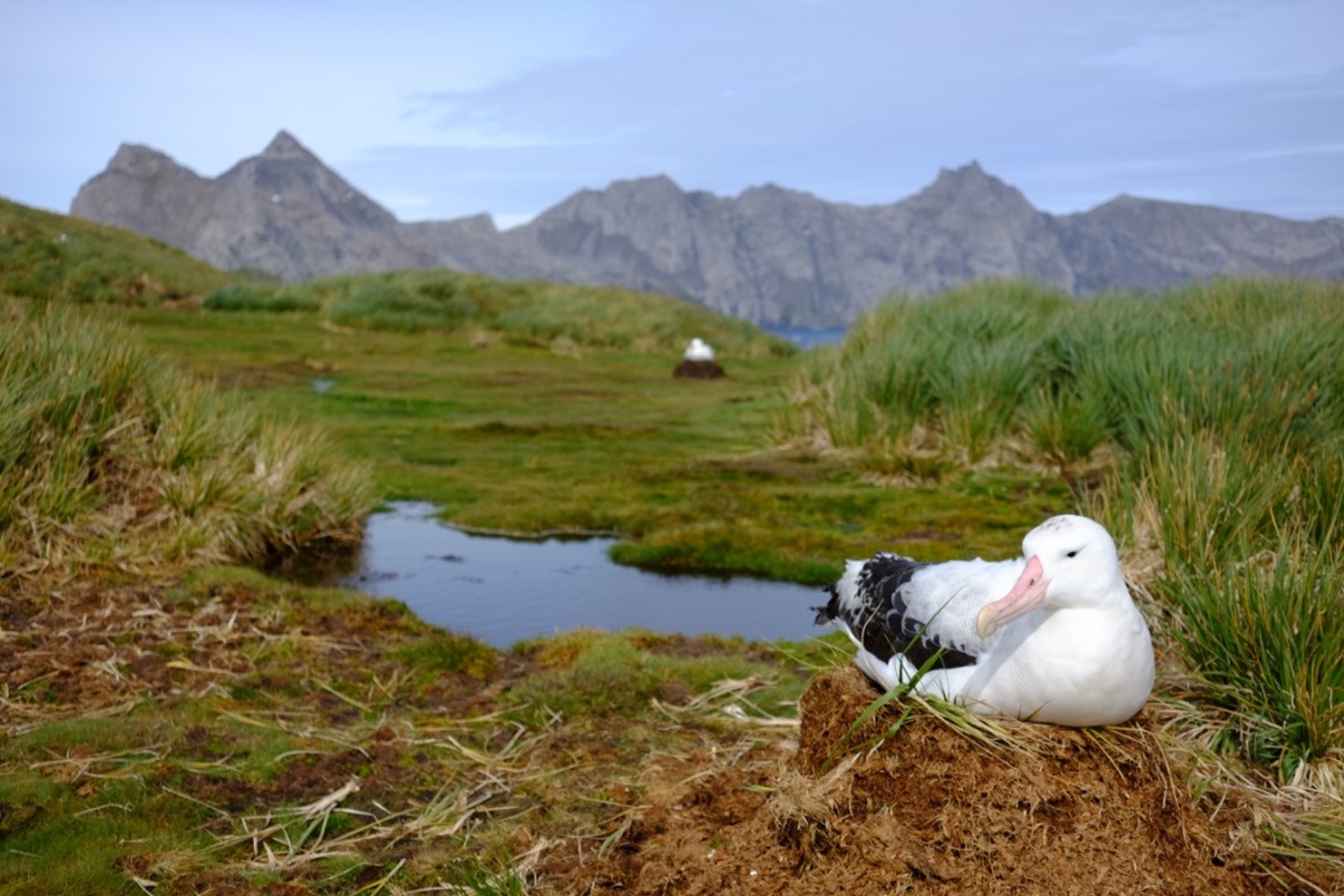
Chuxian Li and her colleagues have now shown that the first continuous seabird colonies were established on Bird Island, South Georgia, between 6800 and 6100 years ago, more than 1000 years earlier than previously thought. They also show that there have been four distinct periods since then with major increases in seabird populations, and that these periods coincided with less intense Southern Hemisphere westerly winds.
“Our findings lead us to believe that the present-day increase in westerly wind intensity may bring about further declines in seabird populations in the Southern Ocean”, says Chuxian Li.
Mercury as a window into past ecosystem dynamics
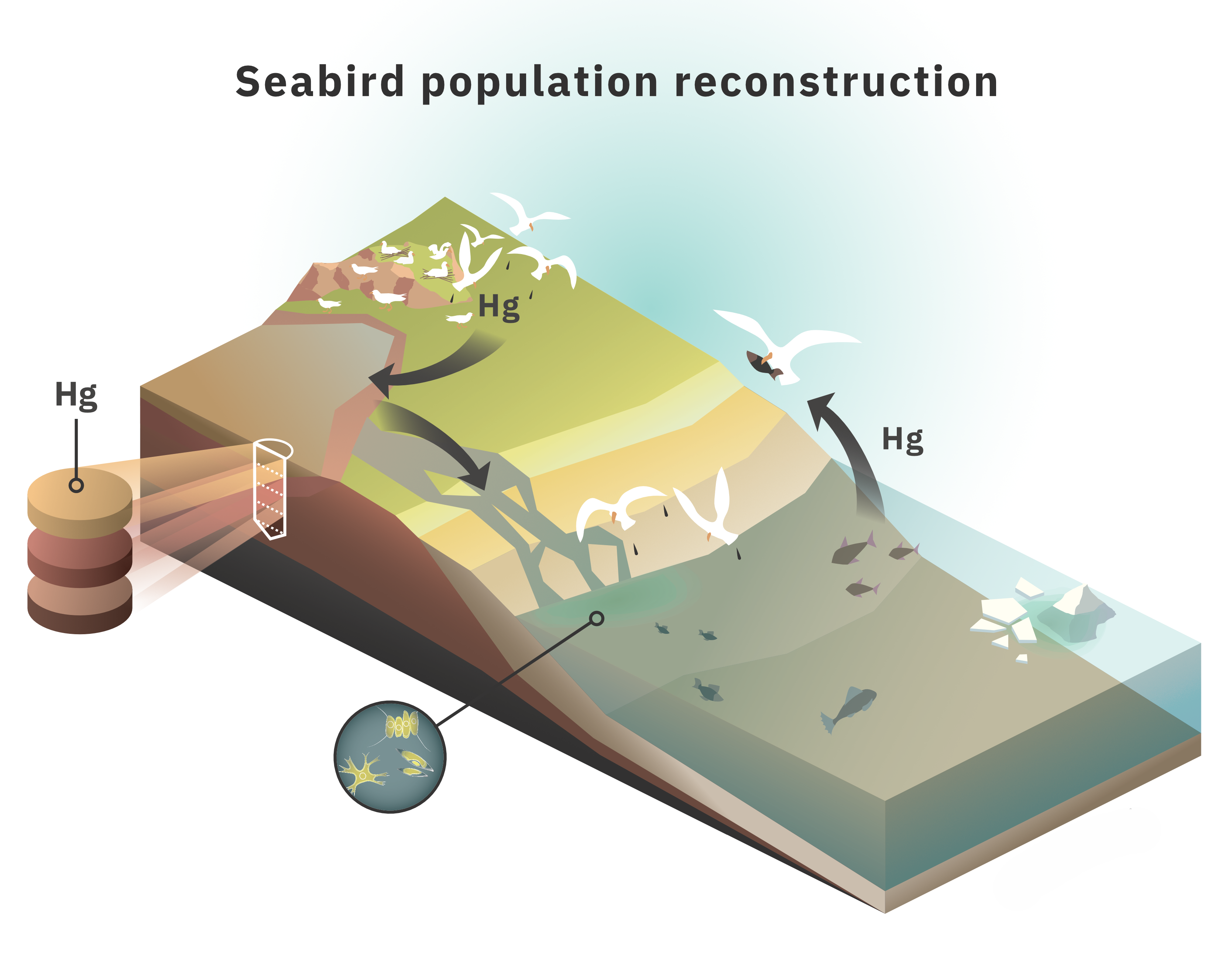
To map the nesting history on the island, the researchers have developed an innovative method: analysing the mercury content at different depths in a valley peatland below the slopes where the birds nest.
Mercury is a chemical element that bioaccumulates in organisms and becomes further magnified as it moves up the food web. This means that when small organisms are eaten by larger ones, the predator ends up with higher mercury concentrations. Since seabirds are top predators, they accumulate substantial amounts of mercury, and the mercury in their prey is also present in their guano.
When the guano is washed into the peat below the nesting sites, it becomes archived in successive layers of the peat. Once the researchers had collected peat cores from the valley, they could use the mercury content in peat layers of different ages as a robust indicator of the size of past seabird populations.
“Mercury lets us open a window to see what happened in the past and learn from that”, explains Chuxian Li.
A method for world-wide use
By applying their new method to sedimentary records on sub-Antarctic Bird Island, the researchers have provided a reliable, widely applicable, and high-resolution reconstruction of seabird population changes after the last ice age. The method can now be used to conduct similar studies at other locations around the world where there are suitable archives of peat layers or sediments.
“Mercury analyses, coupled with other techniques such as environmental DNA (eDNA), will provide new opportunities to reconstruct historical ecosystems. This can help us understand how seabirds respond to today's climate changes and how declining populations can affect ecosystems in the long term,” concludes Chuxian Li.
Contact person
Chuxian Li, Researcher
Department of Aquatic Sciences and Assessment; Division of Geochemistry and Hydrology
Swedish University of Agricultural Sciences
E-mail: chuxian.li@slu.se
https://www.slu.se/en/profilepages/l/chuxian-li/
The scientific article
Chuxian Li et.al. 2026. Southern Ocean seabird population shifts over the Holocene revealed by peat sequestration of mercury from guano. PNAS. https://www.pnas.org/doi/10.1073/pnas.2533681123
Press images
(May be published without charge in articles about this press release. Please include the name of the photographer)