
Hazelnuts are imported despite growing in the wild – now SLU is researching Swedish production
It is nutritious, reliable for food preparedness, and sought after by chefs at luxury restaurants. The hazelnut has many advantages, but is barely cultivated commercially in Sweden. Now researchers at SLU are investigating how production of the nut can become economically viable.
One of the few commercial hazelnut plantations in Sweden, and the largest in the country, is found on four hectares of the Solbacka farm in Sjöbo municipality.
Håkan Wendel runs the plantation alongside his day job, but still puts many hours into the operation throughout the year. However, the crops do not require daily attention, which suits him well.
– If you grow hops, for example, you have to harvest on exactly the right day to get the right aroma and acidity. But if I am away for a week with my job and the hazelnuts ripen and fall to the ground, it does not matter that much. You just pick them up when you get home, says Håkan Wendel.
Hazelnut cultivation requires financial endurance. It takes around five years to get a first harvest, and several more before volumes become significant. But selling the nuts is easy.
Demand from wholesalers and restaurants is high, while Swedish production remains limited.
Trial cultivation in Alnarp
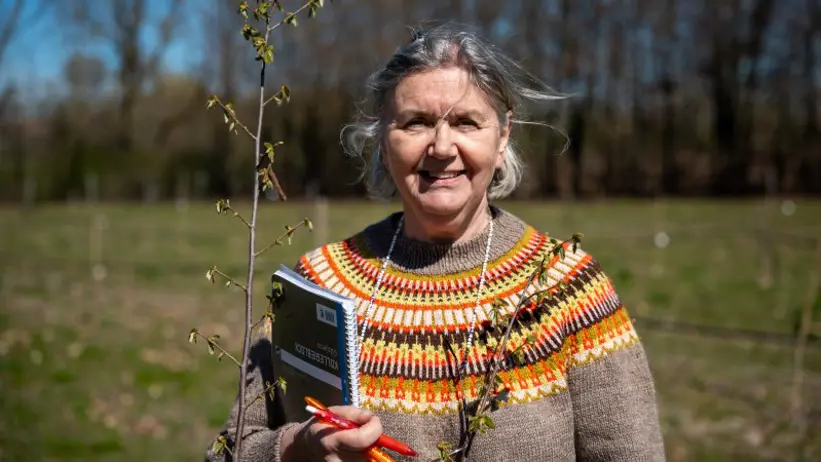
Lotta Nordmark, university lecturer at the Department of Biosystems and Technology, is investigating how hazelnut production can become economically viable in Sweden.
At a trial cultivation in Alnarp, different growing systems are being tested to see how they affect yield and nut quality. Last year, the crops produced its first harvest.
– We are conducting the trial cultivation in order to provide recommendations on how production can be carried out in Skåne, which varieties are suitable here, and what the price per kilo will be. In the end, we will compile our findings into a book, says Lotta Nordmark.
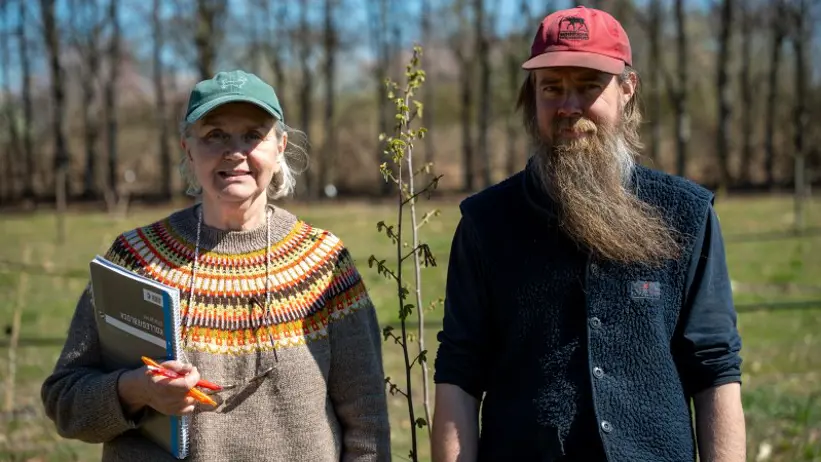
In the project, she is collaborating with Fredrik Alfsson, gardener at the Garden Laboratory, and Helena Persson Hovmalm, researcher at the Department of Plant Breeding.
The project is funded by a grant from the Sten K Johnson Foundation. In addition to the trial cultivation, the grant has also funded study trips abroad and a mapping of existing production in Sweden.
– We have discovered that there are many prospective growers in the country. I am happy to see that there is an interest, says Lotta Nordmark.
Grows in the wild
The conditions for domestic production are favorable. Hazel already grows in the wild in Sweden, can be cultivated in most soils, and is well suited to an increasingly warmer climate, according to Lotta Nordmark.
– It is an easy crop to grow. Where nothing else will grow, you can try hazel, up to Bergslagen and perhaps even further north.
But domestic production has long been outcompeted by imports.
– Our wage levels require a higher degree of mechanization to make the production profitable. But I believe we will be able to compete on quality in the future.
Hazelnuts on the rise
The backdrop to the project is that both production and consumption of hazelnuts are increasing globally.
Lotta Nordmark believes this is partly due to a growing interest in and awareness of healthy food.
– And the Swedish Food Agency, which follows the Nordic nutrition recommendations, recommends eating 20 to 30 grams of nuts per day, she says.
The unripe, green nut appears on the menus of luxury restaurants as a delicacy. But the hazelnut is also suitable for food preparedness.
– Nuts lasts for long periods of time when dried. They require no refrigeration and can be stored in a pantry and eaten as they are. They are also energy-dense. We know that people ate hazelnuts in the Stone Age during winter.
Lotta Nordmark believes that a better understanding of the conditions for hazelnut cultivation in Sweden also paves the way for the production of other types of nuts.
– Hazelnuts are a good starting point for then being able to look at walnuts. We also have sweet chestnut and heartnut that can be grown in Sweden. But almonds and other nuts will have to wait a little, says Lotta Nordmark.
Producer Håkan Wendel, who was one of the people Lotta Nordmark met while mapping the production in Sweden, is positive towards the project in Alnarp. He hopes that more people will take up commercial cultivation on a larger scale.
– We need farmers who are willing to invest some land and capital in order to increase volumes and compete with imports, he says.
Facts on hazel
- European hazel, also known as common hazel (Corylus avellana), is the species primarily cultivated for nut production and further processing, either as dried in-shell or shelled products.
- Hazel thrives in mild winters and cool summer temperatures, and can be grown in most soils except heavy clay and pure sand. It develops well near bodies of water, which moderate temperatures in spring and autumn.
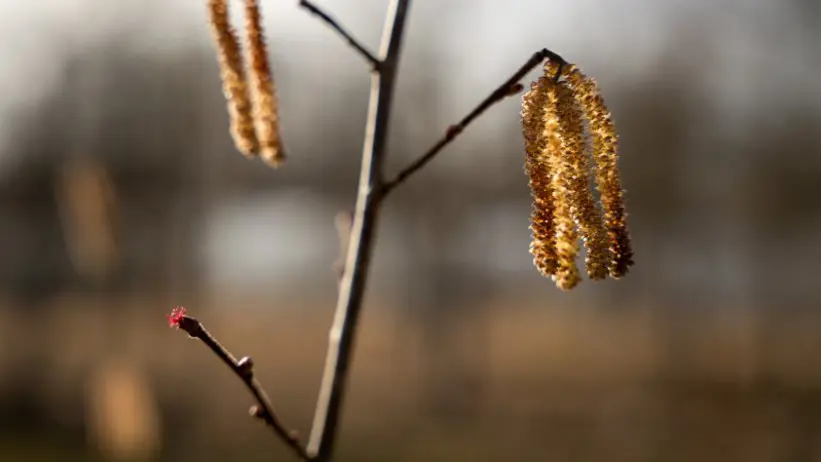
- The bushes flower in early spring with separate male and female flowers on the same bush, which are usually incompatible, making it important to grow several varieties for good pollination.
- Light penetration into the bush is necessary for good flowering, making pruning important. However, the bushes do not need to be pruned every year.
- Hazelnuts are not covered by the Swedish right of public access. They may therefore not be picked in the wild without the landowner's permission.
Source: Lotta Nordmark
Contact
-
Person