
New findings on DDT remediation in soil
DDT remains in Swedish soils – and is difficult to remove. A new thesis from the Swedish University of Agricultural Sciences shows that several innovative remediation methods yield limited results. At the same time, the thesis highlights techniques that could work significantly better.
The thesis is based on the idea that DDT-contaminated soil could be remediated using degrading fungi. This is based on successful laboratory experiments but has not previously been tested on a larger scale in the field.
“We found that the laboratory results did not hold up in the field, which instead paved the way for new and unexpected avenues of research,” explains PhD student Stephanie Casey.
Sites in Sweden requiring DDT remediation
When the ban on DDT came into force in Sweden in the 1970s, it was commonly used in plant nurseries to prevent pest infestations. Consequently, there is a high soil concentration of DDT at many old nursery sites.
“At many nurseries, concentrations of around 100 mg DDT per kilogram (mg kg-1) of dry soil can occur in small areas, with an average of around 10 mg kg-1, whilst 1 mg kg-1 is the Swedish EPA’s general guideline value for this kind of land use. There is a lot of variation within and between sites, which is partly due to the land-use, how the plants were treated, and due to variation in the soil properties,” says Stephanie.
The results from the nine Swedish nurseries analysed in the thesis show that the soil is particularly contaminated at the spot where the plants were commonly dipped in DDT. These so-called ‘hotspots’ are the areas of greatest interest for remediation.
Exciting experiments in the study
The thesis shows that there are primarily two reasons behind the lack of success in transferring experiments from the laboratory scale to field trials. Firstly, DDT and its persistent transformation products bind strongly to soil particles as they are very hydrophobic and therefore not easily available to the fungi.
Secondly, there is the challenge of the fungal growth outdoors, on a large scale, in a competitive habitat and with varying soil and weather conditions. Often, the fungi that can degrade DDT prefer to grow on wood, in forests, but the DDT is in field soils.
“That is why we tried a combined technique where we removed soil from the most heavily contaminated sites and ‘washed’ it under more controlled conditions,” explains Stephanie.
Once the soil has been washed clean of DDT, it can be returned or used in a new location without the risk of contamination leakage. During the washing process, using surfactants, the DDT ends up in a solution to which fungi are added, creating a bioreactor; the fungi can then break DDT down in the liquid phase.
Learning from past mistakes
This thesis reminds us of the importance of learning from historical mistakes. We are still struggling with pollution that was caused decades ago, and today's management of contaminated sites remains challenging.
“Stephanie's work was funded by problem owners who need new strategies to combat pollution. Through the work on the thesis, we know more about how to move forward, but further work is needed to achieve successful treatment at field scale,” concludes Stephanies main supervisor Professor Karin Wiberg.
Contact
Stephanie Casey, Doctoral Student
Department of Aquatic Sciences and Assessment
Swedish University of Agricultural Sciences, Uppsala
E-mail: stephanie.casey@slu.se
Press image
(May be published without charge in articles about this press release. Please include the name of the photographer)
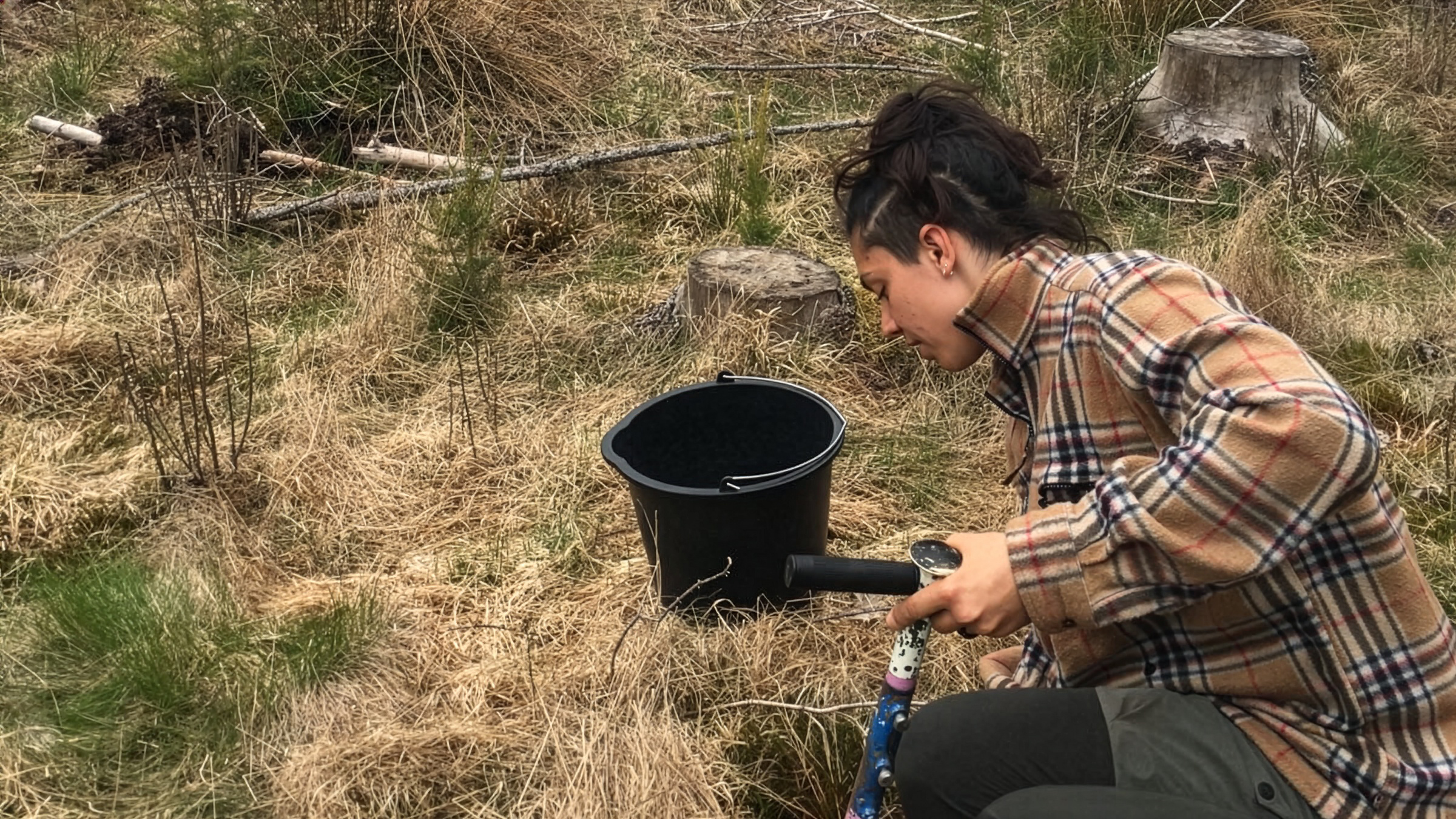
Stephanie Casey collecting soil samples at a plant nursery contaminated with DDT. Photo: Anna-Karin Dahlberg
More about white rot fungi and DDT
White rot fungi often grow on wood and can break down lignin, a plant molecule that is very difficult to decompose. The fungi break down the lignin by producing degradative enzymes that are released from the cells and produce oxidising radicals that can act over long distances. These enzymes are very non-specific, which means that they can also oxidise DDT and its degradation products as well as other environmental pollutants.
DDT is hydrophobic and therefore accumulates in fatty tissues and is transported up the food chain. During the 1960s, it became clear that DDT was harmful to birds, fish and other wildlife, and the pesticide was subsequently banned. However, there are still many contaminated sites in Sweden that require remediation.