
Want to boost indigenous legumes in Africa
Morama bean and Bambara groundnut are grown in parts of Africa, but these indigenous legumes could become important crops in other parts of the continent as well. Researchers from African countries, Canada and Sweden are now trying to launch a research programme that could make this possible.
A broad international research group recently gathered for three days at the Swedish University of Agricultural Sciences (SLU) to discuss what is needed to give two African legume crops a central role in a future African food system.
The workshop, which was funded by the Canadian organisation CIFAR, brought together expertise in a range of subjects, such as genomics, agronomy, soil health, climate-smart agriculture, food science, nutrition, gender science and indigenous knowledge systems. During the last day of the event, the researchers met with SLU researchers who work on subjects that may be of interest in future collaborations.
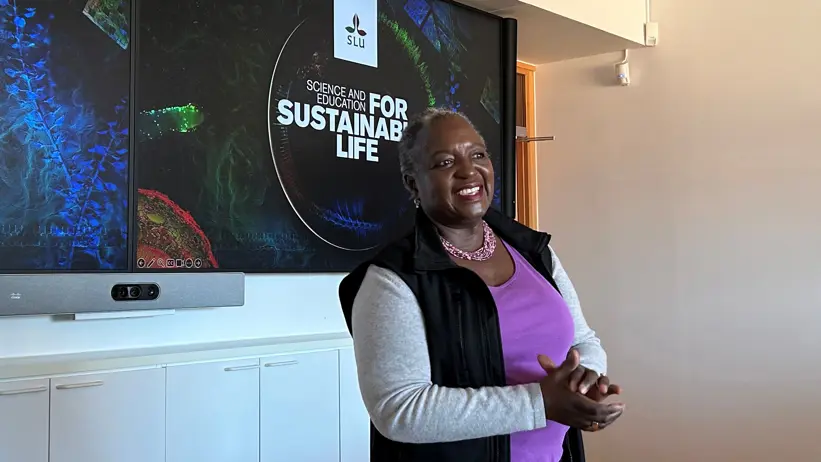
– We hope that this will be the start of an Africa-led, interdisciplinary research agenda that integrates scientific innovation with cultural and ethical governance of food systems, says SLU researcher Linley Chiwona Karltun, who hosted the meeting.
Maroma bean (Tylosema esculentum) is a perennial legume originating in dry areas of southern Africa. The beans are high in protein and fat and are an important food in areas such as the Kalahari.
Bambara groundnut (Vigna subterranea) originates in West Africa, and is an important crop in the areas where it is grown.

Contact person
Linley Chiwona Karltun, Associate Professor
Department of Urban and Rural Development
Swedish University of Agricultural Sciences
linley.chiwona.karltun@slu.se, +46739516424, +4618672757