
WIFORCE takes the next step towards field-based research arenas
How can shared, long-term research environments contribute to the future of sustainable forestry? This question was at the centre when around 60 researchers and stakeholders met to take the next step in developing WIFORCE Arenas.
The workshop marks the start of the work to develop research arenas within the Wallenberg Initiatives in Forest Research programme – shared platforms where multiple research groups and stakeholders can collaborate around experiments, infrastructure and data.
The initiative is part of the Knut and Alice Wallenberg Foundation’s work to create long-term environments where academia, industry and society work together to explore, test and develop new solutions.
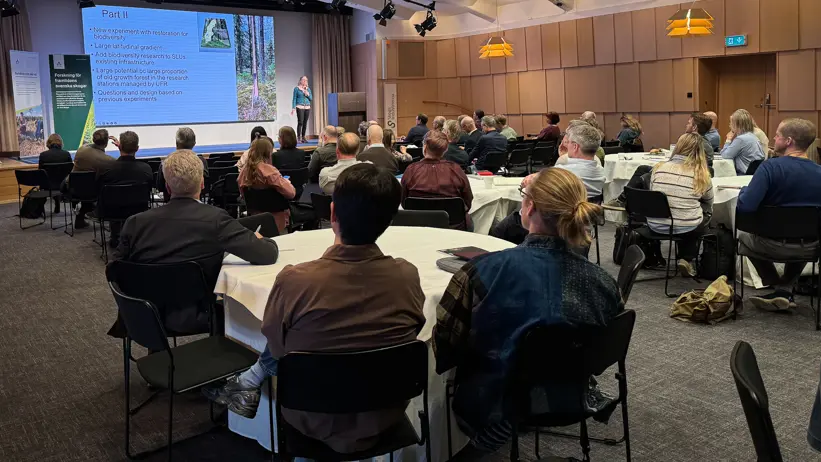
Interest was high, with participants from both academia and the forest sector. During the day, the arena concept was presented, and participants contributed ideas for potential experiments and study designs that could serve as shared resources. In total, 31 pitches were presented.
“The strong interest shows that there is both engagement and many promising ideas to build on in the development of the research arenas,” says Ove Nilsson, Programme Director of WIFORCE.
Shared experiments in focus
A central part of the workshop was the dialogue between researchers and external stakeholders, focusing on identifying shared needs, potential collaborations and new constellations ahead of upcoming projects.
The ambition of the arenas is to create long-term research environments where multiple research groups and stakeholders can work in parallel within the same field experiments and address different research questions based on shared data. The initiative also includes a data support centre enabling joint management of data, models and analytical tools.
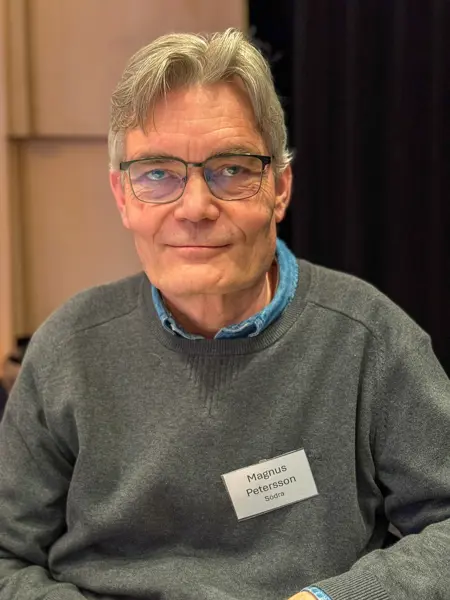
One of the participants was Magnus Petersson, Head of Forest Development at Södra, one of the co-funders of the arenas, who will be part of a reference group linked to the initiative.
“For us, it is about adapting forestry to a changing climate. We need to develop new approaches while learning along the way, and this type of research arena can play an important role,” he says.
Next step: call for arena projects
The workshop is a first step in the process. The next step is a call for arena projects, where ideas from the workshop can be further developed – or entirely new ideas can be proposed.
The call targets researchers at SLU’s Faculty of Forest Sciences and will be carried out in close collaboration with external partners. Projects are expected to contribute to the development of the field-based research arenas and to strengthen collaboration between different groups and areas of expertise.
More information about the call can be found here.
About WIFORCE Arenas
The field-based research arenas within WIFORCE are shared, long-term platforms for fundamental research on the future of forestry. Multiple research groups and stakeholders can work in parallel within the same experiments and using shared data.
The initiative aims to:
strengthen collaboration between academia, industry and society
enable interdisciplinary research
contribute to the education of the next generation of forest researchers
The initiative covers three main areas:
Ecosystem processes, biodiversity and resource use
Trade-offs between production and conservation
Breeding, genetic variation and resilience
A data support centre is also included, enabling shared management of data, models and analytical tools.
Contact
-
PersonOve Nilsson, Programme Director WIFORCEDepartment of Forest Genetics and Plant Physiology
-
PersonSusanna Bergström, Communications Officer WIFORCEFaculty of Forest Sciences