
Biochar in agriculture more complex than many think: "Crops respond very differently"
In farming, biochar is used to improve soil, increase its water-holding capacity and supply nutrients – but it is no universal solution for higher yields. So says researcher Helene Larsson Jönsson, who wants to develop guidelines for the use of biochar in agriculture.
Biochar is a material produced through pyrolysis, that is, the heating of biomass in an oxygen-free environment. The raw material can, for example, be residues from forestry and agriculture, or sewage sludge from wastewater treatment plants.
In farming, biochar can be used for soil improvement, phosphorus supply and increased water-holding capacity.
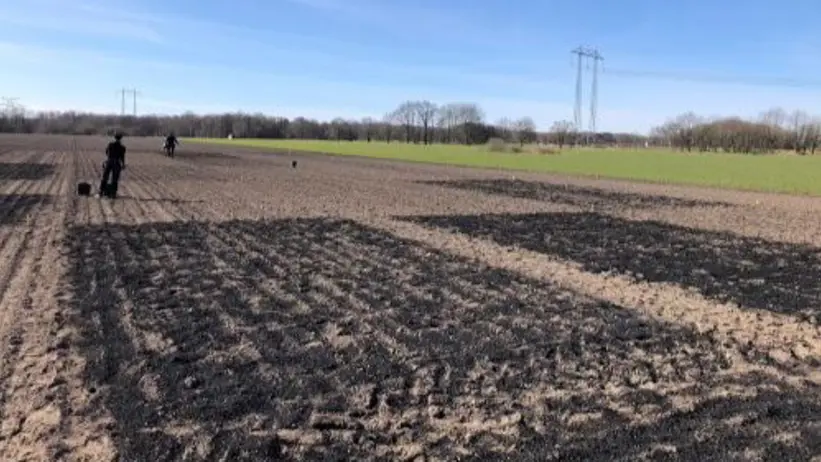
It is not, however, a universal solution for higher yields.
– The use of biochar is a bit more complex than many think, says Helene Larsson Jönsson.
She is a newly appointed docent in agricultural science and a researcher at the Department of Biosystems and Technology at SLU. Her research concerns how biochar can be used in agriculture.
Develop guidelines for practical use
A central challenge is that the properties of biochar differ depending on the raw material it has been made from, and the crops, in turn, respond in different ways.
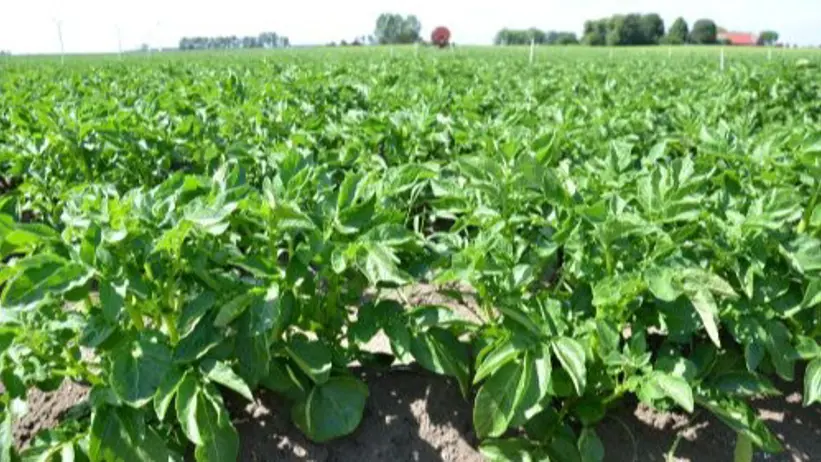
– There is quite a lot of talk in society about biochar, and sometimes it is generalized a little too much. There is a big difference in properties depending on the type of biochar, for example whether it is made of wood, sludge or compost. Crops also respond very differently. So there is no general solution that works for everything, she says.
But through her research, she hopes to be able to draw some general conclusions that can be of use to farmers.
– For biochar to become useful in agriculture, it must be possible to give general advice. It cannot be a specific recommendation for every crop and every type of biochar. So we have to investigate the effects of biochar on a number of different crops, and preferably over a longer period of time.
Environmental advantages
Today, biochar is too expensive to be used by farmers on a larger scale.
Helene Larsson Jönsson, however, sees a potential solution to the problem – in the form of carbon credits.
– A company can pay for the biochar as climate compensation, since carbon is stored in the soil in this way. That way the farmer gets the biochar for free, she says.
Biochar has other environmental advantages as well. Phosphorus in biochar reduces the need for synthetic fertilizer. It is also positive that residues are put to new uses according to a circular model, the researcher believes.
– What I find most exciting right now is whether sludge biochar, that is, from wastewater treatment plants, can be used in agriculture in a safe way. It would be a major societal gain if we could make biochar from it.
The importance of teaching
Helene Larsson Jönsson is director of doctoral studies at the LTV Faculty, program director for the agricultural and rural management program, and deputy head of department for doctoral studies at the Department of Biosystems and Technology
In addition to administration and research, she also teaches, which she enjoys.
– At a university, I think that is really the most important thing. We are not a university without our students and a lot of people are going to be needed in the green industries going forward.
Newly appointed docents at the LTV faculty
Read about all the docents appointed in autumn 2025 and spring 2026:
Neil Sang at the Department of Landscape Architecture, Planning and Management
Raj Chongtham Iman at the Department of Biosystems and Technology
Mari Kågström at the Department of Urban and Rural Development
Anna Bengtsson at the Department of People and Society
Rebeka Zsoldos at the Department of Biosystems and Technology
Contact
-
PersonHelene Larsson Jönsson, ResearcherDepartment of Biosystems and Technology