
Forest Owners Want Different Things — But Their Plans Often Look the Same
New research from SLU shows that today’s forest management plans often struggle to capture forest owners’ diverse goals — and that current planning systems are not designed to support a broader landscape perspective.
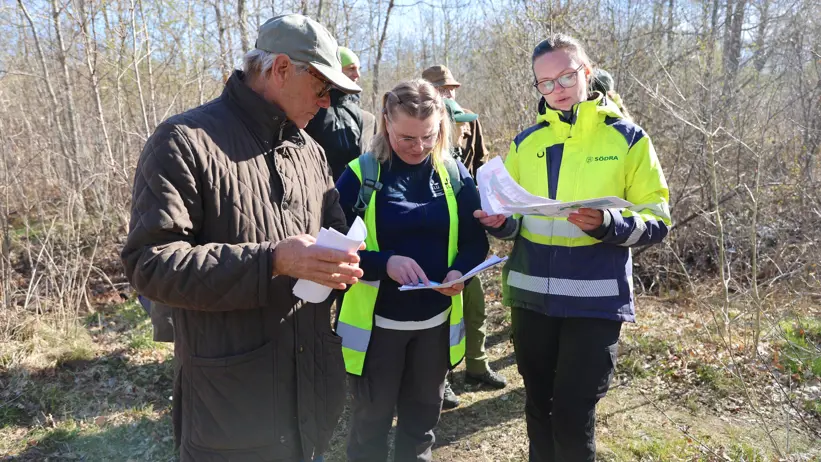
In the study, researchers worked together with forest owners and forest planners at forest owner association Södra to test new approaches to forest management planning. The aim was to better integrate social values, biodiversity, and landscape perspectives into the planning process.
The results show that these issues can be discussed, but that translating them into practice is much more difficult.
“We can talk about biodiversity and social values, but when it comes to incorporating them into the plan, the tools are often lacking,” says Anna Karlsson, PhD student at SLU, who leads the final work package of the Co-creator project, which concludes in 2027.
Forest Owners Interpret Goals Differently
One important insight from the study is that forest owners have very different goals for their forests. The pilot studies included both production-oriented owners and owners with a stronger social focus.
Even though several participants selected similar objectives in the planners’ templates, it became clear that they interpreted them in very different ways. The results therefore suggest that forest planners need both the right skills and sufficient time to engage in thorough dialogue with forest owners about their goals and values.
“The same management objective can mean completely different things to different forest owners. Yet today’s forest management plans largely look the same. When we compared the three pilot projects, it became clear that the forest owners had different levels of knowledge, different goals, and different views on what it means to be part of a landscape and a community — and what they themselves could do to contribute to that,” says Karlsson.
For some, it was about attachment to places and accessibility through trails; for others, about preserving or creating diversity in the forest.
Landscape Perspectives Changed the Planning Process
In one of the pilot studies, researchers tested a more co-creative approach in which researchers, planners, and forest owners worked more closely together. When researchers presented a landscape analysis early in the process, the discussions became more landscape-oriented.
At first glance, the plans looked similar to conventional forest management plans, but differences became visible in the details — for example in how nature values, forest structure, and connections to the surrounding landscape were described.
Existing Systems Make Change Difficult
The study also shows that the barriers are not primarily a lack of willingness or knowledge, but rather how today’s systems and tools are designed.
Current planning tools, map data, and templates are still largely adapted to traditional, production-oriented forestry.
“Many forest owners want more diversified ways of managing their forests, but the planning systems have not kept pace,” says Karlsson.
The researchers argue that future forest management plans need to become more flexible and better able to capture different goals and values, while also taking greater account of the landscape beyond the estate.
About: Co-Creator
Co-creator is a research project at SLU and Umeå University that investigates how forest planning and advisory services can be developed to support more diversified family forestry. The project is carried out in collaboration with, among others, the Swedish Forest Agency and the forest owners’ association Södra, and is funded by Formas.