
Crisis for Sweden’s celebrated model for coexistence between carnivores and reindeer herders
Sweden’s internationally acclaimed compensation scheme for coexistence between reindeer herders and wolverines helped the species recover. A new study now shows that the success has not lasted. Trust in the system has eroded as compensation levels have remained largely unchanged since 2002.
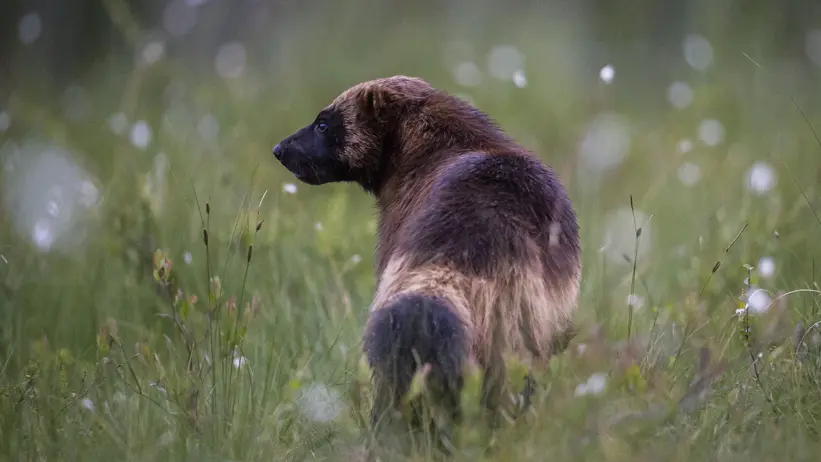
Because wolverines cause substantial losses to reindeer husbandry, the species has long been controversial and was heavily persecuted until it became protected in 1969. In the 1990s, Sweden introduced a compensation scheme in which Sámi reindeer herding communities received payments for documented reproductions of wolverines.
“Back in 2015, we conducted a study showing that the scheme had been successful. Because compensation was linked to reproduction, it created incentives to protect breeding females, which contributed to the recovery of the wolverine population,” says Jens Persson, researcher at the Swedish University of Agricultural Sciences (SLU) Grimsö Wildlife Research Station.
By linking payments to the presence of wolverines rather than to reindeer killed by predators, the system created a financial incentive to tolerate carnivores. The scheme was unique when introduced, and its success inspired similar programmes elsewhere in the world, for example for lions in Africa.
The SLU study has now been revisited with a focus on Norrbotten County in northern Sweden. Drawing on 30 years of wolverine monitoring data and interviews with reindeer herders and other stakeholders, the findings are concerning.
“Reindeer herders have lost trust in the system because the Swedish state has allowed compensation levels to fall far behind what is required by law. This means that those who share their land with predators are carrying an increasingly large share of the costs of Sweden’s carnivore policy,” says Hanna Pettersson, human ecologist at the University of York, who conducted the study together with wildlife researchers at SLU Grimsö Wildlife Research Station.
The monitoring results also indicate a decline in the wolverine population in Norrbotten.
Coexistence is costly – someone has to pay
The study highlights a paradox that all successful conservation payment schemes eventually face: the better the scheme works, the more expensive it becomes. More wolverines mean more predation, more monitoring and higher costs. If the system is not designed to grow alongside its own success, the burden is shifted onto local communities – and the species the scheme was meant to protect may start to decline again.
What is happening in Norrbotten is a good illustration of this. Compensation per documented wolverine reproduction has remained virtually unchanged since 2002 (see fact box on the compensation scheme). During the same period, both reindeer meat prices and the costs of living and working in wolverine areas have increased.
“Everyone we interviewed – reindeer herders, researchers and government officials alike – was dissatisfied with the current system. Many herders felt that the state was doing everything possible to avoid paying compensation and described themselves as ‘carnivore breeders rather than meat producers’ – a painful reversal of the scheme’s original promise,” says Hanna Pettersson.

She also points to the contrast between the compensation system for reindeer husbandry and the systems for other livestock sectors, such as sheep and cattle farming, which have not faced the same financial constraints.
Are wolverines declining in Norrbotten?
Monitoring was previously based on documenting reproductions – breeding females with cubs. The sharp decline in documented reproductions in Norrbotten is probably partly explained by worsening monitoring conditions.
“Monitoring likely missed more reproductions in recent years because of milder winters and poor snow conditions. This makes it harder to find tracks and den sites,” says Malin Aronsson, researcher at SLU Grimsö Wildlife Research Station.

Sweden is currently transitioning towards DNA-based monitoring, meaning that payments will be based on individual wolverines rather than reproductions.
“DNA-based monitoring may be less sensitive to weather conditions than reproduction-based monitoring. At the same time, the focus shifts from breeding females to individual animals. The risk is that protection of females and cubs may weaken,” says Jens Persson.
The picture is complex, but the researchers believe there has been an actual decline in the wolverine population, although its extent remains unclear. Overall, the species is doing well, not least because it is expanding southwards in Sweden.
“There is potential for coexistence between reindeer herders and a stable wolverine population. But this requires improved monitoring and a compensation sum that is continuously adjusted over time. This is not only about conservation – it is also about Indigenous rights and justice,” says Hanna Pettersson.
Facts about the compensation model and the study
The compensation scheme
Since 1996, Sámi reindeer herding communities have received compensation from the Swedish state based on documented reproductions of wolverines (breeding females with cubs) within their grazing areas. The system also applies to other large carnivores, although this study focuses on wolverines. Because compensation was linked to the presence and reproduction of live wolverines rather than to reindeer losses, the scheme created a financial incentive to tolerate carnivores and helped redistribute the costs of coexistence.
Sweden’s system is the world’s oldest and best-known compensation model for coexistence with large carnivores. It has inspired similar programmes in Africa, Asia and elsewhere.
Under Swedish law, compensation levels are supposed to be adjusted annually to reflect actual costs, but this has not happened. The payment per documented wolverine reproduction remained at SEK 200,000 from 2002 onwards. Compensation was increased by SEK 25,000 in the 2023/24 government budget, but this did not offset rising costs. In real terms, the value of the compensation has effectively been cut in half.
How the study was conducted
For the ecological component, the researchers analysed nearly 30 years of wolverine monitoring data collected by government agencies and reindeer herders. Traditionally, monitoring has focused on documenting reproductions – breeding females with cubs. In 2024, a new DNA-based monitoring method was also tested. This method identifies individual wolverines in an area using DNA from faeces and urine.
To investigate the human dimension, the researchers conducted in-depth interviews and questionnaires with reindeer herders, government agencies, Sámi institutions and researchers.
Scientific article
The Paradox of Success in Conservation Performance Payments: Rising Costs and Declining Trust in Sweden's Carnivore Policy, Conservation letter, Hanna L. Pettersson, Malin Aronsson, Jens Persson
Kontakt för artikeln
Hanna Pettersson, human ecologist at the University of York (in the first instance)
+447491121171
hanna.pettersson@york.ac.uk
Jens Persson, wildlife researcher at SLU Grimsö Wildlife Research Station
+46581697305
jens.persson@slu.se
Malin Aronsson, wildlife researcher at SLU Grimsö Wildlife Research Station
+46581697312
malin.aronsson@slu.se
Press photos can be found on MyNewsdesk. Please note that Jesper Stenmark’s photo of the wolverine may not be used as a press photo.
Contact
-
PersonAnna Lundmark, Kommunikatör, SciFest-ansvarigDepartment of Ecology , joint staff/department office