
Field visits highlighted research on biological control and strip cropping at Lönnstorp
During two field visits in May at SLU’s field station in Lönnstorp near Alnarp, researcher Chloë Raderschall and colleagues hosted both crop advisors and members of nature conservation organisations to discuss biological control, biodiversity and sustainable cropping systems.
The first visit brought together crop advisors from RISE, the Swedish Board of Agriculture, Sveriges Frö- och oljeväxtodlare (the Swedish Seed and Oilseed Growers Association), and Hushållningssällskapet (the Agricultural Society) in Halland and Skåne. It was organised within the Swedish Board of Agriculture’s project Mångfald på slätten, led by Petter Haldén. The second visit was organised by Naturskyddsföreningen Bjärred/Lomma and included participants from Bjärred/Lomma, Malmö and Lund.
– The crop advisors focused on discussing biological control in oilseed rape systems and implementation in practice, while the conservation groups brought important perspectives on biodiversity and ecosystem services in agricultural landscapes. Together, these discussions help us better understand the wider relevance of our research, said Chloë.
Measuring ecosystem services in the field
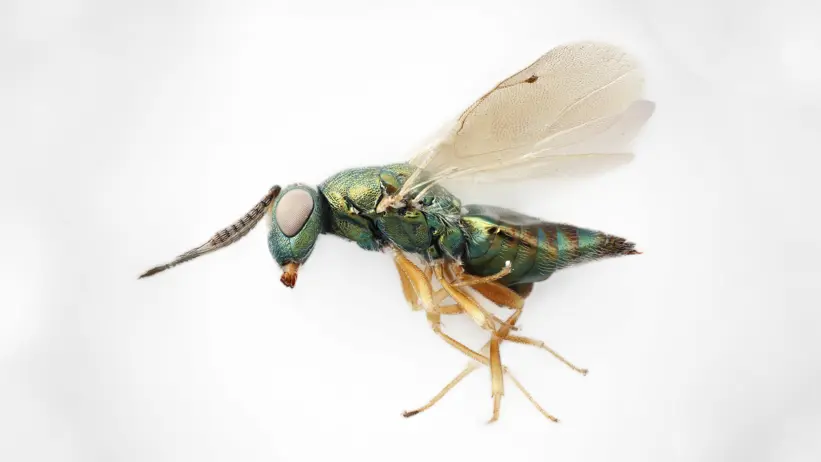
During the visits, Chloë presented the major insect pests in oilseed rape and talked about the importance of parasitoids and ground-dwelling predators such as carabid beetles in natural pest regulation.
Participants were also introduced to the methods used to study biological control in the field, including pitfall traps and water traps used to monitor insect pests, parasitoids and other beneficial insects. Chloë further explained how ecosystem services such as weed seed predation and insect pest control are measured in agricultural experiments.
Can strip cropping increase biodiversity in agriculture?
The group then visited the StripES experiment, where strip cropping is being tested under Swedish conditions. Strip cropping is a cropping system where different crops are grown in alternating strips within the same field, whereby the strip width can be adapted to existing machinery. Strip cropping can increase biodiversity, reduce herbivore survival, and improve resource use efficiency depending on crop combinations.
Chloë explained that studies from Germany and the Netherlands have shown that strip cropping can increase biodiversity of both pests and natural enemies without reducing crop yields. The aim of StripES is to evaluate whether similar effects can be achieved in Sweden using key crops such as winter oilseed rape, winter wheat and spring faba bean. The project measures the density and species richness of arthropod predators, weeds and key insect pests while also measuring weed seed and insect pest predation and parasitism rates.
For the visiting nature conservation groups, the StripES experiment also illustrated how a greater crop diversity on agricultural fields can provide more diverse food and habitat resources for beneficial arthropods over a longer period and so potentially reverse the decline of biological diversity in agricultural landscapes.
– Agriculture covers a large proportion of the landscape, meaning that farming practices play an important role for biodiversity conservation. By understanding how ecosystem services function in the field, we can develop cropping systems that are both productive and environmentally sustainable, said Chloë.
From research to societal dialogue
The field visits highlighted the importance of dialogue between researchers and different parts of society, including both crop advisors and the wider public.
– Crop advisors are an essential link between research and farming practice. If we are to develop more sustainable and resilient cropping systems, it is crucial that knowledge is consistently exchanged and applied, said Chloë.
She also emphasised the value of joint field visits involving both researchers and advisors from different organisations, ensuring a shared understanding of new challenges and solutions and reducing the risk of conflicting recommendations.
For the conservation organisations, the visits provided insight into the kind of agricultural research that is conducted at Lönnstorp and how agricultural research aims to solve the dual challenge of biodiversity conservation and sustainable food production in a changing climate.
– Being out in the field and seeing these experiments directly is a powerful way to spark interest and creates opportunities for discussion and learning across different perspectives. These kinds of meetings are important if we want to support the transition towards more sustainable agricultural systems, concluded Chloë.
Read about Chloë Raderschall’s research.
Contact
-
PersonChloë Aline Raderschall, researcherDepartment of Biosystems and Technology