
Red-listed species require more deadwood in forests
The volume of deadwood can be used to predict the presence of red-listed species in forests, according to a new study from the Swedish University of Agricultural Sciences (SLU). However, more deadwood is needed than previously assumed. This pattern applied to fungi and mosses, but not to lichens.
Protecting red-listed species is important, yet their often cryptic nature makes them difficult to detect, posing a challenge for practical conservation. Researchers therefore investigated whether other measures could be used to predict the presence of red-listed species.
They surveyed 120 forest plots in Sweden, recording species on dead and living trees and measuring several structural variables, including deadwood volume, large trees and broadleaved trees. The plots were located within managed forest landscapes and covered a gradient from intensively managed stands to more protected forest areas.
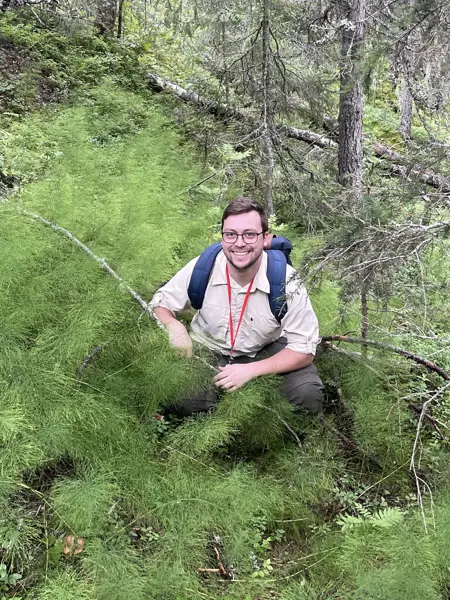
“We expected several of the variables we examined to be important, but only deadwood volume turned out as a reliable predictor. It was also surprising that none of the variables tested for could reliably predict the occurrence of red listed lichens,” says Alwin Hardenbol, former postdoctoral researcher at SLU.
The probability of detecting at least one red-listed species increased strongly with deadwood volume, but high levels – around 40–50 m³/ha – were required to reach a 50% chance of encountering even a single species. Fungi was best predicted by total deadwood, while occurrence of red-listed bryophytes was best predicted by the amount of lying deadwood.
“Our findings confirm the importance of deadwood, but challenge previous research by suggesting that much higher volumes are required,” says Alwin Hardenbol.
Current recommendations often suggest a threshold around 20 m³/ha of deadwood to support biodiversity. According to the study, considerably higher levels are required before it is likely to find a red-listed species.
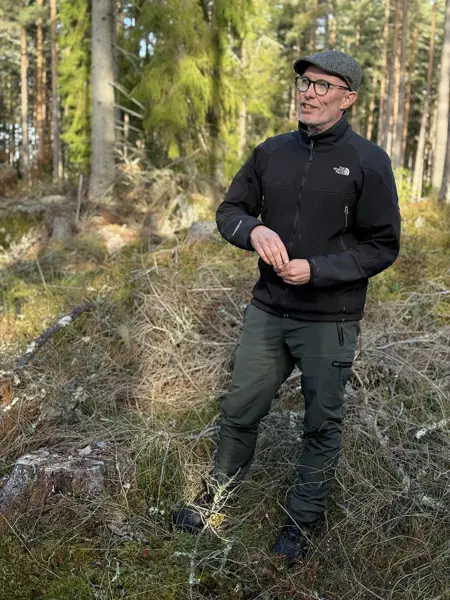
“There is a clear gap between current deadwood levels in the in most managed forest landscapes and the amounts needed to sustain threatened and rare wood-inhabiting species. Our results also highlight the importance of protecting deadwood-rich forests,” says Joachim Strengbom, researcher at SLU.
The study was conducted by researchers from the Departments of Ecology and Wildlife, Fish and Environment at SLU, as well as the Natural Resources Institute in Finland.
Scientific article
Contact
Alwin Hardenbol
Former postdoctoral researcher, SLU
alwinhardenbol@yahoo.com
Joachim Strengbom
Researcher at the Department of Ecology, SLU
joachim.strengbom@slu.se