
Pharmaceutical pollutants in rats linked to animal-borne diseases: "Alter infection patterns"
Pharmaceutical pollution is absorbed by rats and can affect the pathogens they carry. This is shown in a study from the Swedish University of Agricultural Sciences (SLU), in which researchers highlight pharmaceutical residues as a previously unknown mechanism behind animal-borne diseases.
– We have long known that pharmaceutical pollution affects species such as fish and birds. Now, for the first time, we can show that wild terrestrial mammals such as rats are also exposed to pharmaceutical residues, and that this may have far-reaching consequences for humans as well, says Anna Jonsson Sundberg, PhD student and the study’s first author.
Residues of medicines and drugs enter the natural environment via sewage. Researchers at SLU investigated the presence of both pharmaceutical residues and pathogens in wild rats, specifically focusing on infections that rats can transmit to humans. The researchers analysed 152 rats from low-income urban areas in Salvador, Brazil. They tested for six different pathogens and residues from 97 different pharmaceutical substances.
– We found that more than half of the rats, 55 per cent, carried pharmaceutical residues in their brains. These included several different types of drugs, such as antibiotics, antidepressants and antipsychotic medicines, says Anna Jonsson Sundberg.

Antibiotics reduced the risk of infection
The most common substance detected was an antidepressant, citalopram. According to the study, rats with this compound in their bodies had a threefold higher risk of carrying Capillaria parasites, a type of roundworm infection, that can infect humans.
Antibiotics also stood out in the study. Antibiotics, on the other hand, were found to reduce certain infections in the rats. Rats carrying antibiotic residues had a 91% lower risk of infection with Leptospira bacteria, which causes around one million severe cases of leptospirosis in humans each year.
Healthier rats, then. That sounds like a good thing?
– It may sound positive, but it is not. Antibiotic residues in the environment are a major problem because they can make bacteria more resistant and increase the prevalence of pathogens that antibiotics cannot combat. In the long term, antibiotic resistance may pose serious risks to human health, says Erin McCallum, researcher and co-author of the study.

Could have major consequences
The researchers suspect that pharmaceutical residues also alter the rats’ behaviour, and in another study they are currently tracking how rats move in relation to humans.
Because rats living in close association with humans act as reservoirs for a large number of pathogens worldwide, pharmaceuticals in the environment could have significant implications for the risk of animal-borne diseases.
– Pharmaceuticals alter infection patterns in animals.. Our results point to a previously unknown mechanism through which pharmaceutical pollution can influence disease dynamics in cities around the world. This is particularly relevant for people in rapidly growing urban areas where sanitation is poor, access to medicines is limited, and contact between humans and wild animals is extensive, says Hussein Khalil, researcher at SLU, who led the study.


Scientific article
Environmental Science & Technology Letters: Pharmaceutical Pollutants in Urban Rats Are Linked to Zoonotic Infection Risk Anna Jonsson Sundberg, Daniel Cerveny, Federico Costa, Mike Begon, Fabio Neves Souza, Jaqueline S. Cruz, Caio Graco Zeppelini, Hernan D. Argibay, Ianei de Oliveira Carneiro, Albert I. Ko, Mitermayer G. Reis, Erin S. McCallum, Hussein Khalil https://pubs.acs.org/doi/10.1021/acs.estlett.5c00867
Zoonotic diseases
Zoonoses are diseases that are transmitted between humans and other animals.
Examples include COVID-19, hantavirus, Ebola, anthrax and rabies. In Sweden, examples include vole fever, tularemia and tick-borne encephalitis (TBE).
Outbreaks of zoonotic diseases are increasing globally. There are several reasons for this, such as the disruption of animals’ natural habitats due to climate change or human activities such as deforestation and urbanisation.
Animals such as certain rodents, bats, mosquitoes and pigeons can tolerate or even benefit from these changes. At the same time, they are often carriers of zoonotic pathogens. The risk of disease outbreaks increases when animals and humans share the same living space.
To understand this type of complex health challenge, researchers need to collaborate across disciplines. Read more at SLU Future One Health.
Pressphoto's
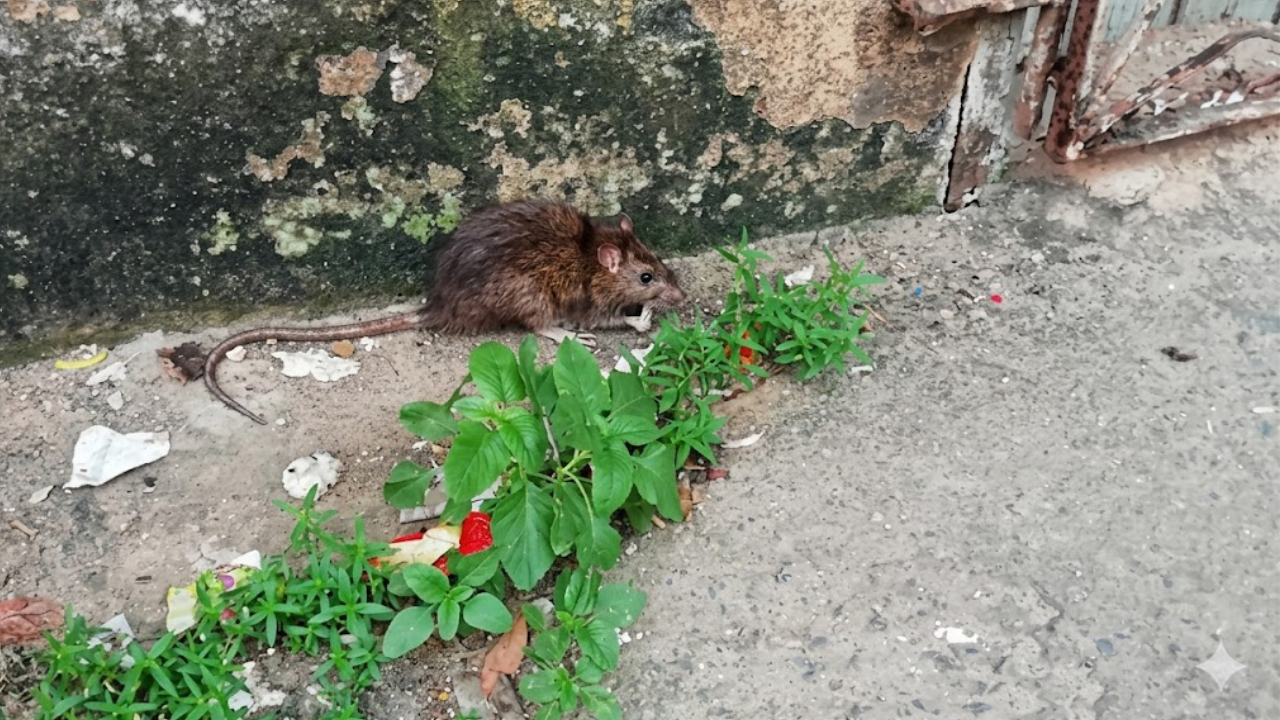
Rat. Photo: Hussein Khalil.
Anna Jonsson Sundberg. Photo: Frida Wengberg/SLU.

Hussein Khalil. Photo: Henrik Persson/SLU.

Erin Mccallum. Foto: Aneesh Bose/SLU.

Contact
Anna Jonsson Sundberg, PhD student, Department of Wildlife, Fish, and Environmental Studies, SLU anna.jonsson.sundberg@slu.se
Hussein Khalil, Researcher, Department of Wildlife, Fish, and Environmental Studies, SLU. hussein.khalil@slu.se +46907868290 +46730558550
Erin McCallum, Researcher, Department of Wildlife, Fish, and Environmental Studies, SLU. erin.mccallum@slu.se
Frida Wengberg, Communications officer
frida.wengberg@slu.se +46725669778