
RNA spray technology shows promise for sustainable crop protection
RNA-based sprays could offer a more sustainable way to protect crops from disease. In her doctoral thesis, Poorva Sundararajan shows that spray-induced gene silencing can reduce fungal infections with only minor effects on beneficial microorganisms.
Wheat, barley and potato are among the world’s most important food crops, but their production is constantly threatened by fungal diseases and pests. Current protection methods often depend on chemical fungicides or long-term breeding for disease resistance.
In her new doctoral thesis, Poorva Sundararajan investigated spray-induced gene silencing (SIGS), an RNA-based method where double-stranded RNA molecules are sprayed onto plants to silence important genes in pathogens and reduce disease development.
– RNA-based methods could become an important complement to existing plant protection strategies, especially as agriculture faces increasing challenges linked to climate change and the need for more sustainable food production, says Poorva Sundararajan.
Reduced disease development in wheat and barley
SIGS is based on RNA interference (RNAi), a natural biological process found in plants, fungi and other organisms. In practice, the method involves spraying double-stranded RNA (dsRNA) molecules onto plants to silence essential genes in pathogens, thereby reducing disease development.
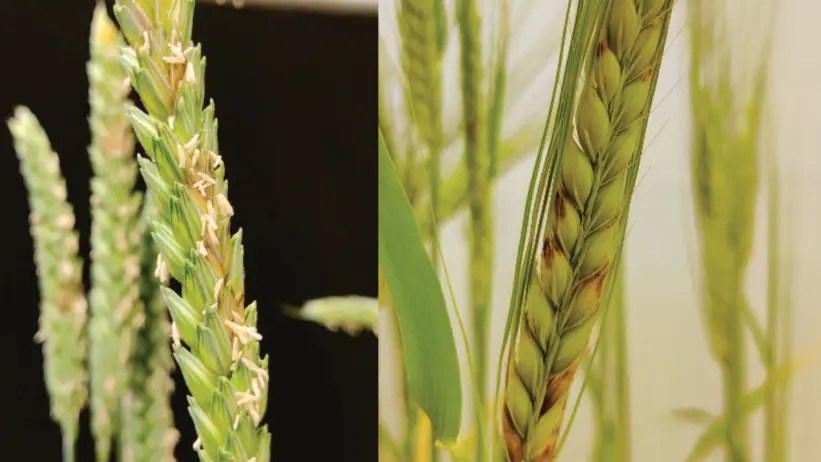
In the thesis, dsRNA treatments targeting the fungal pathogen Fusarium graminearum successfully reduced the spread of Fusarium head blight in intact wheat and barley spikes. Fusarium head blight is a serious cereal disease that lowers both grain yield and quality.
The plant’s natural microbial community remained stable
The research also examined how dsRNA spraying affects the plant microbiome – the community of bacteria and fungi living on plant surfaces that contribute to plant health and resilience. Using DNA sequencing methods, the study showed that dsRNA applications did not alter the dominant bacterial and fungal members of the leaf microbiome in wheat, barley and potato. Only minor shifts in the relative abundance of some bacterial groups were observed.
– The results suggest that pathogen infection itself has a much greater impact on the plant microbiome than the dsRNA treatment. This supports the idea that SIGS is a highly targeted and environmentally safe method, says Poorva.
Together, the findings strengthen the case for SIGS as a future tool for sustainable plant disease management and provide important knowledge for developing the technology for large-scale agricultural use.
Read the thesis
How RNA spray technology works
RNA spray-based plant protection is built on a natural defence system called RNA interference (RNAi), which exists in plants, fungi and many other organisms. RNAi helps cells regulate genes by switching off specific messages before they are turned into proteins.
The process starts when double-stranded RNA (dsRNA) is taken up by the organism. Inside the cell, it is cut into small RNA fragments. These fragments act as guides that match specific genes in a pathogen. When a match is found, the gene is silenced, preventing it from functioning.
In spray-induced gene silencing (SIGS), scientists apply dsRNA directly onto plant surfaces. The dsRNA can then trigger gene silencing in invading pathogens, helping to stop disease development in a highly targeted way.
Small RNAs can also move between organisms, meaning that plants and microbes can influence each other’s gene activity. This makes RNA-based methods a powerful and precise tool for studying and managing plant–microbe interactions.
Contact
-
Person