
Species recover slowly after forest harvesting – some may disappear
The rate at which species recover after clear-cutting varies considerably. Some groups, such as lichens and mosses, are unable to re-establish before the next harvesting cycle, according to a major international study involving researchers from the Swedish University of Agricultural Sciences (SLU).
– The study demonstrates that the harvesting of northern forests has several clear long-term effects on biodiversity. This synthesis of current knowledge is the result of a unique international collaboration involving researchers from several countries, says Mats Dynesius, Associate Professor at SLU and one of the study's co-authors.
When a forest is clear-cut, plants, animals and fungi are all affected. The Canadian-led study, published in the journal Nature Sustainability, examined how quickly spiders, insects, birds, small mammals, lichens, mosses and vascular plants recover in different forest types.
Because forests take many years to regrow, the researchers compared biological communities in forests of different ages following clear-cutting and used statistical models to estimate recovery rates. Scientists from North America and Northern Europe contributed data from 190 studies, which were compiled and analysed. The SLU researchers provided data on mosses, liverworts and insects from forests in northern Sweden.

Recovery took more than a century
According to the study, around half of the species communities investigated recovered to their pre-harvest condition in less than 30 years. Recovery was faster in broadleaved forests than in coniferous and mixed forests. Birds and mammals showed the greatest capacity for re-establishment. However, in coniferous forests, wood-living beetles recovered only weakly, while mosses and lichens took a century or more to return.
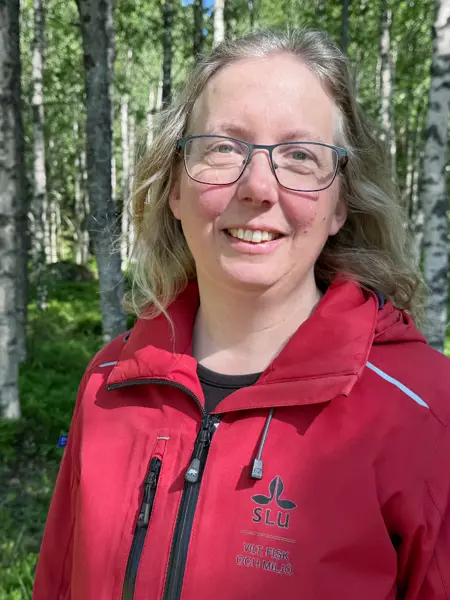
– This means that if forests are clear-cut again within less than 100 years, these species communities will notnever have the opportunity to recover fully. Over time, we simply risk losing species, particularly in our conifer-dominated forests, says Therese Löfroth, a co-author that is Associate professor at SLU and co-author of the study.
Longer rotation periods may be needed
Relatively common species dominate theThe study primarily reflects patterns found in the studyamong the most common species. Many red-listed species, which have more specialised habitat requirements, are likely to require even longer time to recover. In northern Sweden, the typical forest rotation period – from planting to final harvest – is around 80–120 years. The researchers conclude that rotation periods may need to be extended and that larger areas of forest should be set aside from commercial forestry.
– The study is highly relevant to Sweden, where coniferous and mixed forests are the dominant forest types and clear-cutting is the prevailing form of forest management. To avoid further biodiversity loss, longer rotation periods, alternative management practices and the protection of forest areas from harvesting may be required, says Joakim Hjältén, Professor Emeritus at SLU and co-author of the study.

Scientific paper
Nature Sustainability: "Biodiversity recovery is slow following clear-cut harvest of boreal forests".
About the study
The study focused on northern conifer dominated forest, known as the boreal forest biome. It was led by Ellen Macdonald, Professor at the University of Alberta, Canada. Researchers from seven countries participated, with Sweden represented by scientists from SLU and Stockholm University.
Contact
-
PersonJoakim Hjältén, Professor EmeritusDepartment of Wildlife, Fish and Environmental Studies
-
PersonTherese Löfroth, Senior LecturerDepartment of Wildlife, Fish and Environmental Studies
-
PersonMats Dynesius, Associate professorDepartment of Wildlife, Fish and Environmental Studies