
Healthier strawberries without chemicals – fungi from wild strawberries part of the strategy
At SLU, Professor Johan Stenberg is developing biopesticides for cultivated strawberries. The project is one example of how integrated plant protection can contribute to increased Swedish food production – at a time when access to chemical pesticides may become more limited.
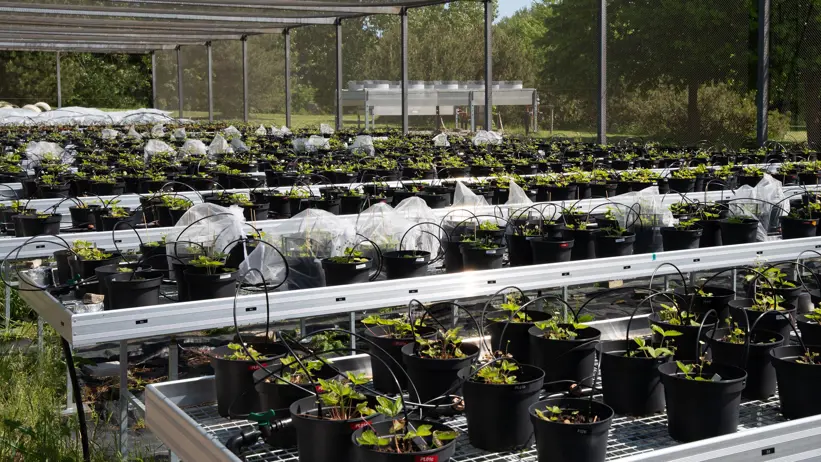
In an enclosed trial cultivation at the Alnarp campus stands rows of tables with potted wild strawberry plants.
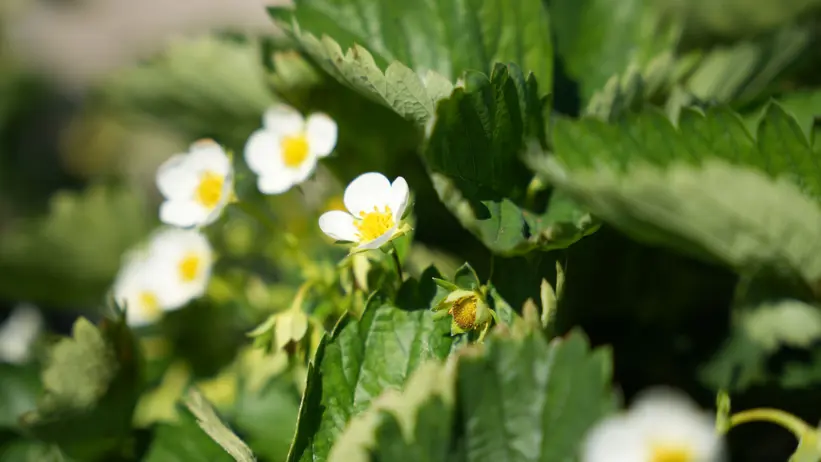
The plants, which have started to flower, have been collected from various locations across Europe and form part of a project to develop a biopesticide.
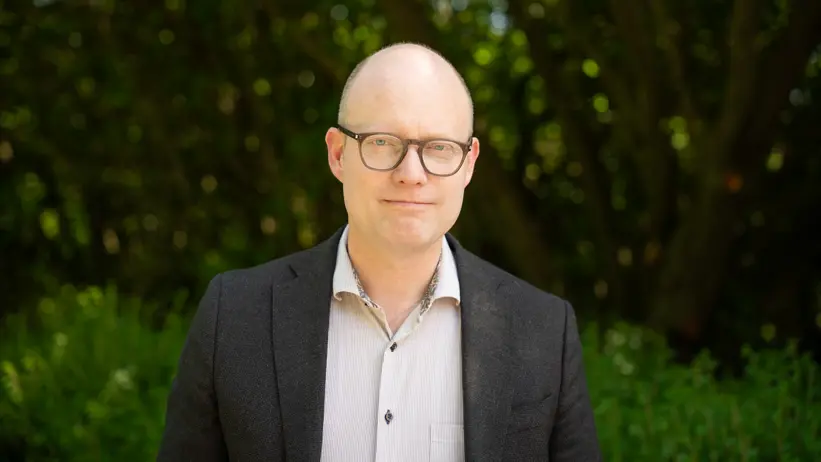
Johan Stenberg, ecologist and professor of integrated plant protection at SLU, walks among the tables, describing the plants' characteristics.
– I enjoy working with wild strawberries because they vary so much in both form and characteristics. Different plants have different strategies for defending themselves against plant diseases and insect pests, he says.
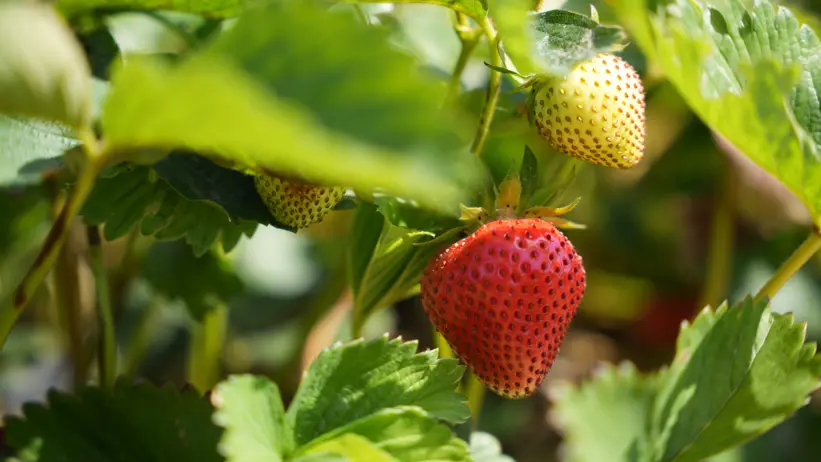
The goal is to mimic the most successful wild strawberry plants and thereby create an effective alternative to chemical pesticides for healthier cultivated strawberries.
He sees chemicals as an important tool to be used when needed, but not as the whole solution.
– The point of integrated plant protection is to rely less on just a single plant protection method.
Plant production's equivalent of Sweden's total defence
Chemical pesticides were introduced to the market during the Green Revolution in the mid-twentieth century. The pesticides became extensively used in agriculture, with a sharp increase in yields as a result.
But over time it became clear that the chemicals often had negative consequences for health and the environment, and researchers began to look for alternatives.
That is how the research field of integrated plant protection came about, more or less, says Johan Stenberg.
– I would say that integrated plant protection is like plant production's equivalent of Sweden's total defence. We have the army to defend us against attacks, but also the navy, the air force, the Home Guard and civil defence, he says.
Today, farmers in the EU are required by law to follow the principles of integrated pest management. Using chemicals as a preventive measure is prohibited.
As consequence, there is a large focus in agriculture on monitoring weeds, diseases and pests, and taking preventive measures. A bit like strengthening human health to reduce the risk of disease, says Johan Stenberg.
– Preventive measures in plant protection can, for example, include providing optimal levels of water and nutrients, planting in a sheltered location, and favouring beneficial organisms.
Increased food production with fewer chemicals
Following a 2025 decision by the Swedish Chemicals Agency, research in integrated plant protection has gained renewed relevance. The decision means that the number of approved chemical pesticides containing PFAS may decrease in Sweden.
– It's both good and bad. You reduce the problem of harmful substances in nature. But you also create another problem: that farmers' access to effective products is limited, says Johan Stenberg, and continues:
– As researchers, we have to take this as a positive challenge, that we need to improve the other methods.
At the same time, Sweden has a national goal to increase food production. In the horticultural sector – fruit, vegetables and berries – Sweden has a particularly low level of self-sufficiency.
Because horticultural crops are sensitive to diseases and pests, and difficult to store, waste in the sector is substantial. Research in integrated plant protection therefore has an important role to play in enabling increased production.
As an example, Johan Stenberg notes that research at SLU has given rise to new storage methods that allow Swedish apples to last all the way through to spring.
– That is a plant protection issue that has been absolutely crucial for ensuring we have access to Swedish apples for such a large part of the year.
SLU strong in biological control
Johan Stenberg highlights three major research areas within integrated plant protection where SLU excels: resistance breeding, intercropping and cultivar mixtures, and biological control.
Resistance breeding involves developing crops that are better at withstanding diseases and pests. In intercropping and cultivar mixtures, researchers develop methods for growing different crops together, or different varieties of the same crop, which has been shown to have good preventive effects.
The third area is biological control, which is Johan Stenberg's own field. Researchers use beneficial organisms, such as insects and microorganisms, and adapt the growing conditions to support them.
– We are very strong in biological control. That is also because there has been political steering towards it, both from SLU and from the government. As a result, we have been able to build up activity within all sectors: horticulture, agriculture and forestry.
The strawberries' microbial bodyguards
The wild strawberry plants in the trial cultivation in Alnarp form part of a project called WildCrop. The biopesticide that Johan Stenberg is working on is based on beneficial yeast-like fungi from the wild strawberries.
The biopesticide is intended to prevent, and to some extent cure, diseases in cultivated strawberries. One of the most important diseases to bring under control is grey mould.
– The fungi occur naturally on wild berries and fruit, which is one reason these plants are often healthy, says Johan Stenberg.
In the project, fungi are collected from wild strawberries that have grown in different locations, so that researchers can create a biopesticide adapted to different environments.
The next step is to make the cultivated strawberries good hosts for the fungi.
– The yeast-like fungi become like microbial, natural bodyguards. For this reason, we are trying to find out which traits make plants good hosts for the fungi, he says, and continues:
– We haven't quite got there yet, but we hope to reach that point in a fairly near future.
SLU in Almedalen 2026
During Almedalen week, SLU is hosting several seminars on current societal issues on board the research vessel Svea.
Some of Sweden's leading experts will share their knowledge on topics such as food preparedness, new opportunities for food production in the north, the role of universities in crisis, and the management of Baltic Sea fish stocks.
One of the seminars addresses the question of what is required to secure the country's access to vegetables, fruit and berries in times of crisis. From SLU, Johan Stenberg and Magnus J. Stark take part in the panel.
Contact
-
PersonJohan Andreas Stenberg, ProfessorDepartment of Plant Protection Biology
-
PersonAlva Mårtensson, Communications officerUnit for Collaboration and Development