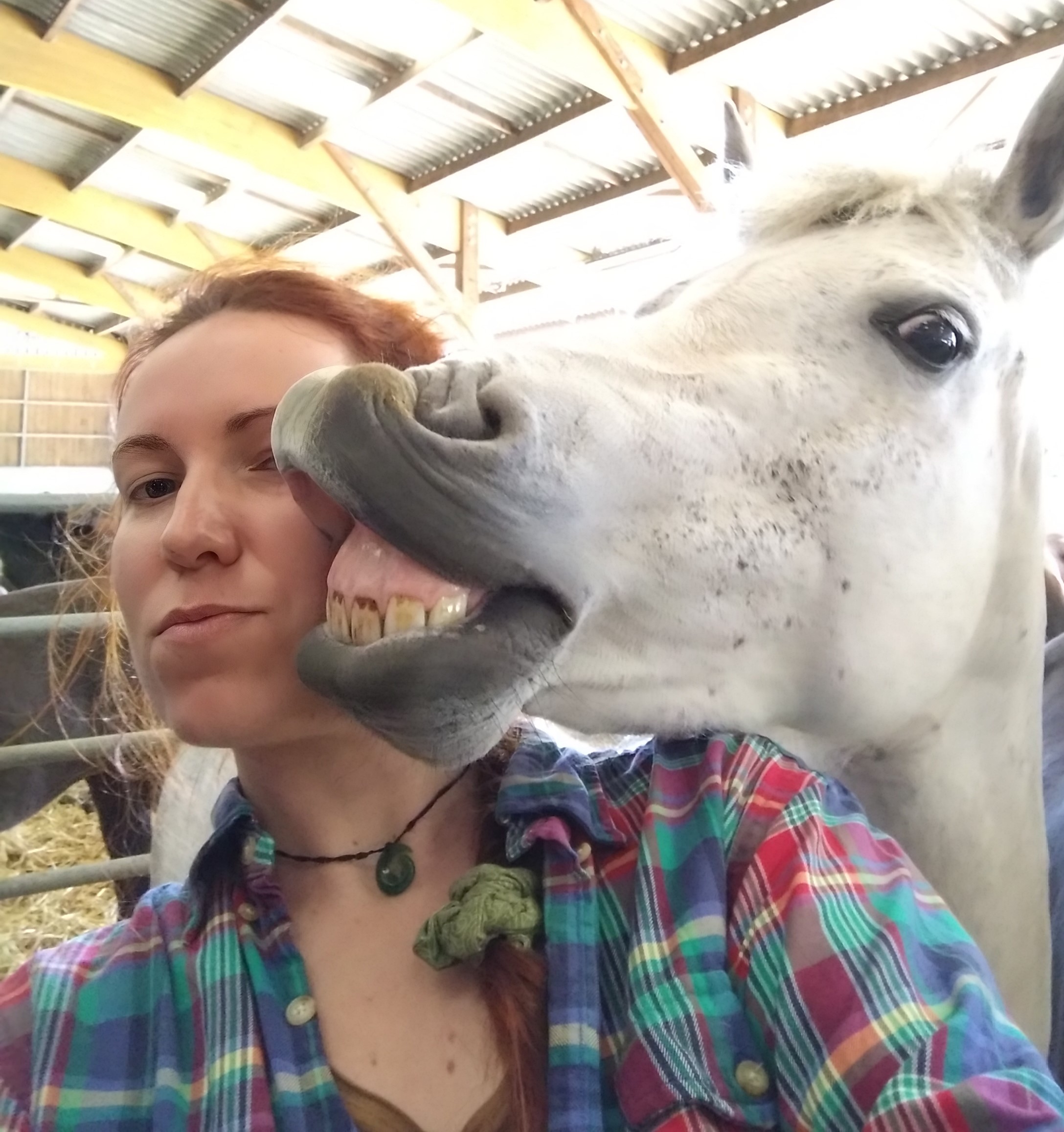
The personality and attachment style of a horse owner shape the interaction with horses
The psychological profile of horse owners affects their interactions with horses – from how often they ride and train to what equipment they choose. This suggests that better self-awareness can lead to more conscious and horse-centred care, according to a study from SLU and the University of Turku.
“Improving horses’ lives often requires understanding their caregivers as well. Human psychological characteristics do not have dramatic effects, but even small, systematic differences can have practical implications when it comes to long-term interactions between a horse and a human,” says lead author Océane Liehrmann from SLU and the University of Turku.
With knowledge of a horse owner's psychological profile, it is possible to tailor training programs, improve communication between humans and horses and ultimately support better horse welfare.
“A first step in this direction would be to develop tools that make horse owners more aware of their own psychological tendencies,” says Océane Liehrmann.
Friend, coworker or tool?
The relationship between humans and pets has been central to humanity for thousands of years, and this interdependence affects the well-being of both humans and animals. Despite a growing recognition of this, research into the human psychology in these relationships is still limited.
When it comes to pets such as dogs and cats, we know that they can provide their owners with a sense of security, a “safe haven” and emotional support, and that owners can suffer from separation anxiety and deeply grieve the loss of their animals. However, we have limited knowledge of attitudes and behaviours towards domesticated animals that we do not share a home with.
“The horse is a fascinating animal, given its cultural significance and historical transition from working animal to athlete and leisure companion,” says Océane Liehrmann. “The horse also has a special place on the line between livestock and companion animals, and the purpose of acquiring a horse can be a wish to have an animal to take care of and be close to, as well as using them for riding, work and competition.”
Psychology matters
Océane Liehrmann and her colleagues have used extensive web-based questionnaires to investigate how the psychological profile of horse owners is linked to their behaviour towards their horses, focusing on how much time they spend on riding, ground training and “quality time”. The researchers also investigated whether headgear with or without bit was used.
The questionnaires were also designed to describe the psychological profile of horse owners using two measures. One concern personality, i.e. how open, conscientious, outgoing, empathetic and neurotic a person is. The other concern attachment patterns, which usually refer to children’s relationships with parents, or relationships between adults, but which can also be applied to relationships with animals. Here, focus is on the need for affirmation, intimacy and independence.
Closer ties, longer rides
The results showed a clear pattern: owners who felt more emotionally close to their horses spent more time with them – whether it was riding, training or simply being present. Owners who regularly spent informal, unstructured time with their horses showed a more secure form of attachment, suggesting that quiet, purposeless companionship may be especially important in building bonds between humans and horses.
Personality also played a role. Owners who rode a lot tended to be slightly more organised, outgoing and less apprehensive, while those who practiced groundwork more often scored higher in “openness to new experiences” – possibly an expression of curiosity and a willingness to explore non-traditional, horse-centred training methods.
The study also found subtle links between the choice of using a bit or not when riding and how emotionally connected owners felt to their horse. Rather than pointing out a particular practice as better or worse, the researchers suggest that reflecting on our own psychological tendencies could be a valuable step towards more conscious and horse-centred decision-making.
The study involved 2,239 horse owners from 21 countries. The questionnaires were available in English, Finnish and French, and most participants came from France, Finland, the UK and Canada.
Contact
PhD Océane Liehrmann, Postdoctoral Researcher
Animal Centered Environment group, Department of Biosystems and Technology
Swedish University of Agricultural Sciences, Alnarp
oceane.liehrmann@slu.se, +33 6 59 85 93 28
Océane Liehrmann is a researcher in animal behaviour and welfare. She completed her PhD at the University of Turku in Finland, where she explored human–animal relationships in working animals such as Asian elephants, horses, and reindeer. She prefers interviews in English or French.
The scientific article
Océane Liehrmann, Alisa Viitanen, Aada Ståhl & Milla Salonen. 2026. Exploring Equestrian Psychology: How Owner Attachment Style and Personality Traits Relate to Training Choices and Relationship Parameters. https://doi.org/10.1080/08927936.2026.2676402
Press image
(May be published without charge in articles about this press release. Please include the name of the photographer)
Océane Liehrmann and a horse. Photo: Océane Liehrmann