
Three years in the field: exploring the hidden dynamics of weed communities
How does biodiversity affect weed populations in agricultural fields? In a long-term field study around Uppsala, Eirini Daouti is investigating how weed diversity and natural seed predators influence weed communities development over time.
This summer, Eirini Lamprini Daouti and her field assistants are spending long days in cereal fields around Uppsala, counting weeds, installing traps and monitoring the activity of seed-eating insects. The work forms part of a three-year field study that aims to understand how biodiversity influences weed populations in agricultural landscapes.
The role of diversity and seed predators
The study is being conducted in ten cereal fields, where sampling plots with different levels of weed diversity have been established. By returning to the same locations between 2026 and 2028, Eirini hopes to reveal how weed communities develop over time and what role natural seed predators play in shaping those changes.
– This year, I have selected the experimental fields and sampling plots and currently we monitor weed communities and measure seed predation for two weed species, Poa annua and Chenopodium album in plots with low, intermediate and high weed diversity. The idea is to follow the changes of the weed community in the same plots over several years, says Eirini.
From individual species to entire communities
To measure seed predation, the research team places seed cards in the fields and installs pitfall traps to study the communities of seed predators present. At the same time, they carefully document the weed species growing at each sampling point.
The field season has been demanding. One of the greatest challenges has been establishing a clear gradient of weed diversity within each field.
– We counted a lot of weeds! It has also been challenging to coordinate the fieldwork with farmers’ activities to ensure that our sampling does not interfere with their field operations.
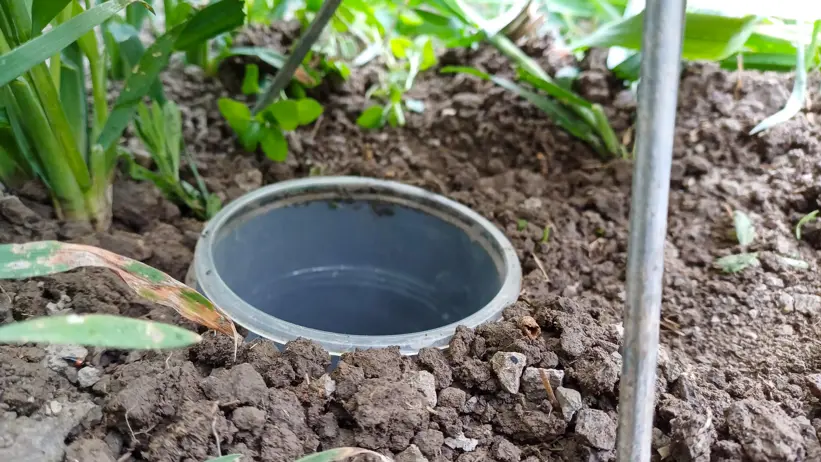
The project builds on Eirini’s previous research, which demonstrated that seed predation can significantly reduce the population growth of the weed species Alopecurus myosuroides. The current study expands the scope from single species to entire weed communities.
– What makes this particularly exciting is that it is a long-term field study across multiple fields and landscapes. It is a unique opportunity to observe how the same weed communities change over several years and understand how biodiversity shapes these dynamics.
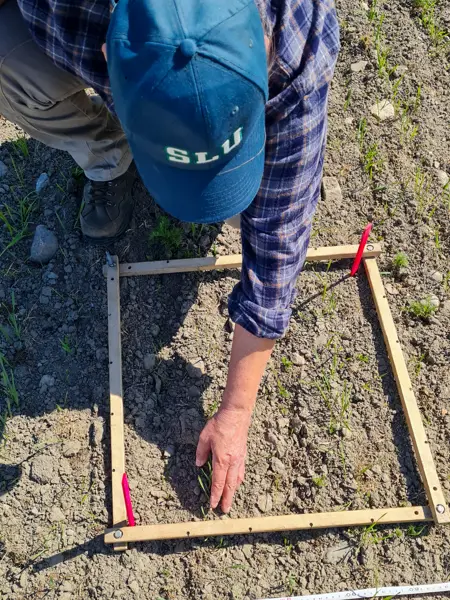
One of the key questions is whether diverse weed communities may be more stable than less diverse ones. Eirini also expects biodiversity above ground to be linked with biodiversityon the soil surface, including the communities of seed predators that help regulate weed populations naturally.
– I hope to find that more diverse and even weed communities have stable population growth rates and are not detrimental to crop yield. I am also expecting seed predators to play an important role in weed dynamics.
Foxes, farmers and fieldwork
While the research focuses on weeds and insects, the fieldwork has provided plenty of memorable encounters with wildlife.
– One of the most exciting aspects of fieldwork is that you never know what you will encounter. We regularly see seed predators running around the fields, but this year we have also seen an impressive number of foxes. Almost every day we spot foxes crossing the fields, which has been an unexpected and very enjoyable part of the field season.
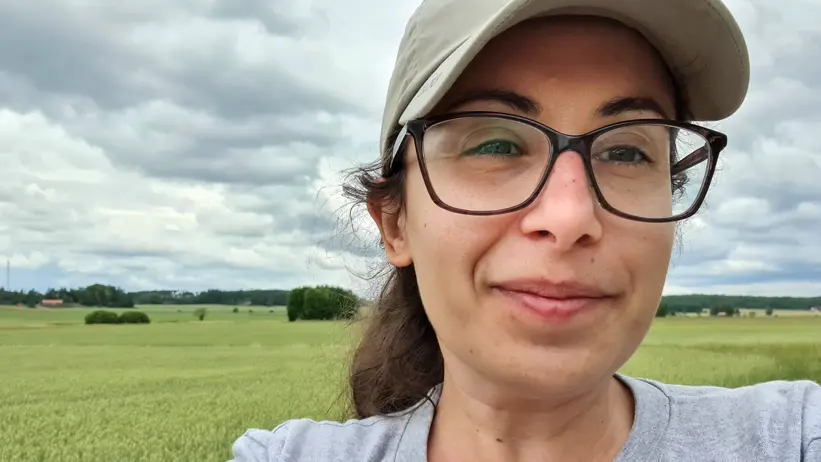
Eirini is also keen to highlight the farmers who have made the research possible.
– I am incredibly grateful to the farmers who have allowed us to work in their fields. They have been extremely helpful, and some are genuinely enthusiastic about learning more about insects and weed seed predation. Their curiosity and engagement are a huge source of motivation and a reminder that research can create meaningful connections between science and farming.
With the most intensive phase of fieldwork expected to be completed by the end of July, the first season is laying the groundwork for a study that will continue to reveal how biodiversity influences agricultural ecosystems in the years ahead.
Read more
Contact
-
PersonEirini Lamprini DaoutiDept. of Crop Production Ecology, Weed biology and management