Scandinavian research team explores Skagerrak's deep-sea habitats
Researchers from Sweden, Norway and Denmark are currently on an expedition aboard SLU's research vessel Svea. Together, they are investigating the species-rich and sensitive habitats found in the deep parts of Skagerrak.
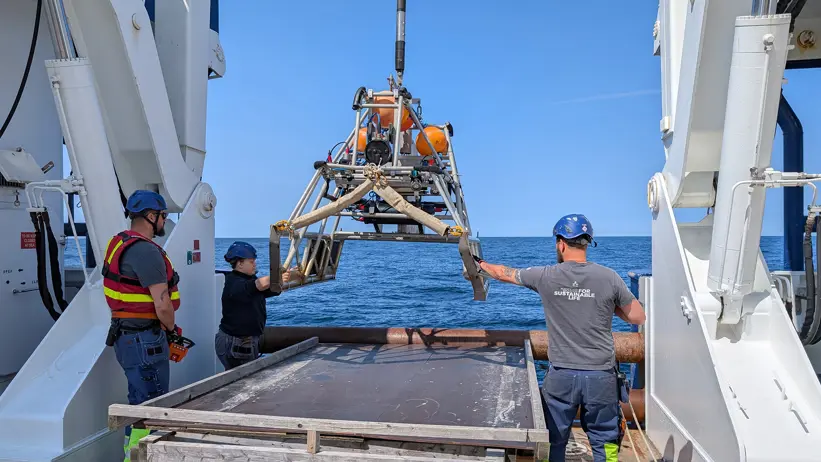
During the expedition, which runs from 4 to 9 July 2026, the marine researchers are studying seafloor habitats and mapping fish, mussels, corals and other bottom-dwelling organisms using underwater cameras and sampling equipment. They are also testing whether an a remotely operated vehicle (ROV) can be used to tag demersal fish.
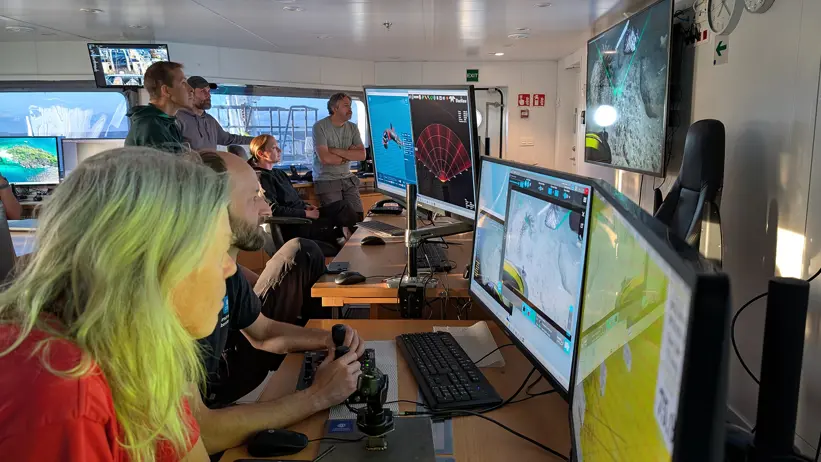
“What is most exciting is that we never really know what to expect when the sampler comes back up or when the first images from the seafloor appear on the screens in Svea’s operations centre. Each station gives us a new piece of the puzzle in understanding how these habitats function,” says Mattias Sköld, expedition leader and researcher at Swedish University of Agricultural Sciences (SLU).
A heavily bottom-trawled sea
By analysing seafloor sediment samples, the researchers are also investigating how effectively soft-bottom habitats function as carbon sinks.
“Parts of Skagerrak are considered an important carbon sink for the North Sea region. At the same time, it is one of the most heavily bottom-trawled marine areas in Europe, which may affect the seafloor's ability to store carbon,” says Mattias Sköld.
The researchers will therefore compare sediment samples from areas with different levels of bottom trawling within the marine protected areas they are visiting in Swedish, Norwegian and Danish waters.
New knowledge for marine management
The ongoing expedition aboard Svea, SCANDSKAGEX26, complements the MARHAB and SAMSKAGII research projects, which investigate how marine habitats and fish populations are connected across neighbouring marine areas, and how marine protected areas influence ecosystems.
“Skagerrak is like a miniature deep sea, where valuable marine environments coexist with many different human activities. Through this joint expedition, we hope to generate new knowledge that supports integrated marine management across Sweden, Norway and Denmark,” says Even Moland, scientific lead of the project and researcher at the Institute of Marine Research, Norway.
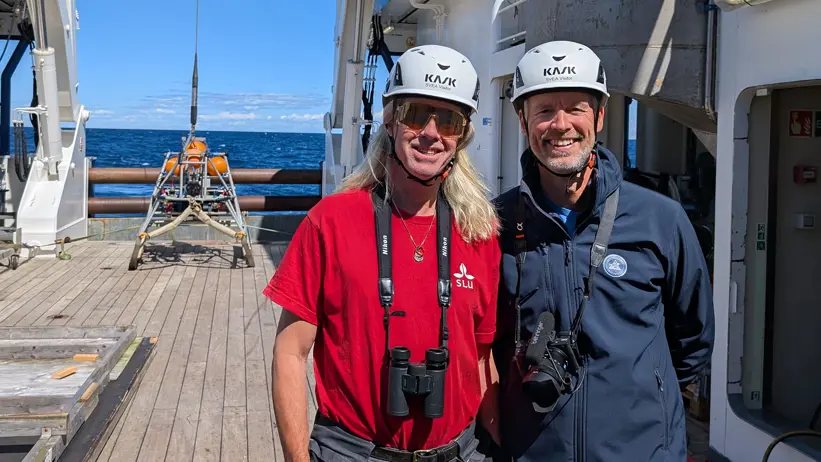
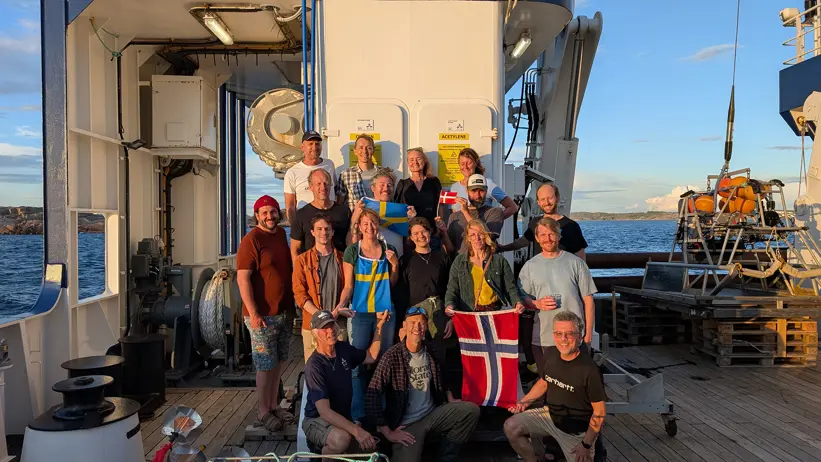
SCANDSKAGEX26 is funded through AQUARIUS, an EU-funded initiative that provides researchers with transnational access to Europe's leading marine research infrastructures. R/V Svea is one of 57 research infrastructures participating in AQUARIUS.
Contact:
Mattias Sköld, Researcher, Swedish University of Agricultural Sciences (SLU), mattias.skold@slu.se , 070- 537 87 74
Even Moland, Researcher, Institute of Marine Research, even.moland@hi.no
................................
AQUARIUS
AQUARIUS is an EU-funded initiative offering researchers free access to state-of-the-art infrastructures for marine and freshwater research.
The project includes 57 infrastructures in total, such as research vessels, monitoring stations, drones, aircraft, satellite services, laboratories and virtual data platforms.
Running from 2024 to 2028, AQUARIUS is coordinated by the Marine Institute of Ireland. SLU participates with the research vessel R/V Svea.
-------------------------
AQUARIUS has received funding from the European Union’s Horizon Europe Framework Programme for Research and Innovation under grant agreement No 101130915. Views and opinions expressed are however those of the author(s) only and do not necessarily reflect those of the European Union or European Research Executive Agency. Neither the European Union nor the granting authority can be held responsible for them.