
High school students tackles global food security challenges through SLU Youth Institute
How can we combat hunger in conflict-affected areas? What solutions can strengthen food security in countries like Malawi? And can urban farming be part of the answer to food insecurity in the UK?
These were some of the questions that engaged high school students from different parts of Sweden when the SLU Youth Institute gathered high school students for a roundtable discussion on global food security and sustainable food systems in the spring.
The SLU Youth Institute is a collaboration between SLU and the World Food Prize Foundation, USA. The purpose of the programme is to give high school students the opportunity to delve into global issues and present their solutions to researchers and experts, which has created an important meeting place between education, research and social development.
During the year, students from schools around our campuses in Uppsala, Alnarp and Umeå have worked on so-called Global Challenge essays. By analyzing some of the world's most pressing societal challenges, they have been given the opportunity to develop their own ideas and solutions for the food supply of the future. One student from each campus is nominated and given the opportunity to attend and present their essays to international experts at the World Food Forum in Rome. Two of the alumni who were nominated in previous years for their great commitment, Rebecka and Alfons, each gave an appreciated presentation about their experiences of writing the essay and the opportunity to present their work in a larger international context.
The roundtable discussions began at SLU's campus in Uppsala, where the students presented their work to researchers and experts. The discussions revolved around everything from sustainable farming to the future of agriculture, and the participants also gained an insight into university life through meetings with students and activities on campus. Ellen Lupkes from the World Food Prize Foundation (WFPF), spoke about the organization's important work and the opportunities students now have as alumni in an international context.
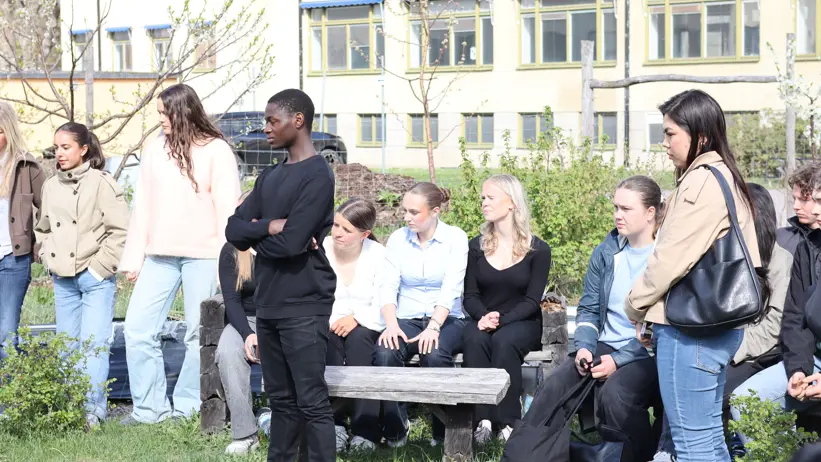
The next stop was SLU's campus in Alnarp, where over a hundred high school students from Landskrona, Malmö, and Lund participated in the roundtable discussions and the parallel inspiration programme. The day was filled with presentations, engaging conversations, and inspiring study visits to Alnarp Agroecology Farm and the Plant Protein Factory. Curiosity was great when the students got to meet students, explore the landscape architecture students' drawing rooms, and discuss the sustainable food system of the future.
Among those who presented their essays, Iris from Malmö Idrottsgymnasium was nominated. Her work focused on food insecurity in the UK as a result of economic and political conflicts. Iris highlighted urban farming and hydroponic farming systems as innovative solutions to increase access to nutritious food in urban environments.
The last roundtable discussions took place in Umeå, where students from Hjalmar Strömerskolan, Tannbergsskolan and Liljaskolan presented their essays and visited the Röbäcksdalen research station. There they were able to deepen their knowledge of research and innovations in sustainable food production in northern Sweden.
Oskar from Tannbergsskolan, who was nominated in Umeå, looked to Malawi in his essay on the challenges and opportunities of agriculture. He highlighted how switching crops from tobacco and tea to more nutritious ones such as avocado and potatoes can contribute to reducing hunger. He also highlighted how forestry, grafting, educational efforts and improved infrastructure can contribute to increased food security and create better conditions for future agriculture.
What united the students' work was not only knowledge and analysis – but also a belief in the future despite the major global problems the world is tackling today regarding conflicts, climate change, hunger and other things. Through creativity, commitment and the will to make a difference, they showed that the next generation is already involved in shaping the solutions to some of the world's biggest challenges.
Contact
-
SLU Youth Institute
For more information, please contact the coordinators:
Anna-Klara Lindeborg (Uppsala):
Telephone: +46-(0)18-67 12 30Kristina Karlsson Green (Skåne):
Telephone: +46-(0)40-41 53 02Elisabeth Nyström (Umeå):
Telephone: +46-(0)90-786 82 38