
Reed harvesting can provide dual benefits – healthier coastal ecosystems and more livestock feed
A new PhD thesis from SLU suggests that harvesting overgrown reed beds along coastal areas in the Baltic Sea could offer an innovative way to improve ecosystem health while also contributing to sustainable livestock feed production.
In his thesis Harvesting reed (Phragmites australis): Possibilities, challenges, and considerations for coastal ecosystems and feed production, PhD student William Ashworth focuses on common reed, a wetland plant found along the shores of Swedish lakes and the Baltic Sea, as well as in many regions worldwide.
– My focus has been to investigate whether harvesting reed could help restore ecological balance while simultaneously creating a new source of forage for livestock, says William Ashworth.
Although reed beds provide an important habitat for fish, birds and invertebrates, excessive growth in recent decades has become a growing environmental concern. Scientists believe nutrient pollution, or eutrophication, has contributed to the rapid spread of reed in parts of the Baltic Sea, creating dense monocultures that reduce biodiversity and interfere with recreational activities such as boating and fishing. In some countries, reed is also a prolific invasive species, which outcompetes native aquatic vegetation.
From dense reed beds to healthier coastal waters
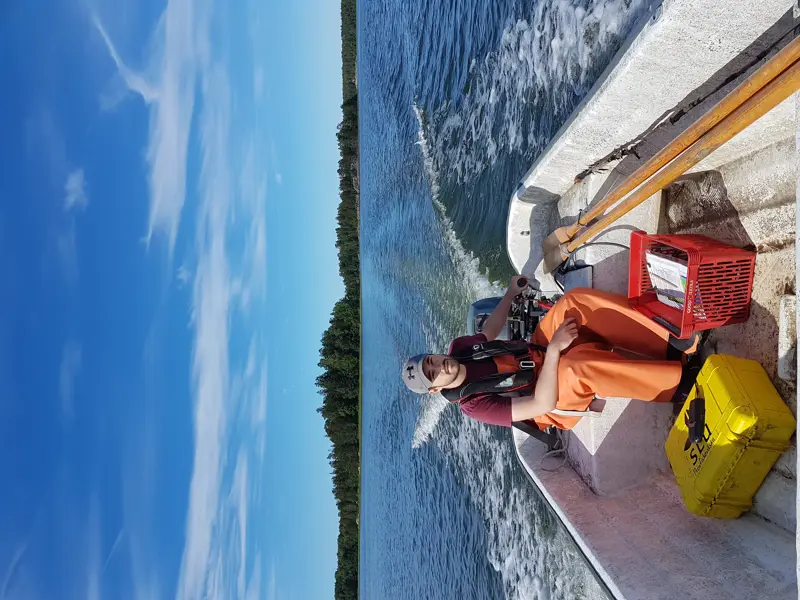
In his research William collected data from Baltic bays in Östhammar and Gräsö where reed harvesting had been carried out and compared it with data from non-harvest bays that were left undisturbed.
– We used a range of methods to study the effects, including visual surveys of plant cover and bird activity, Ekman grabs, gillnetting, pike fishing and detonation fishing, says William Ashworth.
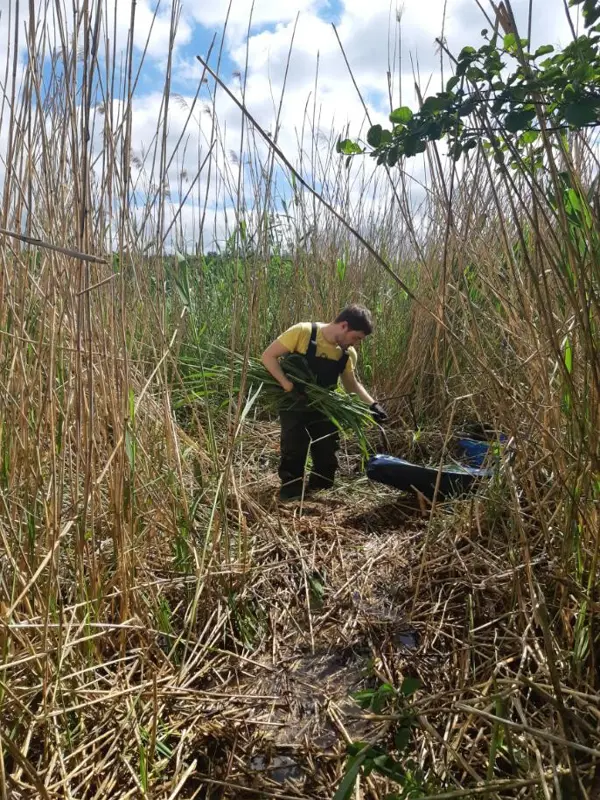
William’s research indicates that reed harvesting can successfully control the spread and density of reed beds, while also benefitting other aquatic plants. Harvesting strategies that maintain a varied habitat structure also appear to benefit fish populations. Furthermore, uniform harvesting methods did not show negative effects on fish or bird communities.
– Harvesting during July and August also removed around nine kilograms of phosphorus per hectare and year from coastal ecosystems, possibly making for an effective method to combat eutrophication in the long term, says William Ashworth.
Reed as feed: potential with limitations
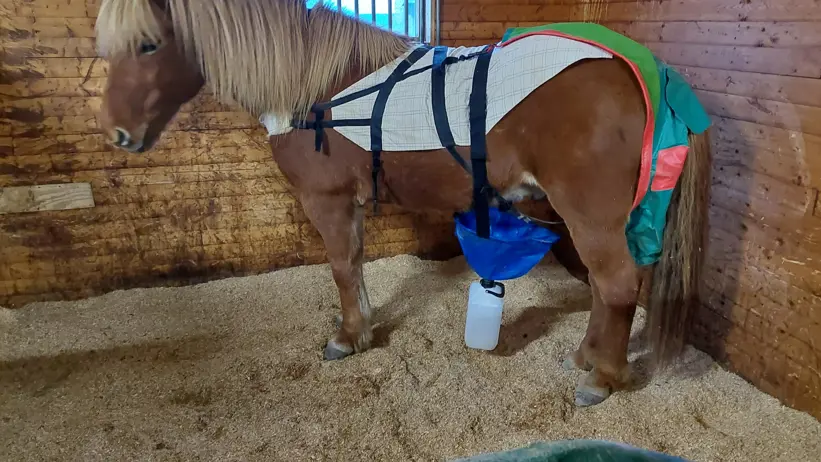
In the second part of his research, William examined whether harvested reed could serve as animal feed through a series of feeding trials. In the first trial, horses were fed reed silage and their intake and digestibility were compared with grass haylage.
– By measuring what the horses consumed and excreted, we were able to assess how the reed silage intake and digestibility compared to the grass haylage, says William Ashworth.
William then carried out a similar trial with cows, comparing reed silage harvested early in the summer with reed silage harvested later.
– This allowed us to evaluate how harvest timing affects the suitability of reed as livestock feed, says William Ashworth.
William’s results showed that reed can be suitable for horses with low energy demands and for non-producing dairy cows. However, it does have some limitations. Most notably, the dry matter intake of the feed was low compared to conventional feed alternatives.
– My results suggest that harvesting reed earlier in the summer may improve feed intake and nutritional quality, though this would reduce overall harvest yields and make the process less economically efficient, says William Ashworth.
Despite these limitations, William concludes that reed harvesting has significant potential as a form of sustainable development that links environmental restoration with agricultural production. The study also identifies several areas for future research, including feed processing techniques, nutritional supplements and harvesting strategies that balance environmental benefits with economic viability
– If these challenges can be addressed, reed harvesting could become a practical tool for both combating coastal eutrophication and meeting growing demands for livestock feed in a more sustainable way, says William Ashworth.
Read the full thesis Harvesting reed (Phragmites australis): Possibilities, challenges, and considerations for coastal ecosystems and feed production.
Contact
-
PersonWilliam Harry Ashworth, PhD studentInstitute of Coastal Research, joint staff