Changing carbon cycling in subarctic lake catchments in a warmer and greener tundra
The Arctic and alpine regions are warming at a rate more than twice the global average. Climate change is rapidly transforming these landscapes, but its effects on carbon cycling are more complex than previously thought.
In a recent study, SLU researchers Willem Goedkoop, Sven Adler, Jens Fölster, and Danny C. P. Lau investigated how warming has affected tundra vegetation, carbon storage, and lake water chemistry across the alpine regions in northern Sweden. Based on nearly four decades of satellite observations, field measurements, and long-term monitoring data from nine subarctic catchments, their analysis showed pronounced responses of terrestrial and aquatic ecosystems to a warmer climate.
The researchers found that rising temperatures promoted the expansion of tundra vegetation, a phenomenon often referred to as “Arctic greening”. As terrestrial plants became more productive, the amount of carbon captured and stored in vegetation also increased substantially. Across the study regions, carbon sequestration had increased by about 20% from the 1980s to the 2000s. The results suggest that warming initially strengthened the tundra’s ability to remove carbon dioxide from the atmosphere, but this increase appeared to level off in more recent years.
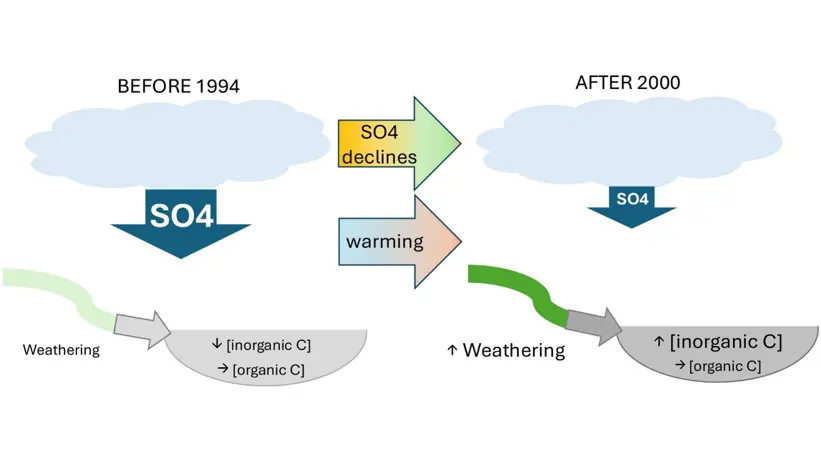
The study also revealed unexpected consequences of these changes for downstream lakes. Despite greater carbon storage on land, concentrations of organic carbon in lake water generally declined, while inorganic carbon increased. The authors showed that warmer conditions accelerated the weathering of soils and rocks, releasing minerals that altered the chemical balance of lakes. Reductions in sulfur deposition from air pollution further contributed to these changes.
These findings demonstrate that climate warming affects not only carbon storage in northern landscapes, but also how carbon is transformed and transported into freshwater ecosystems. Understanding these linked land-water processes is essential for predicting the future impacts of climate change in Arctic and alpine landscapes.
Original article
Contact
-
PersonWillem Goedkoop, professorDivision of Ecology and Biodiversity