
Economics, Sustainability and Pragmatism Important for Swedish Farmers’ Soil Management
Five different farmer archetypes emerge from a new study conducted across five European countries. The study focuses on which factors are important to farmers when making decisions about how they manage their land.
The article A typology of European farmers' viewpoints on soil management and an investigation of their context-dependency, published in the scientific journal Ecological Economics, describes how different farmer archetypes view, among other things, the importance of soil management. The study is based on interviews and uses Q methodology, a research approach that combines qualitative and quantitative methods to map people's subjective opinions, values and perspectives.
The aim of the study was to investigate how European farmers perceive their soils and soil health, and to identify the different perspectives on how soil should be managed. The researchers also wanted to examine how these perspectives are influenced by farmers' regional and farm-specific conditions.
“For me, the key contribution of the study is that it highlights how people are motivated by different factors. This means that agricultural policy and the CAP need to address a variety of motivations in order to engage a broad range of farmers in a transition towards improved soil health and greater resilience,” says Jenny Höckert.
Different Views on Soil Management
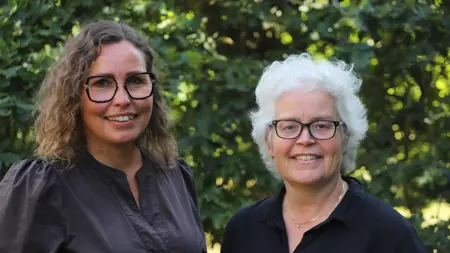
Researchers Christina Lundström and Jenny Höckert from the SLU Competence Centre for Advisory Services are two of the authors of the article. They also participated in collecting data from the Swedish farmers involved in the study.
“The interviews in Sweden were conducted in May and June 2023, during a period of severe drought. Many farmers feared a repeat of the 2018 season, which may, of course, have influenced how they responded to our questions,” comments Jenny Höckert.
The study was conducted in the farmers' native languages in Sweden, Denmark, Austria, Switzerland and Spain. The results revealed five distinct farmer archetypes, each with slightly different views on the importance of soil management and soil health stewardship. Geographic location proved to be less important, as several of the archetypes were found across all participating countries.
Social Engagement
Some geographical differences were identified. Spanish farmers placed greater emphasis on economic profitability, which may be linked to two years of drought, while Danish and Swedish farmers placed greater importance on social and societal considerations.
“It is always difficult to place people into neat categories, and many of the Swedish farmers fitted into more than one of the archetypes,” says Christina Lundström.
Compared with previous studies and classifications of farmer archetypes that have used other research methods, the Sustainable Farmer stands out due to an unusually strong sense of social responsibility and community engagement.
The Economic Farmers operated the largest and most conventional farms and also had the highest levels of education. In contrast, the Risk-Averse Farmers were the youngest group and managed the smallest farms, with a large proportion of rented land. Organic farmers tended to belong either to the Soil Farmer or the Sustainable Farmer archetype.
The final section of the article discusses how political and economic instruments can best support the adoption of more sustainable soil management practices within the EU. Since regional differences were found to be relatively small, many of the necessary measures could be implemented at the EU level. Knowledge of the different archetypes may help policymakers and advisory organisations design more effective support measures.
Fact Box: The Five Archetypes
1. Soil Farmers
The Soil Farmers considered the most important aspect of soil management to be maintaining and improving soil quality for future generations and increasing soil carbon content. Short-term profitability and maximising yields were seen as less important.
2. Economic Farmers
The Economic Farmers considered it most important to maintain and improve the soil’s water-holding capacity in order to secure the long-term viability of the farm. High yields were important, but so was increasing soil carbon content.
3. Sustainability Farmer
The Sustainability Farmers wanted to enjoy their work and maintain farms that were economically viable in the long term. It was also important to avoid negative impacts on the local community and the environment, and to operate in line with society’s expectations.
4. Practical Farmers
The Practical Farmers also wanted to enjoy their work but relied primarily on their own experience and placed less importance on the opinions of others. Soil health and the protection of water resources were important to ensure that future generations would have good conditions for cultivating the land.
5. Risk-Averse Farmers
The Risk-Averse Farmers viewed soil health as important primarily because it helped reduce financial risks, climate-related risks, and rising costs. Frugality and financial incentives were considered important, and the long-term viability of the farming business was a central concern.
Contact
-
PersonChristina Lundström, ResearcherDepartment of People and Society
-
PersonJenny Höckert, ResearcherDepartment of People and Society