
Hidden fungal diversity could help protect Bolivia’s coffee
In her doctoral thesis, Marisel Mamani has investigated the diversity of fungi associated with coffee production in Bolivia. Her results reveal a rich and partly unexplored diversity of Fusarium and Trichoderma, including fungi with potential for biological disease control.
Coffee production in Bolivia is concentrated in the Yungas region, where high rainfall, warm temperatures and mountainous landscapes provide favourable conditions for growing high-quality Arabica coffee. They also create favourable conditions for fungi, including species that can cause disease.
In her doctoral thesis, Marisel Mamani investigated the diversity and characteristics of two groups of fungi associated with coffee: Fusarium, which includes important plant pathogens, and Trichoderma, a group of fungi known for its ability to suppress plant diseases.
Different Fusarium isolates behave differently
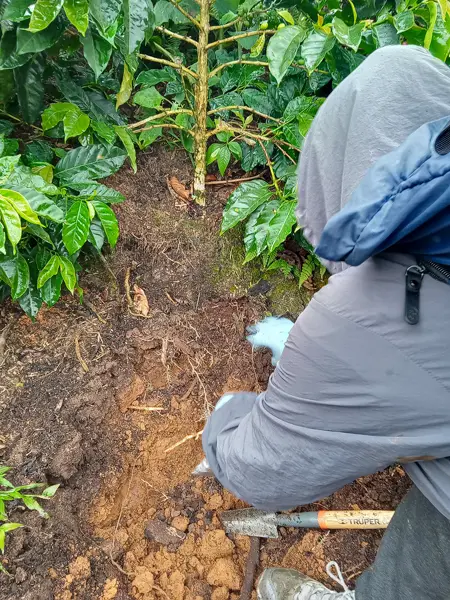
Marisel collected Fusarium from roots, stems, leaves and berries of coffee plants showing disease symptoms. Seven species were identified, belonging to six species complexes. When selected isolates were tested on coffee leaves and seedlings, several caused disease symptoms. However, their ability to cause disease varied considerably between isolates.
– This shows that the presence of Fusarium on symptomatic coffee tissue does not necessarily mean that all isolates are pathogenic. Their ability to cause disease needs to be tested experimentally, says Marisel Mamani.
The study provides new information about the Fusarium species associated with coffee in the Yungas and their potential to cause disease.
Extensive diversity of Trichoderma
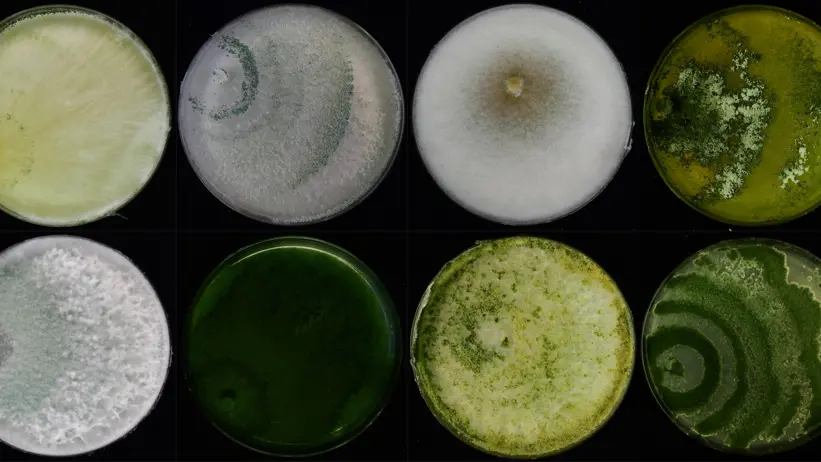
The study also investigated native Trichoderma from coffee soils, fallow areas and nearby forests. Marisel identified 51 different Trichoderma taxa, but only four could be confidently matched to known species. Genetic analyses of 41 isolates revealed 16 distinct taxa that may represent previously undescribed diversity. Diversity was highest in coffee rhizosphere soils and varied between environments.
– The diversity we found was greater than we expected, and we still do not know exactly what many of these fungi are. There is clearly much more to discover, says Marisel.
Native fungi show potential for disease control
Marisel also investigated whether the native Trichoderma isolates could suppress disease caused by Fusarium oxysporum, a highly virulent isolate obtained from Bolivian coffee. Of the 100 Trichoderma isolates tested, 70 showed strong antagonistic activity. Of these, 30 reduced disease by more than 90 percent under the experimental conditions.
– Some of these native Trichoderma look promising as biological control agents against coffee diseases. But the isolates can behave quite differently, so we need to test them individually rather than assume that closely related fungi will work in the same way.
How Trichoderma responds to pathogens
One Trichoderma isolate, T. cf. brasiliensis BOLM459, was studied to see how it responds to three fungal pathogens associated with coffee diseases: Colletotrichum gloeosporioides, Fusarium xylarioides and Phoma costaricensis. The fungus changed its gene activity even before physical contact, with the response varying depending on which fungus it encountered.
– This shows that Trichoderma can adjust its response depending on which fungus it encounters. It gives us a better understanding of how these fungi interact.
A basis for further research
The thesis provides new knowledge about the diversity of fungi associated with coffee production in the Bolivian Yungas, while also identifying fungi with potential relevance for disease management. The discovery of potentially undescribed Trichoderma diversity also highlights the need for further research into the fungal biodiversity of the region.
– These results can be a starting point for finding locally adapted biological control agents and developing more sustainable ways to manage coffee diseases, concludes Marisel.
Read more
Read the thesis:
Fungi associated with coffee in Bolivia - Biodiversity of Fusarium and Trichoderma.
Marisel Mamani will defend her thesis 16 October, 9.00 in Lennart Kennes Sal at the Biocentre, Ultuna, Campus Uppsala.
More information about the defence here.
This research is part of a research collaboration between SLU and Universidad Mayor de San Andrés (UMSA) in Bolivia, supported by the Swedish International Development Cooperation Agency (Sida). The collaboration brings together researchers and coffee-growing communities to study Bolivia’s coffee agroecosystems.
Contact
-
Person