
Legumes can reduce insect pests in winter oilseed rape
Growing winter oilseed rape together with legumes can reduce some of the crop’s most important insect pests. This is shown by a new study from SLU, in which researchers investigated how different legumes affect insect pests and yield under Swedish growing conditions.
Intercropping and other forms of diversified cropping system hold promise to reduce agriculture’s reliance on synthetic chemical inputs without reducing crop productivity. Legumes are particularly important intercrops because they can also provide nitrogen through biological nitrogen fixation.
In a field experiment conducted over two growing seasons, the SLU researchers compared winter oilseed rape grown as a sole crop with winter oilseed rape intercropped with either frost-sensitive faba bean, berseem clover or frost-hardy winter pea. They also investigated the effects of crop management such as sowing time of the intercrop relative to the winter oilseed rape and different levels of fertiliser and pesticide inputs.
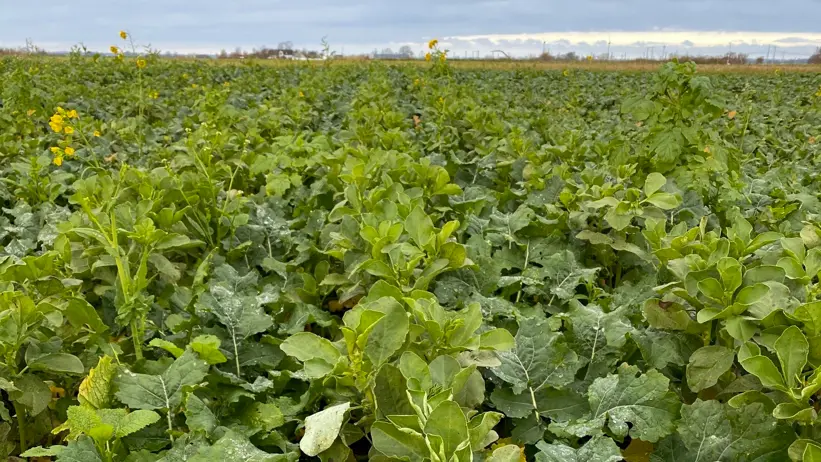
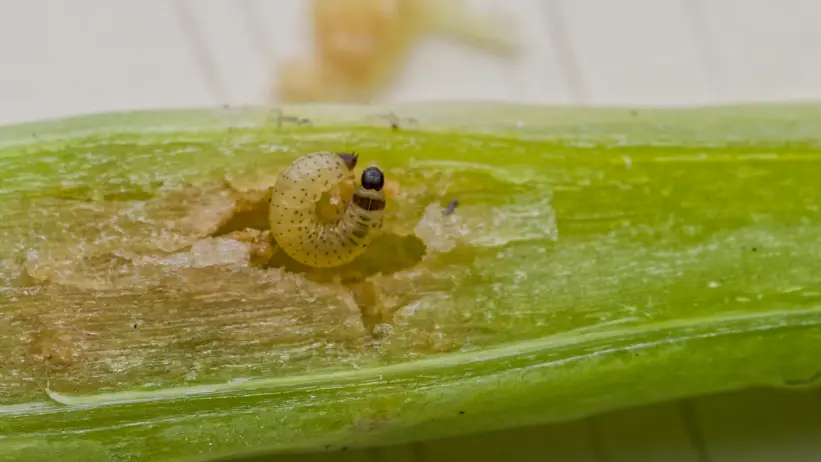
Fewer cabbage stem flea beetle larvae and reduced pollen beetle damage
The clearest effects were seen when winter oilseed rape was intercropped with frost-sensitive faba bean. The number of cabbage stem flea beetle larvae decreased from an average of 6.87 to 3.48 larvae per plant compared with winter oilseed rape grown as a sole crop. Damage to the rape buds caused by pollen beetles also decreased by 34 per cent. At the same time, the results show that the positive effect of intercropping on pest control depends on how the intercropping system is designed.
– It was interesting to see that sowing the intercrop simultaneously with winter oilseed rape is essential for pest control. Even a short sowing delay of ten days between the faba bean or the berseem clover and winter oilseed rape increased the number of cabbage stem flea beetle larvae significantly compared with when the crops were sown simultaneously, says Chloë Raderschall.
– So it’s not just a question of which legume you choose. When you sow it can also affect how well the intercrop protects against insect pests” adds Chloë.
The researchers found no effect of intercropping on the parasitism rates of pollen beetle or cabbage seed weevil larvae. A large proportion of the larvae were parasitised regardless of the cropping system, showing that parasitoids already play an important role in biological control in winter oilseed rape.
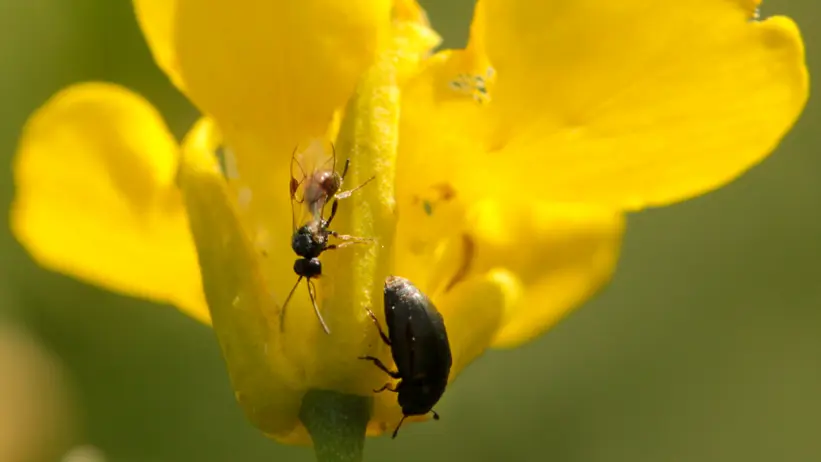
Positive effects on insect pests, but also a trade-off
The reduced incidence of insect pests did not result in a higher oilseed rape yield. Instead, the oilseed rape yield was lower when intercropped with frost-sensitive faba bean than when grown as a sole crop. The researchers believe that competition between the crops may have contributed to the lower yield. The results therefore point to a trade-off that needs further investigation: how can the positive effects of plant protection be achieved without the intercrop competing too strongly with the oilseed rape?
– Our challenge now is to find the right ratio between the intercrop and the winter oilseed rape for Swedish systems, where the legume suppresses insect pests and ideally also weeds without competing too much with the oilseed rape, Chloë concludes.
Read more
Intercropping with legumes can reduce insect pest pressure but does not increase yield in winter oilseed rape (Brassica napus L.)
– The scientific article published in Pest Management Science.
Contact
-
PersonChloë Aline Raderschall, researcherDepartment of Biosystems and Technology