
Pollinators in Focus in Bologna
The buzz around pollinators, honey bees and beekeeping was louder than ever at this year’s international EurBee 11 Conference, held in Bologna.
Researcher Lotta Fabricius Kristiansen from the SLU Centre for Advisory Services attended the EurBee conference in Bologna with a poster presenting a study conducted within the core project “B-RAP” (Bridging Research and Practice) of the COLOSS organisation. The study is based on two surveys carried out in 2020 and 2025 and explores which sources of knowledge beekeepers consider trustworthy and which they do not. The results showed that researchers, beekeeping advisers and experienced beekeepers were the sources of information most trusted by beekeepers.
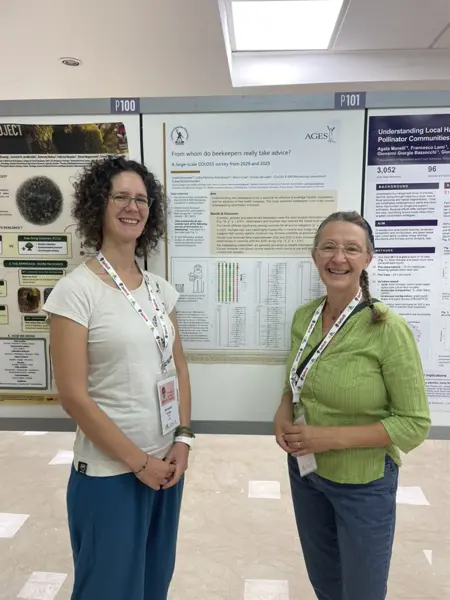
— There was considerable interest in our study. Most conference participants asked about how the credibility of different information sources compared in their own countries and whether there were any differences between 2020 and 2025, representing the periods before and after the COVID-19 pandemic, said Lotta Fabricius Kristiansen.
She also presented the Flora & Fauna Citizen Science Project and the way in which it engages members of the public in mapping and surveying the availability of flowering plants in the landscape for honey bees and other pollinators.
— It was rewarding to see this project presented in this context, as it is really about a new methodology for working together and gathering knowledge at a local level, rather than simply presenting the results of a floral survey, said Lotta.
Held Every Other Year
The EurBee Conference is held every two years and brings together apidologists, researchers and bee specialists from around the world. Topics at this year’s conference included bee health, agroecology, and the impacts of climate change on both wild and managed bees and their productivity.
— Perhaps the most interesting aspect of this year’s conference was the breadth of perspectives on pollination and pollinators. Discussions ranged from broad, strategic issues to highly detailed debates at the genetic level. One presentation that particularly stood out was the keynote address by our Swedish colleague Björn Klatt from Halmstad University, entitled ‘The 4th Agricultural Revolution – Rise of the Bees’. He took us on a journey through history, exploring the development of agriculture and how the future may evolve towards a system in which pollination and pollinators play a vital role in securing our food supply.
This autumn, a series of interviews with presenters and participants from EurBee will also be released as part of a dedicated podcast series.
Contact
-
PersonLotta Fabricius Kristiansen, ResearcherDepartment of People and Society