
Researchers test new ways to return ash to forests
In a new field trial, researchers at SLU are investigating how ash from heating plants can be used to return nutrients to forest soils. The aim is to explore whether ash recycling can be made simpler, while monitoring the effects on soil, water and vegetation.
When forests are harvested, branches and treetops can be used to produce heat and electricity. Burning this biomass leaves behind wood ash, which contains several of the nutrients that the trees have taken up from the forest soil.
Returning the ash to the forest can restore some of these nutrients to the soil. This is already done in some parts of Sweden, particularly in the south. However, the process can be costly and logistically challenging, and a large proportion of the wood ash therefore ends up in landfill.
“There is great potential to increase its use and to view wood ash as a resource rather than a waste product to a greater extent,” says Linnea Larsson, a doctoral student at SLU and associated with the Wallenberg Initiatives in Forest Research (WIFORCE) research programme.
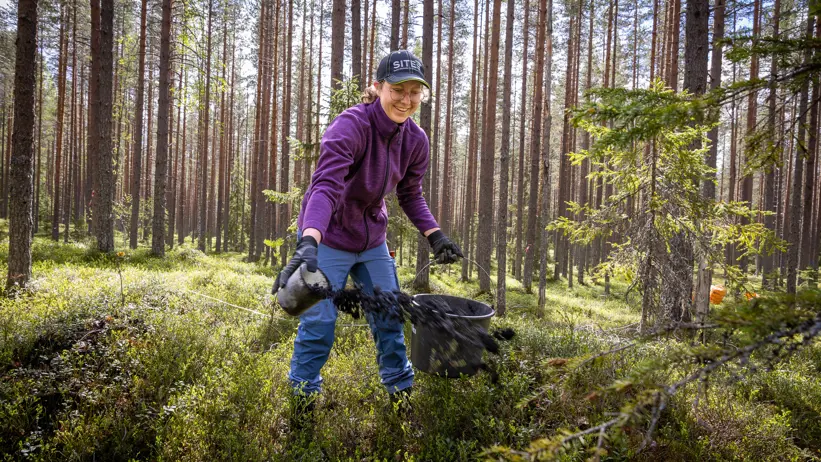
Looking for simpler ways to recycle ash
Ash recycling currently involves both transport and specialised spreading equipment. The ash is usually applied using specialised spreaders mounted on forestry machines or tractors, but it can also be spread by helicopter. The researchers want to investigate whether ash recycling can be made simpler and less expensive.
One idea is to make use of forestry machines travelling back empty after carrying out other forestry operations to transport ash into the forest. The researchers are also investigating whether the ash needs to be spread evenly across the ground or whether it can instead be deposited in piles.
But first, the researchers need to understand how the different application methods affect the forest. Ash contains both nutrients and heavy metals, so it needs to be returned in a way that minimises the risk of adverse effects on soil and water.
Monitoring soil, water and vegetation
The researchers are investigating what happens to the ash over time and how nutrients move through the soil. They take samples of soil and soil water and also monitor mosses, bilberry, lingonberry and other vegetation.
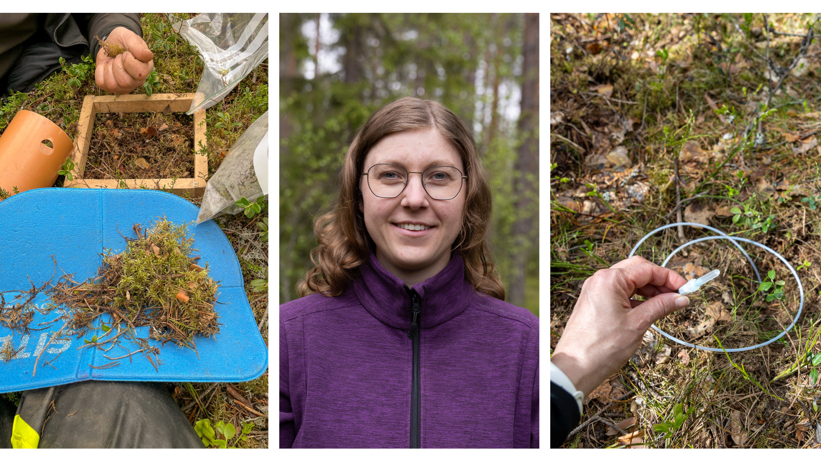
“We look at what happens in the soil by analysing the soil water and the soil itself, as well as the plants growing there, such as mosses, bilberry and lingonberry. We also monitor tree growth,” says Linnea Larsson.
The project also examines how different seasons and weather conditions affect the ash and how available the nutrients become to plants. The aim is to gain more knowledge about how nutrients from forests can be returned in a more resource-efficient way without adverse effects on soil, water and vegetation.
The project runs until 2029, is funded by the Swedish Energy Agency and is part of the Wallenberg Initiatives in Forest Research (WIFORCE) research programme.
Ash recycling in Sweden
In 2025, 40,200 tonnes of ash, measured as dry matter, were spread across 12,800 hectares of forest land.
Between 2009 and 2025, 80% of the area where ash was recycled was in Götaland, 18% in Svealand and 2% in Norrland.
Source: Swedish Forest Agency, Forestry measures
Read more about ash recycling and the Swedish Forest Agency's recommendations (in Swedish).
Contact
-
PersonLinnea Larsson, PhD Student
-
PersonMikael Thyrel, Associate Professor
-
PersonSusanna Bergström, Communications Officer WIFORCEFaculty of Forest Sciences