
AgriFoSe2030 shares lessons on science translation with African ambassadors
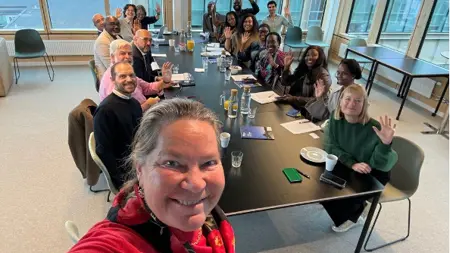
How do we move knowledge from the researcher’s desk into decisions and practices that make a difference on the ground? This challenge was at the centre of a recent engagement between AgriFoSe2030 researchers, ambassadors and representatives from eight African countries.
Across Africa, universities and research institutions are generating knowledge and innovations to address some of the continent’s most pressing challenges- from climate change and food insecurity to agricultural productivity and environmental degradation. Yet scientific evidence does not automatically translate into better policies or practices.
The irony of scientific solutions co-existing in the same space where food security problems persist
During the engagement, AgriFoSe researchers used the simple example of the “fufu paradox” to illustrate the challenge of science translation for societal benefit. Fufu, a popular Ghanaian dish made from pounded cassava and plantain and served with soup can become increasingly expensive at certain times of the year in Ghana. One reason is the widespread impact of cassava mosaic disease, which affects a substantial share of cassava farms. Researchers have developed disease-resistant cassava varieties, however uptake of these varieties even within the immediate environment of the universities and research institutions that have developed the solution is low. This creates a paradox where scientific solutions exist alongside the problem they are intended to address. AgriFoSe2030 therefore focuses on building capacity around the processes, skills, partnerships and institutional conditions needed for scientific knowledge to contribute to societal change.
African research for African challenges
Across the African continent, universities and research institutions are developing innovative responses to pressing societal challenges. Examples highlighted include research at the University of Cape Coast in Ghana on using smartphone cameras to detect crop diseases, innovations at the Council for Scientific and Industrial Research in south Africa on using artificial intelligence for autonomous mining and environmental monitoring, and work at the University of Cape Town- South Africa, on developing heat-based fire detection systems suited to informal settlements. These examples illustrate the need to build capacity and create the enabling conditions for existing knowledge and innovation to be taken up, institutionalized and scaled.
From research to policy and practice
AgriFoSe2030's experience demonstrates that science translation can contribute to tangible changes beyond academic publications. The programme has contributed to the Kisumu County Food System Strategy for 2023–2027 in Kenya. In West Pokot County, Kenya, researchers contributed to processes that resulted in local government budget reallocations towards interventions including farmer group learning, camel husbandry and health monitoring.
In Zimbabwe, AgriFoSe researchers were invited to contribute to policy processes around the edible insects value chain, including collaborations with the Zimbabwe Standards Authority to develop the country’s first edible insects standards and contributions to the agenda of the Agricultural Research Council of Zimbabwe hosted by the Ministry of Agriculture. In Uganda, programme activities have supported the establishment of a women-owned milk processing facility.
The impacts also extend to institutional change. At the University of Nairobi- Kenya, Chinhoyi University- Zimbabwe and Kyambogo University- Uganda, science translation courses have been institutionalized as a requirement for graduate research. At the University of Nairobi, a dedicated policy brief committee and a national stakeholder committee on science translation has been created.
Continuing the conversation
The meeting with African ambassadors provided an important opportunity to reflect on what is required to strengthen evidence-based development and to explore how research partnerships between African countries and Sweden can contribute to this agenda. This means continuing to invest in knowledge networks that can connect science with real-world challenges. It also means recognizing that some of the most important innovations are already being developed within African research institutions and communities. What remains is to continue strengthening the pathways through which those innovations can influence policy and practice.
Contact
-
Selorm Kugbega, Dr.
MEL and Communications
SEI, Stockholm Environment Institue
Phone: +46 (0)73- 27 04 306
E-mail: selorm.kugbega@sei.org