
Beneficial bacteria could help protect potatoes against late blight
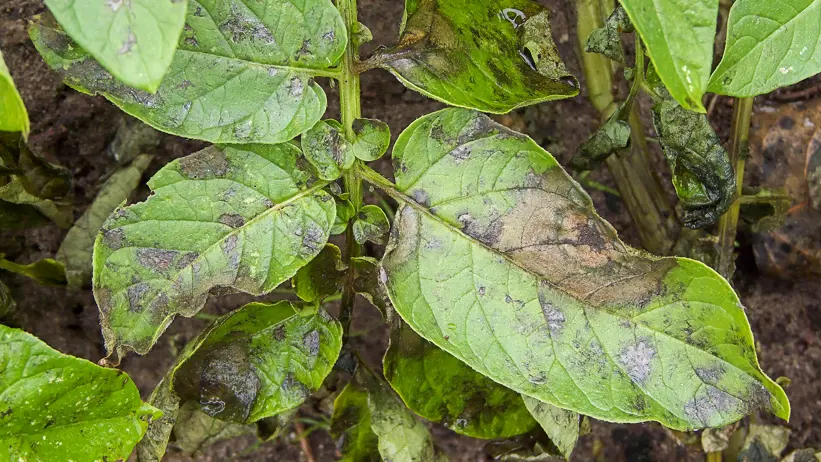
Bacteria associated with plant roots could help protect potatoes against late blight, one of the crop's most destructive diseases. In a new study, researchers at SLU show that certain bacteria can reduce disease severity, stimulate plant growth andinfluence the plants' defence responses.
Potato late blight is a major problem for farmers worldwide. Caused by the microorganism Phytophthora infestans, the disease can spread rapidly in cool, humid weather andcause devastating crop losses within a week under favourable conditions. Farmers rely heavily on chemical fungicides to control it, but increasing resistance and concerns about environmental impacts make alternative methods increasingly important.
Researchers at SLU, together with international colleagues, have now investigated whether beneficial bacteria could offer another way to protect potato plants. Their results show that several bacterial strains can suppress the pathogen while also promoting potato growth, resulting in taller plants, greater biomass and increased root weight.
Bacteria that slow down disease
The researchers tested five bacterial strains in field trials, greenhouse experiments and laboratory studies. All five reduced the severity of late blight compared with untreated, infected plants. One strain, Serratia rubidaea AV10, stood out. In laboratory experiments, it inhibited the growth of Phytophthora infestans by 97 percent. It also performed well in field and greenhouse trials, although conventional fungicides remained more effective in the field.
– Our results show that naturally occurring bacteria have considerable potential to help protect potatoes against late blight. They may not replace fungicides entirely, but they could become a valuable part of more sustainable disease management strategies, says Bekele Gelena Kelbessa.
Helping plants defend themselves
The bacteria may protect potato plants in several ways, including producing substances that inhibit pathogens and competing with them for nutrients and space. The researchers also found that two bacterial strains influenced genes involved in the plants' immune responses, suggesting that beneficial bacteria may help plants prepare their own defences against infection.
A boost for plant growth
Protection against disease was not the only benefit. In greenhouse experiments, several bacterial treatments also improved plant growth, resulting in taller plants, greater biomass or increased root weight. To better understand how the bacteria work, the researchers sequenced the genomes of two strains isolated from the soil surrounding potato roots.
They identified genes potentially involved in producing antimicrobial substances, making nutrients more available to plants and influencing plant growth. Differences between the two bacterial genomes may also help explain why some strains were more effective than others.
– What makes these bacteria particularly interesting is that they may benefit the plant in several ways at once. Understanding the genes and mechanisms behind these effects will help us identify promising bacteria for future biological control methods, says Ramesh Vetukuri.
Towards more sustainable potato production
The findings highlight the potential of beneficial bacteria as part of integrated disease management, where different methods are combined to protect crops while reducing reliance on chemical pesticides.
– We still need to test how well these bacteria work under different field conditions, but our results are a promising step towards biological treatments that could help farmers grow healthier potatoes with fewer chemical pesticides, concluds Ramesh.
Read more
The scientific publication:
Kelbessa, B. G., Ghosh, S., Ghadamgahi, F., Catara, V., Whisson, S. C., Ortiz, R. & Vetukuri, R. R. (2026). Rhizobacterial biocontrol of potato late blight and genomic insights into disease suppression and growth promotion. iScience, 29, 117682.
Contact
-
Person