‘Bomb carbon’ in wood shavings helped researchers measure the stability of biochar in soil
Biochar can store carbon in the soil and reduce the amount of carbon dioxide in the atmosphere –yet we still know too little about how long the biochar will persist. Now, SLU researchers have found a new way to measure this, using wood from the 1960s that was affected by nuclear weapons testing.
There is currently great interest in using biochar – the type of carbon we use in barbecues – to improve the cultivation properties of agricultural land. Tilling biochar into the soil is also viewed as a method for the long-term storage of significant amounts of carbon, thereby helping to combat climate change. This form of carbon is considered so stable that, in practice, it does not return to the atmosphere. Estimates suggest that, on a global scale, it might be possible to store enough carbon in the soil to offset 6–16 percent of annual human-caused carbon dioxide emissions.
Erik Karltun is a soil scientist at the Swedish University of Agricultural Sciences and has worked extensively with biochar.
“There is great potential here, but a concern for us is that we still know too little about the long-term stability of biochar incorporated into soil and how it affects the turnover of other carbon present in soil organic matter. However, it is difficult to study the decomposition of a material that breaks down much slower than other plant residues in the soil. We have therefore thought about how to design an experiment that makes it possible to distinguish carbon dioxide originating from decomposed biochar from that coming from other soil carbon.”
‘Bomb carbon’ – a Cold War legacy
More than 20 years ago, Erik Karltun participated in a study where so-called "bomb carbon" provided interesting insights into carbon turnover in forest soils. Bomb carbon refers to radioactive carbon (carbon-14) created by the hundreds of nuclear tests conducted after World War II; these tests nearly doubled the level of radioactive carbon in the atmosphere before above-ground testing was eventually banned. Levels peaked in the mid-1960s, and traces remain in biological material formed during that period, such as wood and bone.
The idea of utilizing bomb carbon in other types of studies had been brewing in Erik Karltun’s mind ever since, and eventually, he found a research question for which this material would be ideally suited.
“Wood formed during the peak years contains significantly elevated levels of carbon-14, and it struck me that biochar produced from such wood would possess a 'carbon-14 profile' clearly distinct from that of soil carbon,” says Erik Karltun.
The studies he has now conducted alongside colleagues Haichao Li and Harald Cederlund confirmed his hypothesis. It proved possible to produce biochar with a sufficiently high proportion of radioactive carbon to investigate the fate of biochar incorporated into the soil.
Wood obtained by turning
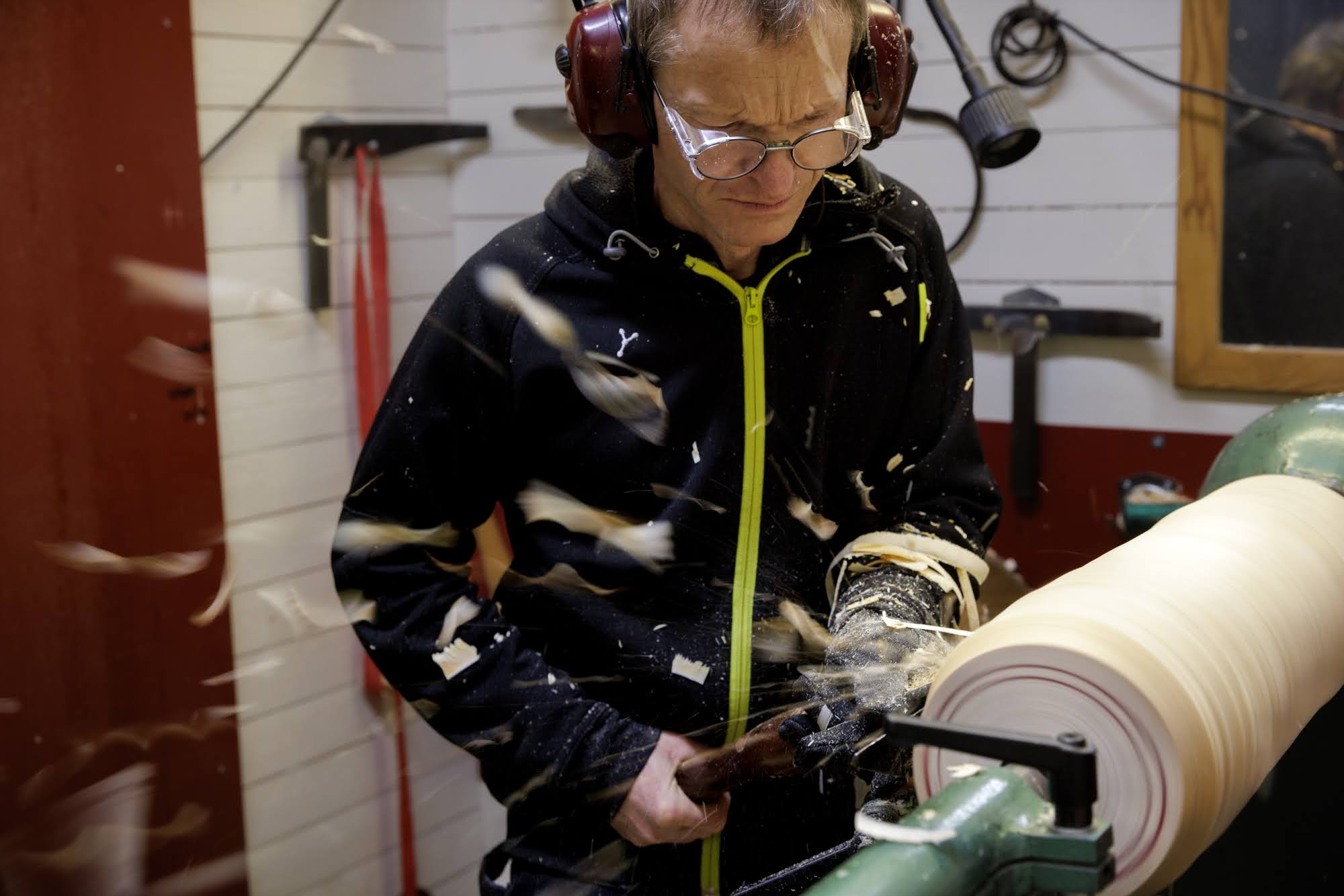
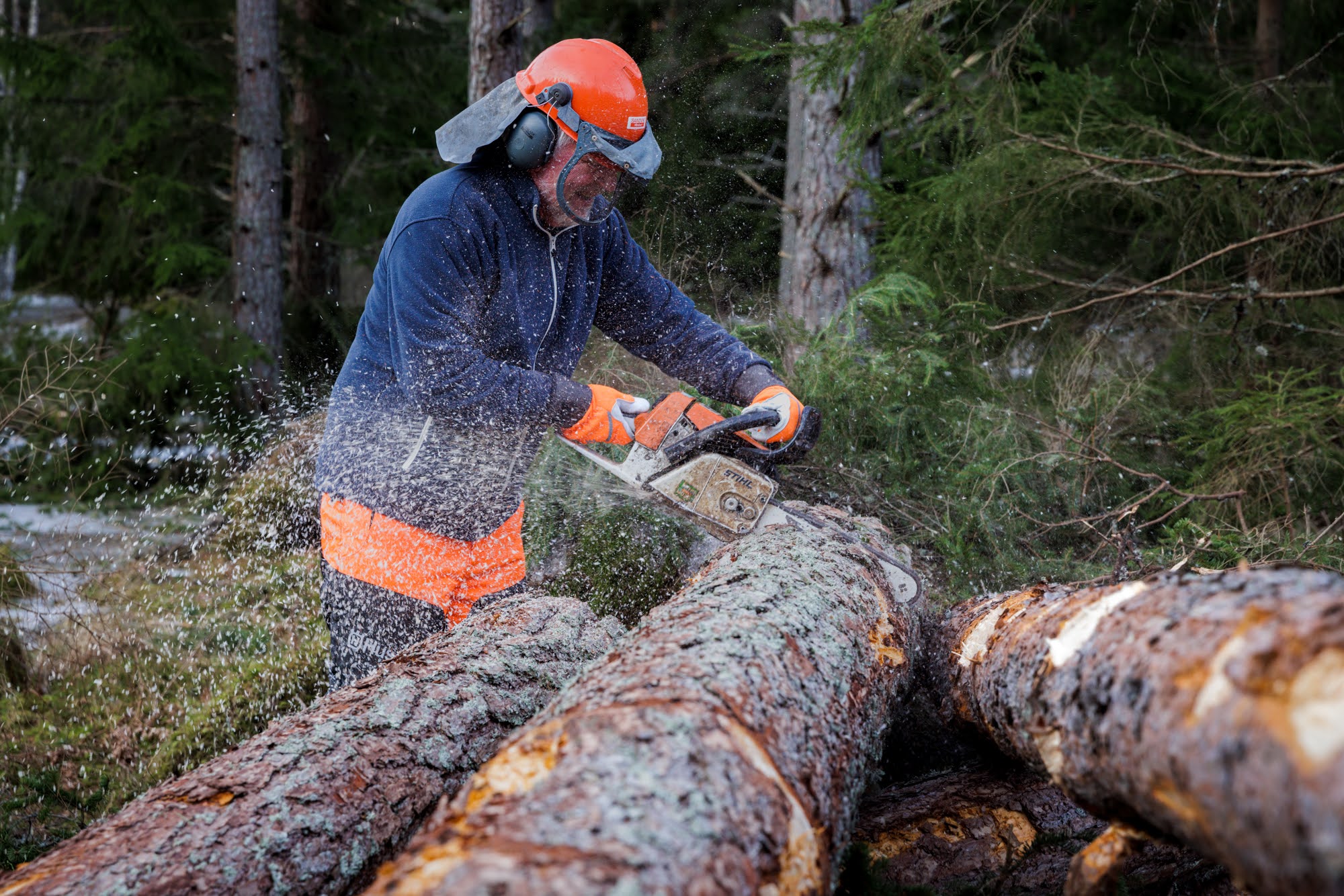
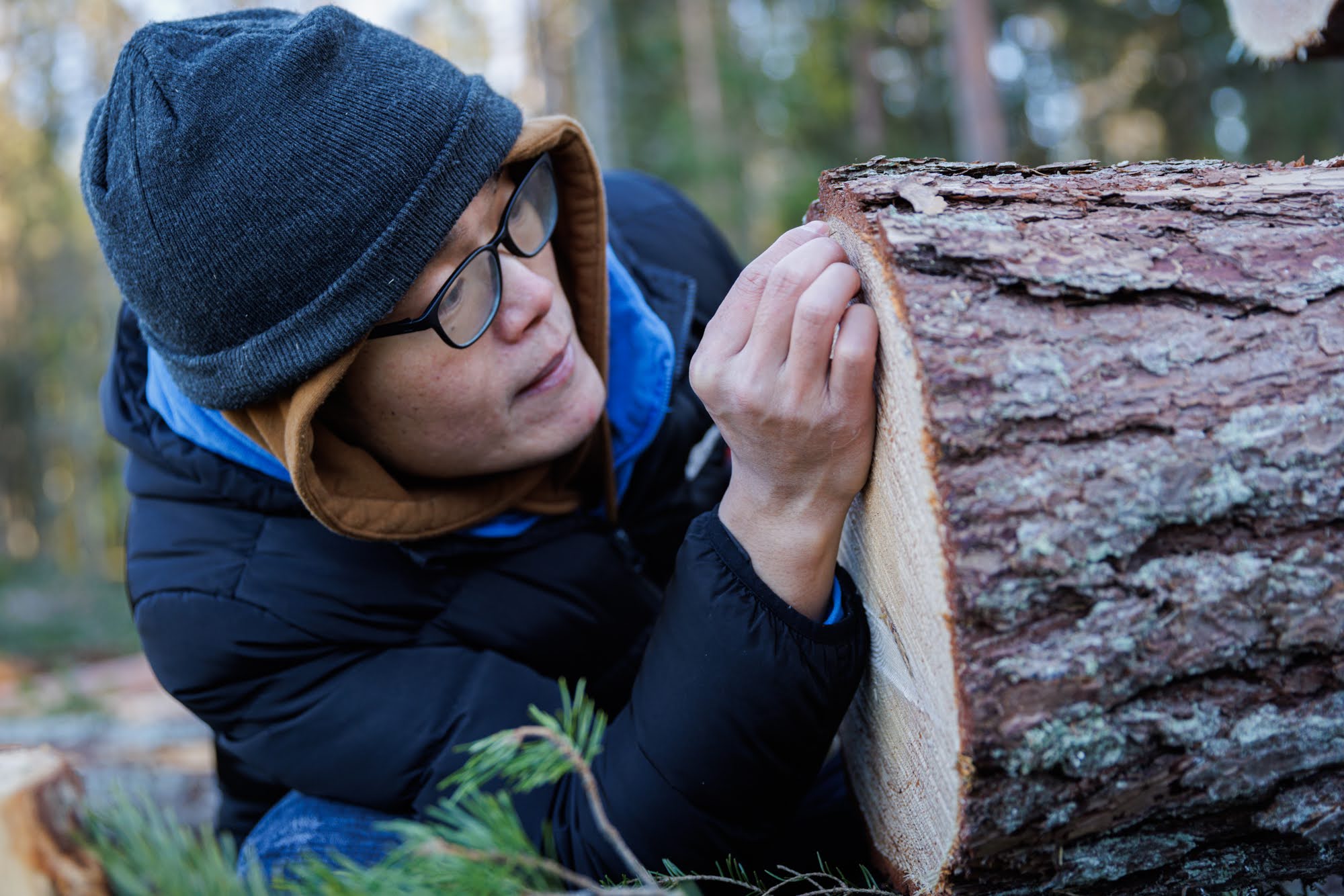
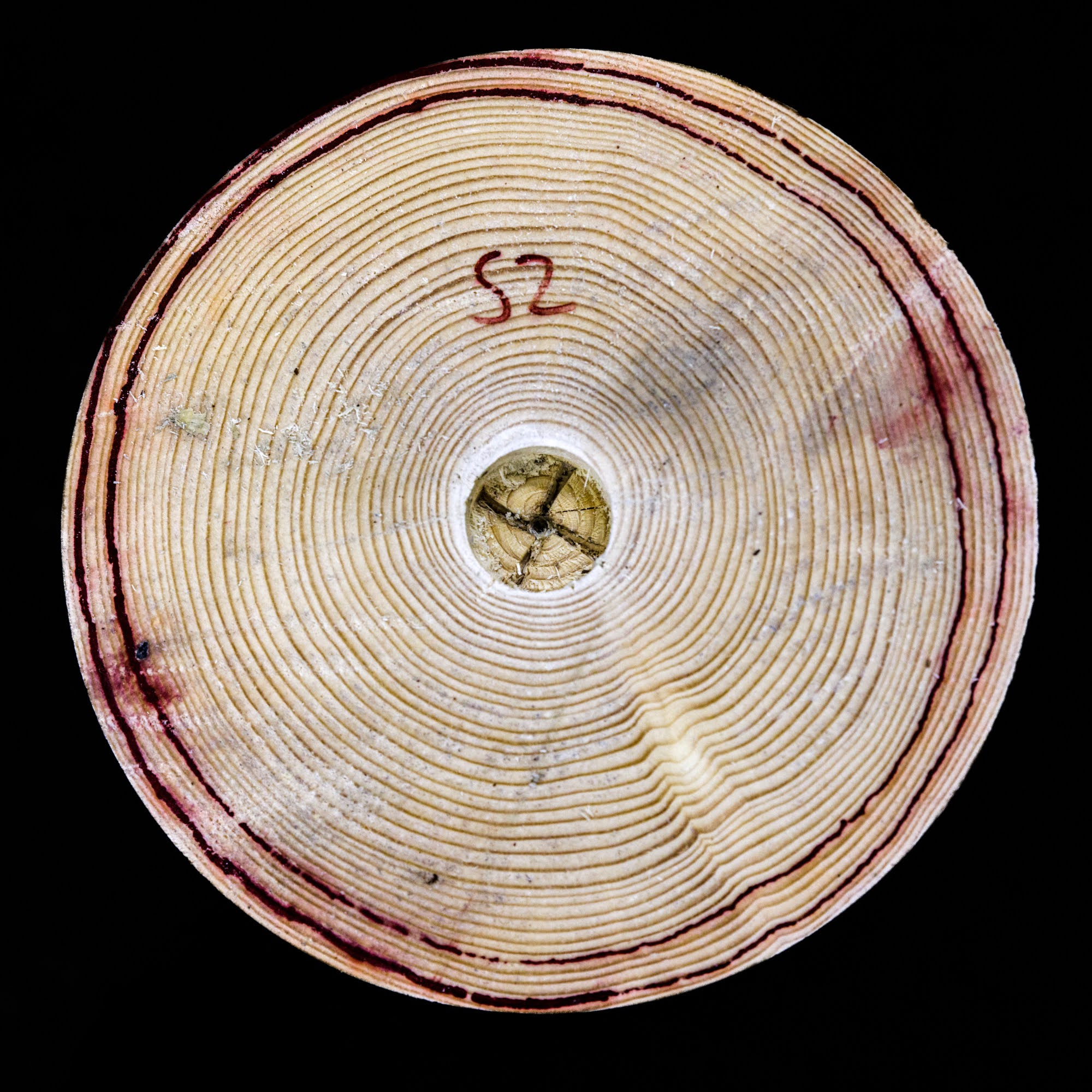
To obtain sufficient quantities of wood from growth rings formed between 1964 and 1967, the researchers opted to use a woodturning process. Round, uniform half-meter sections of spruce and pine logs were transported from a logging site in Uppland to SLU. Next, the specific growth rings expected to contain the highest levels of carbon-14 were identified. The marked logs were taken to a professional woodturner in Närke. He began by turning away all the wood formed after 1967; the subsequent task was to carefully recover the wood – barely a centimeter thick – from the growth rings of interest.
When the researchers later analysed the collected wood, it turned out to contain roughly the same amount of radioactive carbon as theoretical calculations had predicted. The wood shavings were then converted into biochar through pyrolysis, a process involving heating in an oxygen-free environment. The process resembles what happens in a charcoal kiln.
The biochar is not entirely stable
The final test of the method was a one-year experiment in which researchers analysed the carbon dioxide emitted from soil to which the prepared biochar had been added. At its peak, the carbon dioxide from the soil mixed with biochar contained about 10 percent more carbon-14 than soil without biochar. This demonstrates that the biochar makes a small but measurable contribution to the emitted carbon dioxide. Over the course of a year, approximately 0.35 per cent of the biochar was converted into carbon dioxide. This implies that at least half of the incorporated biochar will remain in the soil in 200 years' time.
“Above all, our study shows that the 'bomb-carbon' method works and that it is relatively easy to produce large quantities of naturally formed wood that can yield traceable biochar. The method opens up opportunities to address new research questions that were previously difficult to study. Furthermore, the biochar we have produced is more similar to commercial biochar than the material used in earlier research,” says Erik Karltun.
Building on this method, Haichao Li has secured new research funding. Over the coming years, he will work with the researchers from SLU and University of Bonn in Germany to further investigate biochar stability in soils and how it will be affected by climate change. The new research will provide useful data to help both researchers and policymakers assess its potential to combat climate change.
Contact person
Erik Karltun, Associate Professor of Soil Science
Department of Soil and Environment
Swedish University of Agricultural Sciences (SLU), Uppsala
erik.karltun@slu.se, 018-67 12 77
The article
Li H, Cederlund H, Azzi ES, Sundberg C, and Karltun E (2026). Bomb 14C for tracing biochar mineralization in soil. Radiocarbon. https://doi.org/10.1017/RDC.2026.10247
Press images
(May be published freely in connection with articles about this news item. Click for high-resolution image. Photographer must be credited.)