
Building resilient agrifood systems in Bhutan: connecting local realities with national visions
A recent SASI-SPi mission to Bhutan explored key Agrifood trade dynamics before launching the first round of participatory food system diagnosis workshops in Ngangla gewog, Zhemgang district.
Under Workstream 3 of SASI-SPi, a joint mission involving CIRAD (Dr. Isabelle Vagneron and Dr. Nabil Hasnaoui Amri) and the Tarayana Foundation (Dr. Karma Lhaden) took place in Bhutan from September 24 to October 7, 2026. The mission explored key agrifood trade dynamics in Gelephu (Sarpang) before launching the first round of participatory food system diagnosis workshops in Ngangla gewog, Zhemgang district.
Connecting trade dynamics with rural opportunities
In Gelephu, an important trade hub bordering India, the team met with the Food Corporation Bhutan Limited (FCBL), a state-owned enterprise playing a key role in Bhutan’s agrofood trade and national food security. Discussions explored the operational realities of managing national food reserves and stabilizing food prices, alongside persistent challenges such as dependence on imports from India for staple foods, international market price volatility, and transport and transit bottlenecks.
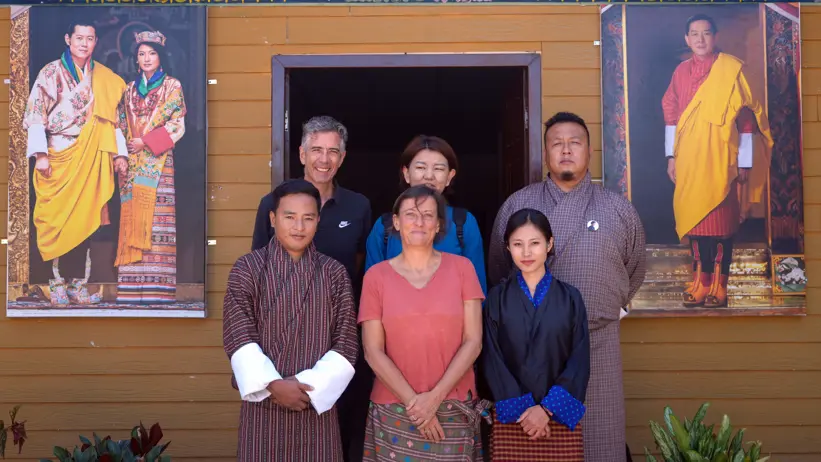
Gelephu is also on the brink of significant transformation with the development of Gelephu Mindfulness City, envisioned by His Majesty King Jigme Khesar Namgyel Wangchuck as a green economic hub. This emerging development could create new market opportunities and improve infrastructure connectivity for surrounding rural areas, including Zhemgang district.
Understanding these evolving trade and market dynamics is essential to identifying opportunities that can strengthen rural livelihoods and connect local producers with changing food markets.
Understanding local food systems
The mission focused its fieldwork in Ngangla gewog, Zhemgang district, where 94% forest cover reflects the area's rich biodiversity and the importance of balancing environmental conservation with rural livelihoods.
Local communities face growing pressures, including human-wildlife conflict and climate change. Rising summer temperatures and diseases affecting traditional orange orchards are creating additional challenges for farmers. In response, some are beginning to diversify their agricultural activities, including through coffee cultivation promoted with support from international development initiatives.
These changes highlight the need for locally grounded approaches that account for environmental pressures, evolving livelihood strategies, and the aspirations of rural communities.
Participation central for food system transformation
A key milestone of the mission was the piloting of a three-day participatory diagnostic workshop in Ngangla gewog, facilitated in collaboration with the Tarayana Foundation.
The workshop brought local perspectives to the forefront, exploring community spatial organization, barriers to youth employment, and everyday food practices. These discussions provide a foundation for identifying priorities and shaping future interventions that respond to local needs and opportunities.
Beyond gathering information, the process aims to strengthen local research capacity, encourage inclusive dialogue, and support communities in developing their own solutions for more resilient agrifood systems.
From local diagnostics to collective action
The methodology piloted in Ngangla will be extended to additional gewogs in Zhemgang and Paro districts. Through 2027, the initiative aims to translate locally identified challenges into concrete, community-led action strategies, linking grassroots priorities with broader agrifood system development objectives.
By bringing together local knowledge, participatory research, and an understanding of wider market and policy dynamics, SASI is helping lay the groundwork for more sustainable, inclusive, and resilient agrifood systems in Bhutan.
Contact:
Isabelle Vagneron: vagneron@cirad.fr