On their way to an excursion at Lantmännen, symposium participants had plenty of opportunities to exchange ideas and make new connections across agriculture, horticulture and forestry. Photo: Cajsa Lithell.
Plant protection across boundaries: new perspectives and connections
News published:
13/10/2026
From forest pests to plant diseases in agriculture and horticulture, many plant protection challenges are shared. On 8–9 October, around 90 researchers and stakeholders gathered at SLU in Uppsala to exchange ideas and build connections across disciplines.
The symposium was organised by the SLU Plant Protection Network and the SLU Forest Damage Centre. Over two days, participants shared research findings, explored new technologies, visited research facilities and met representatives from government agencies, industry and other organisations.
– We have so much to learn from each other, both across different research fields and from those working with plant protection in practice. I hope these two days will inspire people to look beyond their own disciplines and find new ways of working together, says Anneli Lundkvist, Chair of the SLU Plant Protection Network.
Artificial intelligence opens new possibilities
The symposium opened with two talks on artificial intelligence and its potential applications in plant protection and forest health. Professor Abozar Nasirahmadi from SLU presented applications of AI in agriculture, while Maria Nordström from Skogforsk explored how the technology is being used in forestry.
Maria Nordström from Skogforsk discussed the possibilities of using artificial intelligence in forestry during her presentation at the symposium. Photo: Cajsa Lithell.
For associate professor and senior lecturer Ola Lundin, the presentations highlighted why researchers need to keep up with technological developments, even if AI is not part of their own work.
– I think it is important for all researchers to familiarise themselves with digitalisation and AI. Whether we work directly with these technologies or not, they will influence research in both agriculture and forestry in the future.
Anders Broby from the Swedish Environmental Protection Agency has worked with drones and AI to detect wildlife damage to crops. He found the presentations particularly relevant but also raised a question about the pace of technological change.
– An eye-opener for me was how much faster AI is developing than we can comprehend, and that we are only at the beginning. One interesting question raised during the talks was how research can keep up. AI models may be significantly better in just six months, while research projects often run for three years. That is a real challenge.
Into the field for new perspectives
After the morning lectures and poster session, participants headed out on five excursions in and around Ultuna. The destinations included Lantmännen, the National Reference Laboratory for the Diagnostics of Plant Pests at the National Veterinary Institute (SVA), SLU's Lövsta field research station and the BLANDSKAP project, RISE Research Institutes of Sweden, and a field excursion focusing on forest damage.
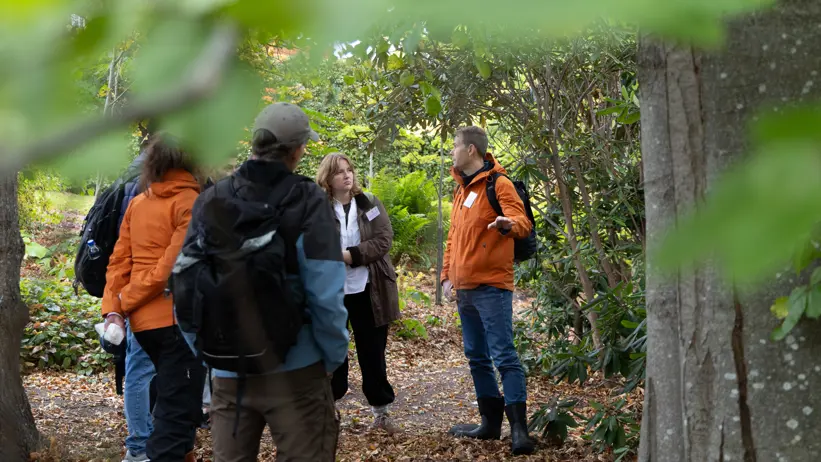
Audrius Menkis, analyst of forest damage caused by fungi, bacteria and viruses at the SLU Forest Damage Centre, led the forest damage excursion together with Mats Jonsell, forest entomologist at SLU. Photo: Theres Svensson.
The visits offered a chance to explore ongoing activities, see practical examples of plant protection and discuss research in smaller groups.
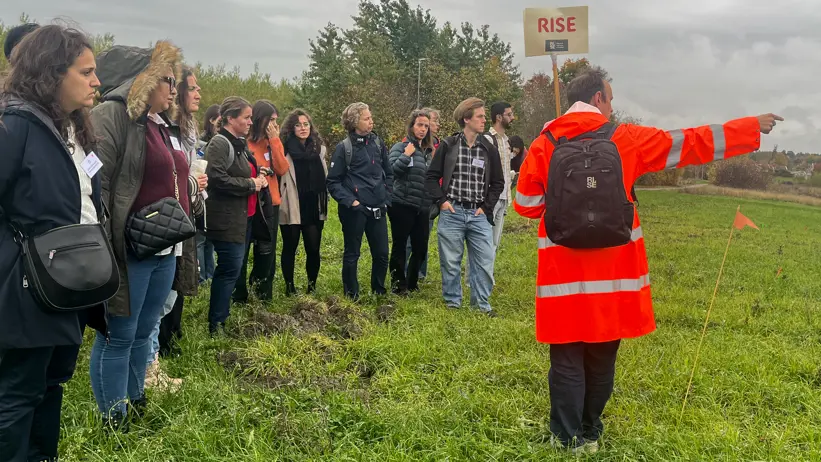
Björn Ringselle from RISE Research Institutes of Sweden guided participants during a field visit, one of the symposium's five excursions. Photo: María del Rosario García Gil.
Björn Andersson, Field Pathologist at SLU, particularly appreciated the opportunity to discover activities close to home.
– I think it was a fantastic programme, with something for everyone. I appreciate that it focused on practical activities rather than just visions and strategies. The excursions were excellent! I've worked at SLU for ages, but this was my first visit to SVA. There are so many connections and opportunities for collaboration.
One of the symposium excursions took participants to the National Reference Laboratory for the Diagnostics of Plant Pests at the National Veterinary Institute (SVA), where they learned more about its activities and opportunities for collaboration. Photo: Cajsa Lithell.
Research across disciplines
Back at the symposium venue, six early-career researchers gave short presentations on topics ranging from pesticide resistance and alternatives to glyphosate to bark beetle detection, crop diseases and ash conservation. Malin Elfstrand, professor in forest pathology at SLU, appreciated both the variety of research topics and the presenters' ability to engage a broad audience.
– The young researchers were very good at making complex topics accessible to a broad audience. It was also interesting to see such different perspectives on pesticide use, from working directly with farmers to studying experimental evolution in insects.
The symposium offered plenty of opportunities for informal discussions and networking between researchers from different fields of plant protection. Photo: Cajsa Lithell.
New perspectives from outside academia
An important part of this year's symposium was the opportunity for researchers to meet organisations working with plant protection outside academia. Representatives from government agencies, farmers' organisations and advisory services presented their activities and the challenges they face.
The programme included contributions from the Swedish Board of Agriculture, the Swedish Environmental Protection Agency, the Swedish Forest Agency, the Federation of Swedish Farmers (LRF), ODLA and HIR Skåne. An interactive stakeholder mapping exercise also encouraged participants to identify organisations relevant to their research. For Jonas Jönsson from HIR Skåne, the meeting was a welcome opportunity to connect with researchers and share the needs of the agricultural sector.
– It is exciting to meet young researchers and PhD students and see how eager and curious they are. We want to help guide research towards questions that are useful to the industry and share what we actually need. For example, we collect information about the industry's needs and can present researchers with a list of priorities. That helps make research relevant to the sector.
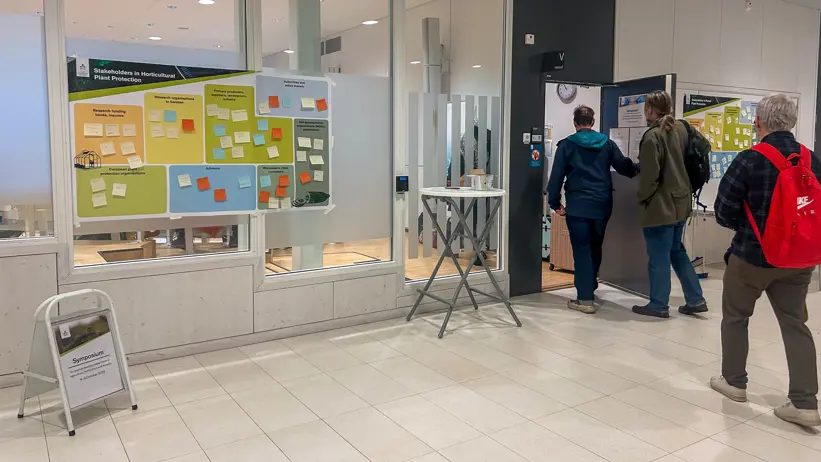
Participants mapped stakeholders in agriculture, horticulture and forestry during an interactive exercise, identifying organisations and potential partners for collaboration. Photo: Cajsa Lithell.
The meeting also offered new insights for researchers. Michelle Cleary, senior lecturer in forest pathology at SLU, pointed out that there is much to discover about organisations and activities beyond one's own research field.
– Even for those of us who have been at SLU for a long time, there is still much to learn about the different stakeholders and what they do. These sessions are also an excellent opportunity for students and postdocs to discover potential partners for future research collaborations.
Sofia Backéus from the Federation of Swedish Farmers (LRF) welcomed the opportunity to meet researchers in person. She also appreciated the symposium's broad scope, reflecting the reality of many landowners.
– I think these networking meetings are great. It is nice to meet researchers in person, put faces to names and hear about their questions. I also appreciate bringing agriculture and forestry together. Many forest owners are also farmers and face challenges in both sectors, so it makes sense to bring everything together in one place.
Plant protection and food security
The final talks of the symposium highlighted the importance of plant protection for food security. Anders Kvarnheden, professor of virology at SLU, explained why food security starts with healthy plants, while Anna Berlin, senior lecturer in plant pathology at SLU, discussed how agriculture can be protected against biological threats. Together, the presentations offered a broader perspective on the role of plant protection in ensuring a secure and resilient food supply.
New perspectives and connections
Beyond the lectures and excursions, the symposium offered plenty of time for informal conversations. Coffee breaks, poster sessions and a conference dinner gave participants opportunities to learn about each other's research and make contacts that might otherwise never have happened.
For Luiz Cosimo, a PhD student working in forestry, it was his first symposium of this kind. Meeting researchers from other fields helped him see new possibilities for his own work.
– Working in forestry, we sometimes get caught up in our own field. It was really interesting to meet people from other areas of plant protection, especially those using similar technologies but for different purposes. It broadened my perspective on what we can do.
The first evening offered a relaxed setting for participants to continue conversations and make new connections over dinner and drinks. Photo: Cajsa Lithell.
Poster prizes to support future collaboration
The symposium concluded with an award ceremony for the best research posters. Ebba Söderblom from the Department of Plant Biology received first prize, a grant of SEK 5,000, for her visually appealing and well-designed poster, “Catching the Invisible”, which caught the jury's attention and sparked curiosity. Two second prizes, each worth SEK 3,000, were awarded to Lucas Sjögren from the Department of Plant Biology and Katherine Lauck from the Department of Ecology.
The prize money is to be used during 2026 or 2027 for activities that promote collaboration in plant protection or forest damage research in Sweden. These may include attending conferences or meetings with stakeholders, or research visits to other SLU campuses.
Participants heading into the lecture hall for the final session of presentations and discussions at the Plant Protection Symposium. Photo: Cajsa Lithell.
Looking back on the two days, Katja Fedrowitz, coordinator of the SLU Plant Protection Network and the SLU Forest Damage Centre, hopes that the conversations will continue long after the participants have returned to their everyday work.
– It has been two inspiring days with many interesting discussions and new connections. I hope that the ideas and contacts made here will lead to new collaborations across disciplines and between researchers and stakeholders. That is exactly what we want to achieve with these meetings.