
Small burnt birch trees are of great benefit – play an unexpected role in biodiversity
Birch trees are an underrated asset in efforts to restore key forest habitats through prescribed fire. A study from the Swedish University of Agricultural Sciences (SLU) shows that burnt birch trunks attracted more wood-dwelling beetles than pine in the first few years following prescribed fire.
– Burnt birch trees, even small ones, provide valuable habitats for beetles. In our study, burnt pine trees attracted more red-listed species than birches, but birch trees should not be underestimated. They make a significant contribution to biodiversity following a prescribed fire, says Katja Frostgård, a PhD-student at SLU who led the study.
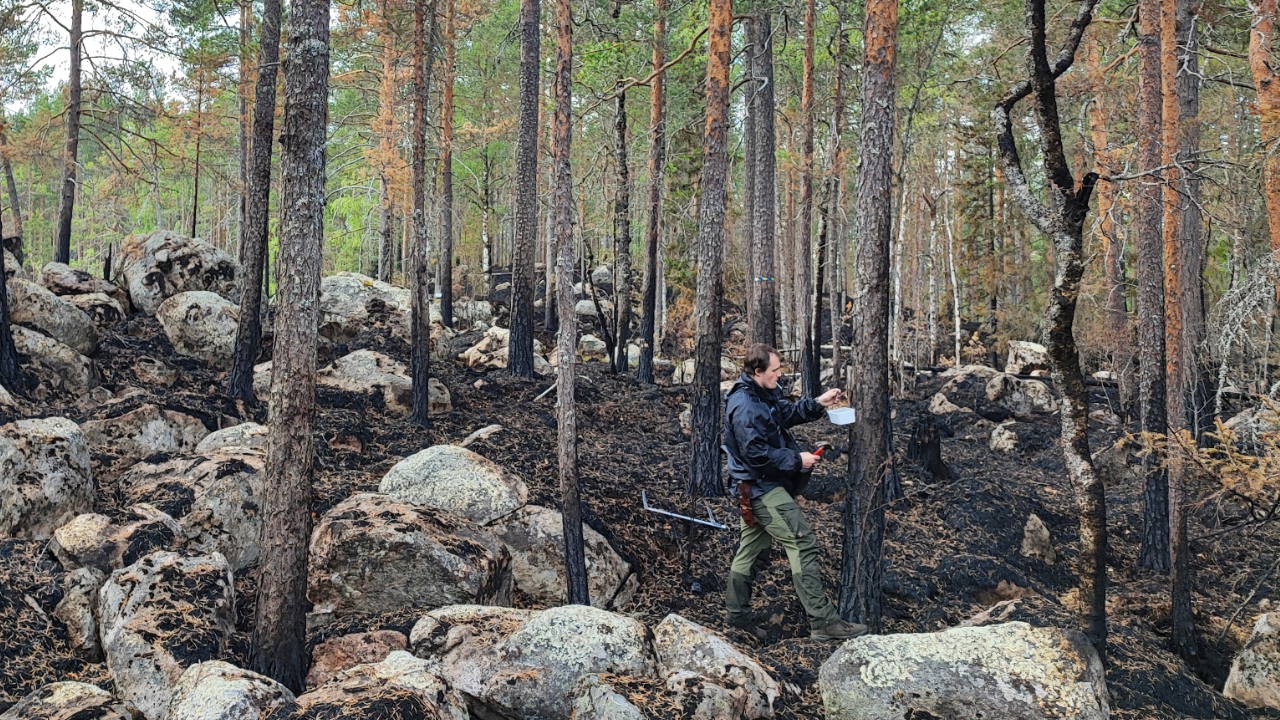
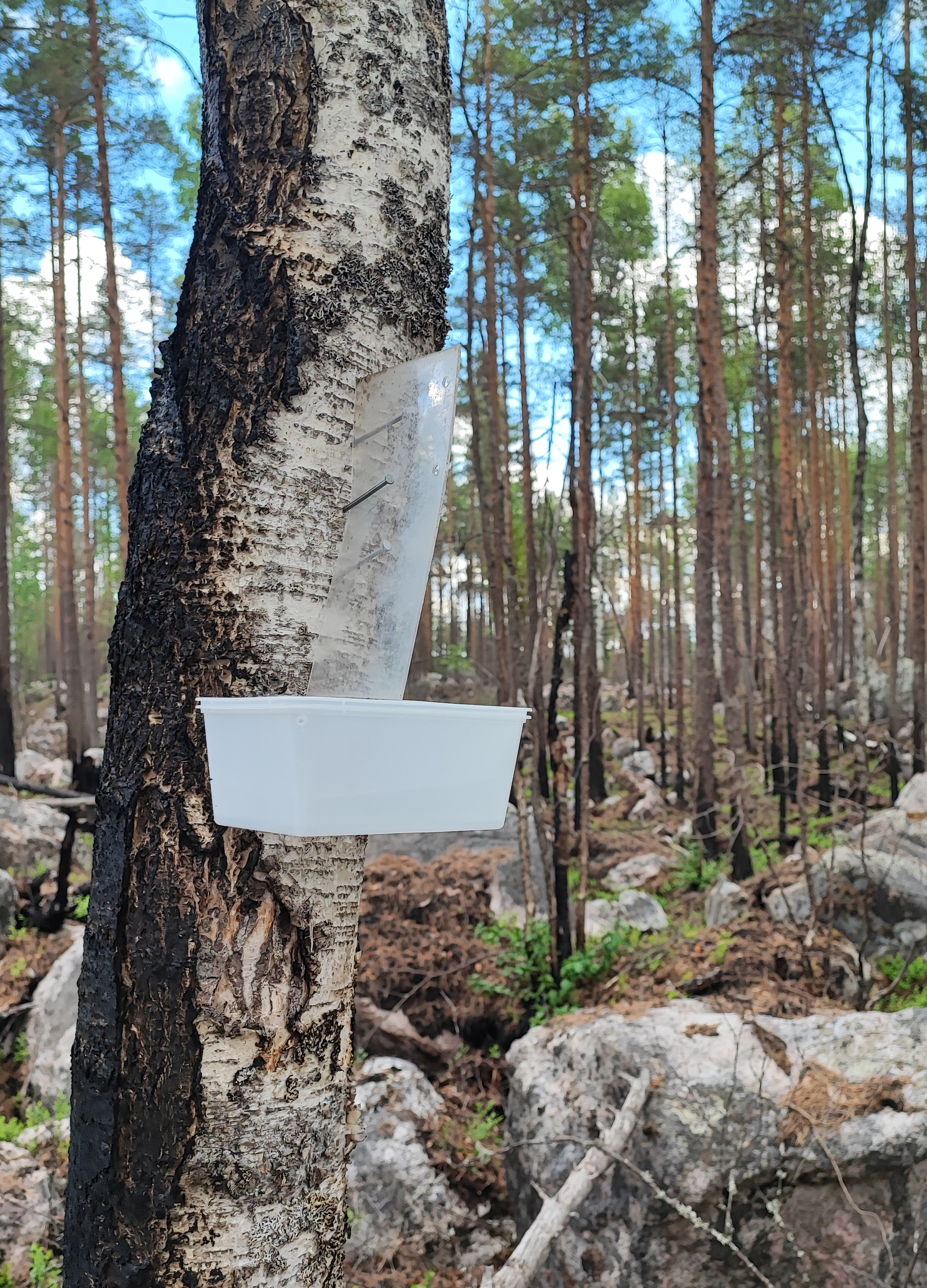
Some species are entirely dependent on forest fires. In Sweden, planned forest fires – known as prescribed fires – are an important tool for restoring habitats in a controlled manner. To gain a better understanding of where fires have the greatest impact on wood-inhabiting species, the researchers studied beetle communities on birch and pine trees during the first two years following prescribed fires. The researchers focused on fire-dependent and red-listed species and analysed species richness, abundance and species composition on birch and pine trees of various sizes.
– Pine trees often withstand forest fires better than birch and burnt bark on living pine trees is important for several red-listed species. However, we found that small birch trees, with trunks 10 centimetres in diameter and upwards, were attractive for beetles because their fire-sensitivity. They produced more dead, burnt wood than pine. It is this type of wood that many fire-dependent beetles and other insects require, says Anne-Maarit Hekkala, SLU researcher who leads the project.
Important knowledge when planning controlled burns
The EU’s new regulation on nature restoration means that EU countries must introduce measures to restore habitats for species at risk of extinction. The study provides practical knowledge that can be used in restoration efforts in Swedish forests.
– Our results show that forests with a high proportion of birch should be seen as an asset and an important complement to pine in prescribed fires. Pine and birch offer different types of habitats, and by varying the tree species and the intensity of the fire, we can create more species-rich beetle communities. This forms part of strengthening the long-term work to promote biodiversity in our forests, says Anne-Maarit Hekkala.
Scientific article
Insect Conservation and Diversity: Small birches matter: Beetle diversity on burned birch and pine in boreal forests Katja Frostgård, Emelie Fredriksson, Anne-Maarit Hekkala.
The study, which was funded by Sveaskog, was carried out in one of Sveaskog’s 37 ecoparks, Ekopark Ejheden in Dalarna, as part of the Effekt 20 monitoring project.
Read more about the SLU Ecopark-project.
Contact
-
PersonAnne- Maarit Hekkala, ResearcherDepartment of Wildlife, Fish and Environmental Studies
-
PersonFrida Wengberg, Communications Officer