Eula Gems Mateo Oreiro studies the evolutionary potential of the fungus behind one of the world’s most important wheat diseases.
Wheat pathogen adapts to fungicides and changing temperatures
News published:
09/10/2026
The wheat pathogen Zymoseptoria tritici can adapt to both fungicides and changing temperatures. In her doctoral thesis, Eula Gems Mateo Oreiro explores what drives this ability and what it means for future disease management.
Septoria tritici blotch, caused by the fungus Zymoseptoria tritici, is one of the most important foliar diseases of wheat worldwide. The fungus infects wheat leaves, reducing their ability to photosynthesise and potentially causing substantial yield losses. Fungicides are widely used to control the disease, but Z. tritici is a difficult opponent.
– Zymoseptoria tritici populations are very diverse, and that gives the fungus many different ways to adapt when conditions change, for example when we use fungicides to control it, says Eula Gems Mateo Oreiro.
Resistance mutations widespread across Europe
When Eula studied Z. tritici populations from wheat-growing regions across Europe, she found many different genetic changes that can help the fungus withstand fungicides. These occurred in different combinations and became more or less common over time, showing how fungicide use can shape the evolution of the pathogen.
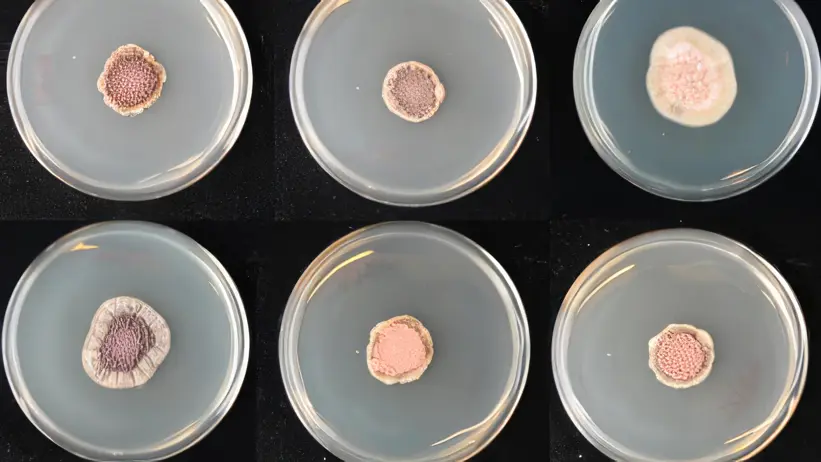
Different forms of Zymoseptoria tritici growing in the laboratory. The variation between them reflects the diversity found within populations of this wheat pathogen. Photo: Eula Gems Mateo Oreiro.
The results show that resistance is not simply a matter of one resistant strain appearing and spreading. Instead, many different variants already exist within European populations, and fungicide use can give some of them an advantage.
– We can see that fungicide use is changing these populations over time. Following these changes can help us understand how resistance develops and how to slow it down, says Eula.
No rapid shift in Swedish fields
Eula also studied Z. tritici populations collected in 2022 and 2023 from Swedish wheat plots with and without fungicide treatment. She found high genetic diversity, including many genetic variants linked to fungicide resistance. But over the two years, there was no clear sign that particular resistance traits were becoming more common.
She also wanted to know whether resistance comes with a downside for the fungus. The results suggest that it does not: fungi that were less sensitive to fungicides were just as capable of causing disease as more sensitive ones.
The findings highlight the importance of following fungal populations over longer periods. Changes in resistance may happen gradually and can be difficult to detect from just a few growing seasons.
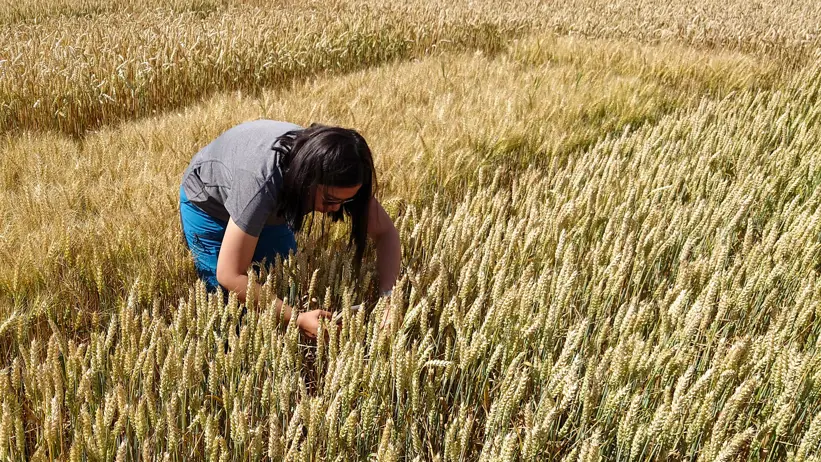
Eula collecting infected leaf samples of Septoria tritici blotch from fungicide-treated and untreated wheat plots in western Sweden. Photo: Björn Andersson.
Temperature also drives evolution
To investigate how temperature can shape the pathogen adaptation, Eula grew six Z. tritici parental isolates for 48 weeks under constant or fluctuating temperatures. The fungal populations evolved in different ways depending on the temperature conditions and on which isolate they originated from. There was no single response to temperature.
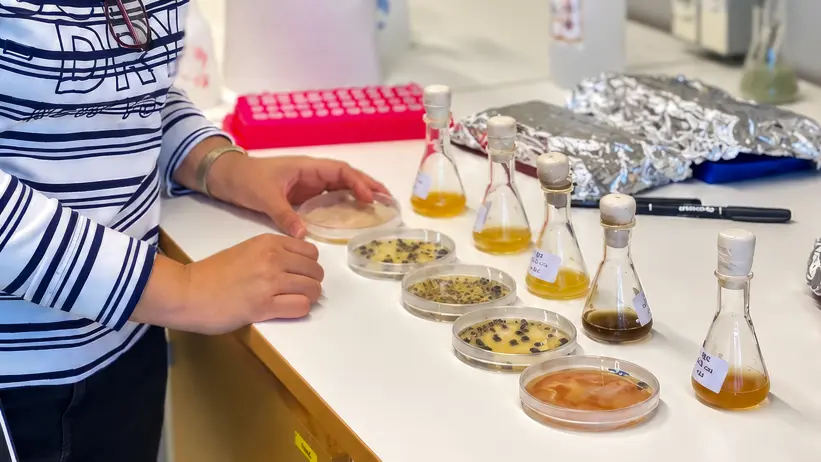
Different isolates of the wheat pathogen Zymoseptoria tritici in the laboratory. Their genetic diversity gives the fungus many possible ways to adapt to changing conditions. Photo: Anna Berlin.
– Different genetic backgrounds can take different evolutionary paths. This makes it difficult to predict exactly how the pathogen will respond to changing environmental conditions, says Eula.
The results show that both fungicide use and temperature can shape Z. tritici populations, but that the response can vary considerably. According to Eula, this highlights the need to monitor pathogen populations over longer periods.
– By following these populations, we can learn more about how resistance develops and spreads, and what is driving it. That can help us make better decisions about how to control the disease, concludes Eula.
Read more
Eula Gems Mateo Oreiro will defend her doctoral thesis on 30 October at 9:00 in room L, Undervisningshuset at Campus Ultuna in Uppsala. Read more about the defence.