
Kyambogo University Hosts the Rt. Hon Speaker of Parliament Jacob Oboth for Science meets Parliament event
What happens to research after a university publishes its findings? Does it remain in academic journals and conference presentations, or does it reach the people making decisions that affect millions of lives?
This article was first published on the Kyambogo University website.
That question took centre stage at Kyambogo University on Thursday, 12 November 2026, when the University hosted the Speaker of Parliament of Uganda, Rt. Hon. Jacob Marksons Oboth-Oboth, for a high-level engagement aimed at strengthening the relationship between scientific research and national policymaking. The engagement, organised under the AgriFoSe2030 Science Meets Parliament initiative, brought together legislators particularly members of STI committee and Agriculture and Natural Resources Committee, researchers, university leaders and development partners to explore how scientific evidence can play a greater role in shaping Uganda’s agricultural policies and development priorities.
Held at the University’s CTF Auditorium 105, the dialogue was conducted under the theme, “Strengthening the Interface between Science, Policy and Practice for Sustainable Agricultural Transformation in Uganda.”
The central message was research should not end when a report is written. Its findings should inform decisions, influence policies and ultimately make a difference in people’s lives. For a country like Uganda where agriculture remains central to household incomes, food security and rural livelihoods, the connection between research and policymaking is particularly important. Researchers are continuously generating knowledge on agricultural productivity, food systems, climate resilience and other development challenges. However, ensuring that this knowledge reaches policymakers in a form they can use remains a challenge.
The presence of the Speaker of Parliament brought an important dimension to this conversation. Parliament plays a significant role in shaping the country’s development direction through legislation, budget approval and oversight of government programmes. Stronger engagement with researchers can therefore help legislators access reliable evidence when debating policies and making decisions that affect communities.
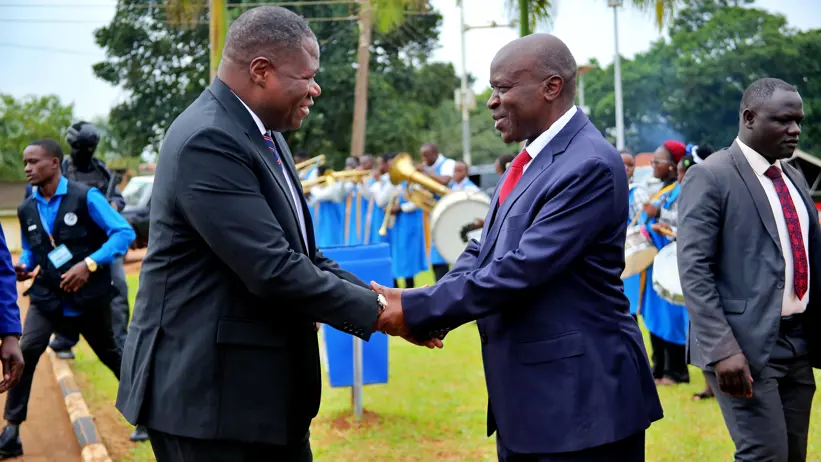
The Vice Chancellor of Kyambogo University, Prof. Eli Katunguka Rwakishaya, hosted the engagement which was moderated by NBS Television journalist Canary Mugume. The dialogue also featured contributions from Ugandan and international academics and development experts including representatives of the Swedish University of Agricultural Sciences.
One of the key issues explored during the engagement was the need to create more structured opportunities for researchers and legislators to interact. While universities have an important responsibility to generate knowledge, policymakers need research findings presented in clear, accessible and practical formats that respond to the questions they face when making decisions.
The proposed establishment of a Centre of Excellence for evidence-based research and policymaking was among the initiatives explored as a possible way of addressing this gap. The proposed centre would provide a platform through which universities, research institutions and Parliament could maintain regular engagement. It would also create opportunities for researchers to share findings with parliamentary committees, while legislators would be able to identify areas where additional research is needed to support policy discussions.
Such an arrangement would benefit both sides. Researchers would gain a better understanding of the country’s policy priorities while legislators would have improved access to scientific knowledge when considering national programmes and interventions.
The discussion also highlighted the importance of making research relevant to the everyday challenges faced by Ugandans. In the agricultural sector for instance research can help identify better farming practices, improve food safety, strengthen climate resilience and create opportunities for value addition. However, these benefits can only be realised when the findings are communicated effectively and translated into practical interventions.
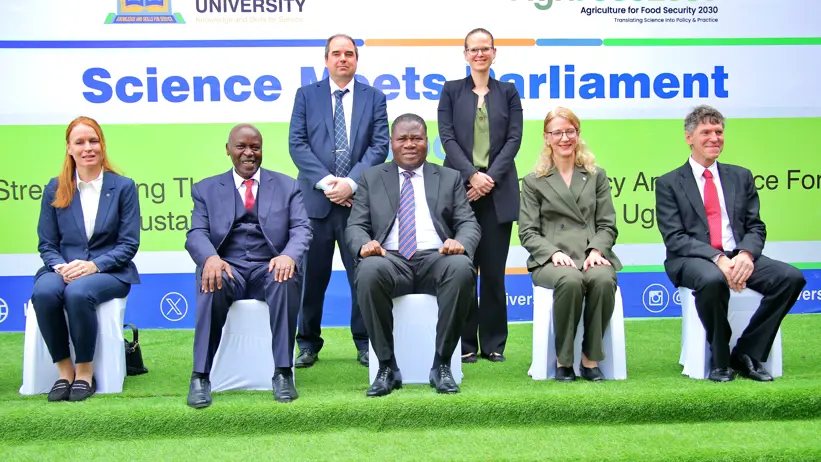
For Kyambogo University, the engagement provided another opportunity to demonstrate the importance of connecting academic research with national development priorities. Through its partnership with AgriFoSe2030, the University is contributing to efforts aimed at strengthening the translation of scientific knowledge into policy and practice. The initiative recognises that producing research is only part of the process ensuring that the knowledge reaches the right people and contributes to meaningful change is equally important.
The participation of the Speaker and other stakeholders offered an opportunity to strengthen this relationship and consider how collaboration between Parliament and universities can become more consistent.
Beyond the discussions held at the University, the real test of Science Meets Parliament will be what follows. Stronger relationships between researchers and legislators will require continued engagement, accessible research communication and a shared commitment to using evidence in public decision-making.
For universities this means looking beyond the publication of academic papers and paying greater attention to how their findings can address society’s needs. For policymakers it means recognising research as an important resource when developing policies, allocating public resources and overseeing national programmes.
As Uganda continues to pursue agricultural transformation, food security and sustainable development, the knowledge generated within its universities has an important role to play.
By bringing the Speaker of Parliament, researchers and other development stakeholders together, Kyambogo University provided a space for an important conversation about the future of evidence-based policymaking.
Ultimately, the value of research is not measured only by the number of publications produced but also by the lives it helps improve. The challenge now is to ensure that knowledge generated in universities finds its way into Parliament informs national decisions and reaches the communities where its impact is needed most.
Contact
-
SLU Global
SLU Global supports SLU's work for global development.
SLU Global
Division of Planning and Research SupportPO Box 7005, SE-750 07 Uppsala
Visiting address: Almas Allé 7
global@slu.se www.slu.se/slu-global
Subscribe to our newsletter and follow us in social media.