
”My master’s studies helped me make sense of everything”
The course Advanced Practice, offered online by the Department of Biosystems and Technology in Alnarp, enables students to gain hands-on experience in professional environments while reflecting on the connections between theory and practice. Asia Buzzolan went to rural Spain.
Through an Erasmus+ scholarship, Asia Buzzolan, spent two months in rural Asturias in northern Spain, working with sustainable tourism and rural development through ECOTUR. Drawing on reflections developed during her internship and the subsequent course report, she shares some insights here from her experience.
”I arrived in Asturias this late summer with just a backpack, an Erasmus+ agreement and a very basic knowledge of Spanish. For two months I lived in a caravan on a small family farm, surrounded by Asturian ponies and sheep, with the Cantabrian coast not far away and an old hórreo (a traditional Asturian granary) in the garden. I was working with ECOTUR, an organisation that promotes sustainable tourism in rural areas.
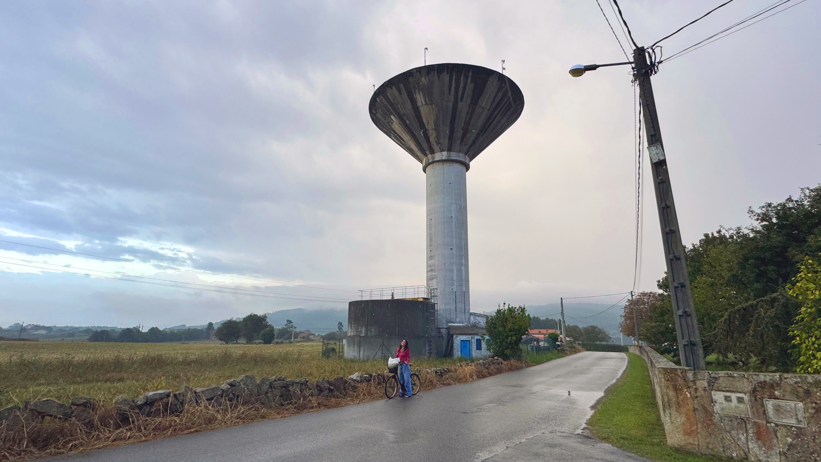
My task sounded pretty simple: help visitors reach rural guesthouses without a car. In practice, it meant talking to accommodation owners and turning scattered information into travel guides. The reality was a bit more complicated. A bus stop that appears on Google Maps may have disappeared years ago, and a “short walk” may turn out to be an hour on a road without a pavement.
What I liked most about my experience was how my master’s studies helped me make sense of everything around me. Suddenly, one hour's walk to the bus stop was not just an inconvenience, but a question about who decides which places are worth making accessible, and which aren't. A farm preserving native breeds made me think about how policies and subsidies can shape the management of conservation in rural areas, and how the survival of native species often depends on the incentives available to the people who look after them.
The same was true of the landscape: eucalyptus plantations have spread across northern Spain to supply the paper industry, and walking through them I was struck by the silence, with hardly any birdsong or undergrowth. On the farm, the family was slowly removing eucalyptus and replanting native trees, without any financial incentive. It showed me how decisions taken decades ago still shape the land today, and how restoring it can depend more on personal commitment than on policy support. Empty villages, rising house prices and busy summers made me wonder how tourism can support a place without taking it over and creating a conflict with the residents.
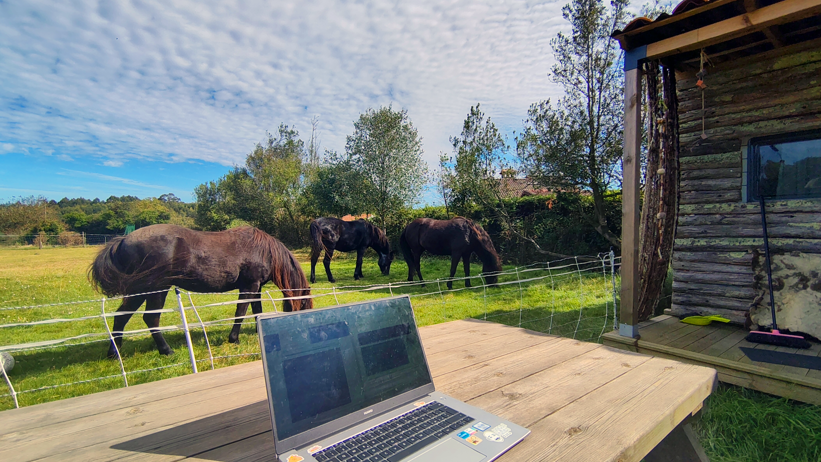
Besides the work itself, there was another side to this experience. Working alone in an isolated place can be lonely, and there were days when I wished for more guidance. But it also taught me how to be pleased by my own company, and showed me the value of a slower life with less constant internet connection.
It helped me understand what kind of work environment I want for the future: one with more people, more collaboration and more hands-on activity. I left Spain with a clearer idea of the kind of work I would like to do, and how I would like to do it, but also with many questions. And I think that is the real value of an internship."
Asia Buzzolan
Master student, Rural Development and Natural Resources Management
Contact
-
PersonHannah Ohm, LecturerDepartment of Biosystems and Technology