
Artificial cavities attracts threatened species as old oaks decline
New research shows that veteranisation using artificial tree cavities can quickly attract insects, helping to compensate for the growing shortage of truly old trees.
Ancient oaks are among the most important habitats for biodiversity. Their cavities, sap runs, dead branches and decaying wood support hundreds of species of insects, fungi, birds and mammals. Yet across much of Europe, old trees are becoming increasingly scarce, while too few younger trees are available to replace them. This is a growing problem for the many species that depend on veteran trees.
"We are seeing fewer and fewer old trees across Europe, and a significant age gap between the ancient trees and the next generation," says Vikki Bengtsson, PhD student at the Swedish University of Agricultural Sciences (SLU) and one of the researchers behind the new study.
Positively surprised
The researchers investigated whether a method known as veteranisation could help bridge that gap. Using chainsaws, they created cavities in oak trees designed to mimic natural nesting holes and other features typically found in older trees. Two years later, they examined which insects had been attracted to the treated trees.
"We were positively surprised by how quickly the treatment seemed to affect saproxylic beetles," says Vikki Bengtsson.
The veteranised trees attracted significantly more wood-living beetles than untreated control trees. Flight interception traps recorded more than 13 000 individuals representing 493 species, of which 318 were saproxylic, meaning they depend on dead or decaying wood. The researchers also recorded 47 red-listed species, including the endangered ship timber beetle Lymexylon navale.
The original idea behind the project was to create wounds that encourage fungal growth, which in turn creates habitat for wood-dependent insects. However, the cavities have also been used by birds and mammals, including bats and mice.
Although the results are promising, veteranisation can never replace the ecological value of genuinely old trees.
Additional tool
"Nature is still best at creating these habitats. Veteranisation should never be used as an excuse to remove 500-year-old trees."
Instead, Vikki Bengtsson sees veteranisation as an additional tool in the conservation toolbox. The method can be useful in landscapes where ancient trees are scarce or where forests consist largely of even-aged stands and managers want to create structural diversity more quickly than natural processes would allow.
So what can forest owners do? The most important measure is still to protect existing old trees and allow younger broadleaved trees to mature. However, those who actively want to create more wildlife habitat can also take inspiration from natural processes and consider conservation measures such as veteranising selected trees, preferably broadleaved species such as oak.
"Go for it, but do it safely," says Vikki Bengtsson.
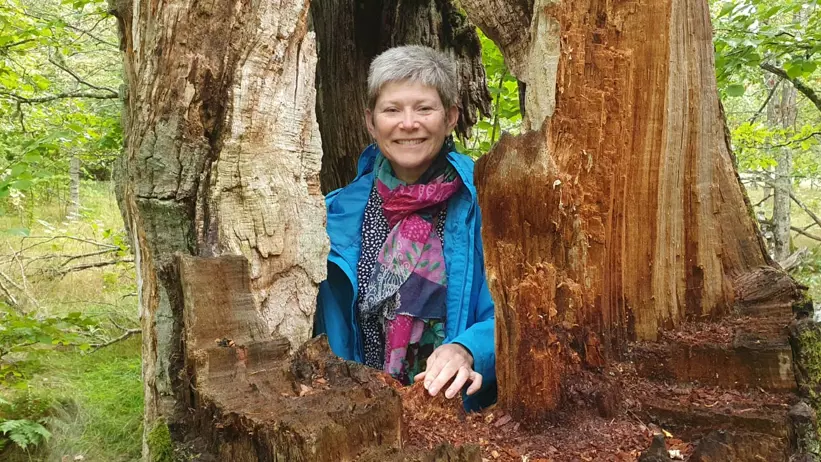
"Go for it, but do i safely!"
So what can forest owners do? The most important measure is still to protect existing old trees and allow younger broadleaved trees to mature. However, those who actively want to create more wildlife habitat can also take inspiration from natural processes and consider conservation measures such as veteranising selected trees, preferably broadleaved species such as oak.
"Go for it, but do it safely," says Vikki Bengtsson.
Contact
-
PersonTorbjörn Esping, KommunikatörSouthern Swedish Forest Research Centre