
SASi-SPi held Multistakeholder dialogues in Sierra Leone
Transforming agrifood systems requires bridging national policy ambitions with local realities to ensure agricultural growth directly translates into healthy, nutritious diets
The 6th mission in Sierra Leone under SASI-SPi made significant progress toward addressing a central Transition Challenge: How can the "Feed Salone" Strategy effectively contribute to healthy diets for the people of Sierra Leone?
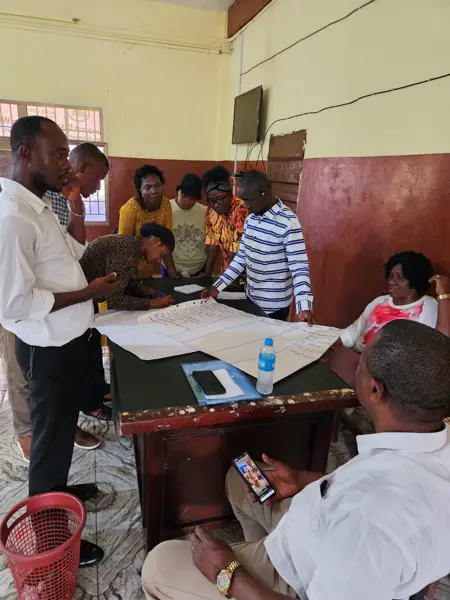
Carried out by Thijs Wissink (IRAM) from September 12–23, 2026, the mission conducted multi-stakeholder dialogues across Kenema and Port Loko districts to co-create concrete, district-level interventions.
Key mission highlights & territorial insights
- co-created interventions specifically focused on four nutrient-dense food groups currently underrepresented in local diets: animal protein, plant-based proteins (pulses and beans), vegetables, and fruits;
- multi-stakeholder dialogues brought together a diverse cross-section of actors, including district council leadership, health and agriculture officers, private sector traders, processors, farmer organizations, women’s associations, youth groups, interreligious leaders, and traditional healers;
- findings from in Kenema and Port Loko provide practical inputs to inform district development plans, the rollout of the national "Nourish Salone" campaign (led by SUN&FSCU), and the ongoing implementation of the Feed Salone strategy.
- positive discussions were held with the Ministry of Agriculture and Food Security (MAFS) regarding SASI-SPi support for an upcoming Mid-Term Review of the Feed Salone strategy, strengthening national institutional architecture and enhancing policy dialogue with the European Union.
From bottom up to high level
Achieving long-term food security requires moving beyond staple crop volume to prioritize dietary diversity and nutrition. By combining bottom-up, territorial co-creation with high-level policy governance, Sierra Leone is building an integrated roadmap to nourish its population and build resilient local food systems.
Contact:
Isabelle Vagneron: vagneron@cirad.fr