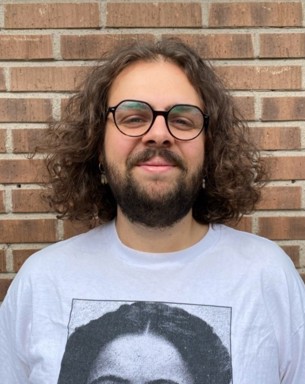
Max Andersson
Presentation
Hello there! My name is Max, and I am currently a PhD student with the Unit of Chemical Ecology at the Department of Plant Protection Biology here at Campus Alnarp. Below you can read more about my research, but a little bit about me is that I am a Swede born in Skåne and raised in Blekinge by the coast. When I am not working on my research, I either tinker or ride my bike, train boxing or read a book while drinking tea.
Research
My current research focuses on the functional genomics and structure-function of odorant receptors (Ors) in the malaria vector Anopheles gambiae and the dengue fever vector Aedes Aegypti, which are two prolific disease vectors spreading pathogens that kill millions of people every year, most prominently in the tropical band and the Southern Hemisphere.
These pathogens are spread to humans (and other vertebrates) when an infected female mosquito takes a blood meal. This blood meal is necessary for the female to produce eggs and new generations of mosquitoes and in this event they also unfortunately spread the pathogen to a host. The female locates a vertebrate host or other resource of interest such as an oviposition site, nectar-feeding site or mate through various sensory modalities of which olfaction is one. Olfaction is mediated by olfactory receptors which include mainly Ors and another receptor family called ionotropic receptors (Irs), which transduce a chemical signal into an electrical one which mediates a behaviour towards or away from a resource.
To come to understand the function of a receptor such as an Or, we need to understand what odorant binds the receptor and why. Research on functional genomics and structure-function can be approached in a plethora of ways but my methodology consists of a two-way split between in vivo and in silico lab work and computational experiments.
The wet lab methodologies we utilise are based on electrophysiology, specifically single sensillum recordings (SSR) and fluorescent imaging using the HEK293 cell system. These methods allow us to measure the depolarisation events happening in the olfactory sensory neurons (OSN), which host one or several Ors, following stimulation with an odorant from the resources.
Instead of working directly on the Ors expressed in the mosquitoes themselves we utilise heterologous expression in either the Drosophila empty neuron system or HEK293 cells, as mentioned previously. In the Drosophila empty neuron system, by deleting the endogenous Or we can replace this with an exogenous Or while keeping the rest of the olfactory system and central nervous systems intact. For HEK293 cell system we transfect the cells with an Or of our choosing along with the Or coreceptor Orco to create an environment where we can measure a response.
In a dry lab setting I use different software and bioinformatics workflows to perform tasks such as chemical modelling in AlphaFold3, molecular docking, molecular dynamics, phylogenetics and structural and sequence alignments. This is done to streamline the electrophysiological experiments as well as to develop a workflow that can be applied to any insect Or by a fellow researcher in the future.
This research will hopefully give us further understanding of the function of the various Ors in these disease vectors and, in the future, a better understanding of mosquitoes' attraction to their resources like humans and by this reducing the spread of disease.
Highlighted in bold are important words and concepts if you would like to read more about what I do :)
Research groups
Educational credentials
My academic background is quite varied, and there is no clear path to how I ended up where I am today, except for the desire to do a PhD since I was a small child.
I have a bachelor's degree in Gastronomy from the University of Kristianstad where I learned a lot about both food and everything that surrounds food, such as food history, meal planning for the elderly and children and perhaps most importantly the science of sensation. At the end of my bachelor's, I wanted to learn more about food production and I was very into environmental sustainability so I went on to start a master's in Agroecology at SLU Alnarp. This education gave me many new insights to the world of agri and horticulture on the basis of environmental, social and economic sustainability. For my master's project I focused on horticultural fly pests affecting onion and brassica production in Skåne, where I found that there are certain compounds that are highly attractive to the flies from these crops.
At that point, I realised that chemical ecology was the answer I had been looking for since I was a child, combining biology and chemistry in a way that also works for/on sustainability.
PhD Council
As a doctoral student, I am a member of the PhD Council. At this council, I have two main responsibilities, one as a representative for the PhD Council and member of the Faculty board (LTV faculty) as well as the representative of the other doctoral students at my department's board.