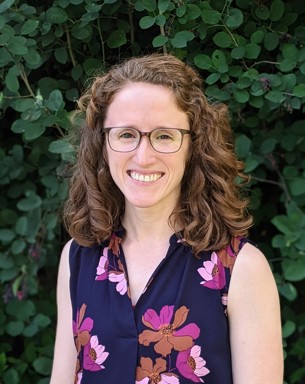
Erin Mc Callum
Presentation
I’m an Senior Lecturer (Associate Professor) at SLU in Umeå, Sweden. The overarching focus of my research program is on the ecological consequences of anthropogenic pollutants, especially pharmaceuticals, for aquatic ecosystems with the goal to inform policy for conserving freshwater organisms and habitats. My research group in Umeå uses various aquatic species as study systems. Working in both the lab and field, we strive to upscale approaches in ecotoxicology to include large spatial scales, social complexity, and multi-species dynamics.
Research
I study how aquatic pollution affects fish, invertebrates, and aquatic environments, and a lot of my work focuses on pharamceutical pollution. My current research focuses on answering these two questions: 1) how do wastewater effluents that contain a myriad of pharamceutical pollutants affect and shape aquatic communities? and 2) how does pharmaceutical pollution change animal behaviour, especially social behaviours, and what are the consequences of these sublethal changes for populations and across generations?
But, I'm interested in and have worked on lots of topics! In addition to my main focus, I have also worked on topics related to the relationship between pharamceutical pollution and zoonotic diseases, evidence synthesis in ecotoxicology (e.g., systematic reviewing and mapping), the management of aquatic invasive species, and the behaviour and migration success of salmon and trout.
Teaching
I am the course leader and teacher for BI1448 Fish and Wildlife Management. This is a master's level course offered as part of the "Conservation and management of fish and wildlife" program here at SLU. In this course, I teach students about the sustainble harvest and management of animal populations.
I also teach shorter sections in BI1301 Applied Population Ecology and BI1415 Ecological Zoology.
Educational credentials
Docent in Biology, SLU, Sweden - 2024.
PhD, McMaster University, Canada - 2016.
BSc, University of Western Ontario, Canada - 2011.
Supervision
Are you interested in a bachelors/kandidate thesis or a master's thesis? Contact me by email to see what research projects I have on the go and how you can get involved for your thesis work. Likewise, if you are interested in Ph.D. or postdoctoral experience, email me and we can discuss project and funding ideas.
I am eager to work with students from diverse backgrounds, but working on your degree in some form of natural science will give you a good background knowledge for this type of research (e.g., environmental science, forestry, biology, chemistry, ecology etc.).
Open MSc / BSc projects:
Note! I often have ideas for projects I may not post here. Please feel free to reach out by email to discuss your ideas.
(MSc thesis) - How does wastewater effluent affect aquatic invertebrate communities? Working with samples collected up- and downstream from wastewater treatment plants across Sweden, we will sort and identify aquatic invertebrates to genus and family levels to identify how wastewater inputs with nutrients and chemicals shape and change aquatic communities. 30 or 60 credits.
(Bachelors thesis or MSc independent project course) - Does pharmaceutical pollution affect fish behaviour? Pharamceuticals deisgned to change human behaviour are environmental pollutants (e.g., antidepressants). How does exposure to these compounds affect aquatic organisms exposed in the wild? We will score behaviour from video recordings to understand how pharmaceuticals change animal behaviours. 15 credits.
(MSc thesis or Bachelors thesis) - Literature review on advanced technologies for reducing pharmaceutical pollution. Advanced water treatment technologies (e.g., ozone or UV sterilization) are being used to remove chemical pollution from wastewater before it is returned to our rivers, lakes, and streams. But do these new technologies improve fish and habitat health? We will conduct a systematic review of published literature to determine what evidence exists how treatment technologies improve the health of aquatic animals, habitats, and ecosystems. This project is scaleable from 15 to 60 credits.